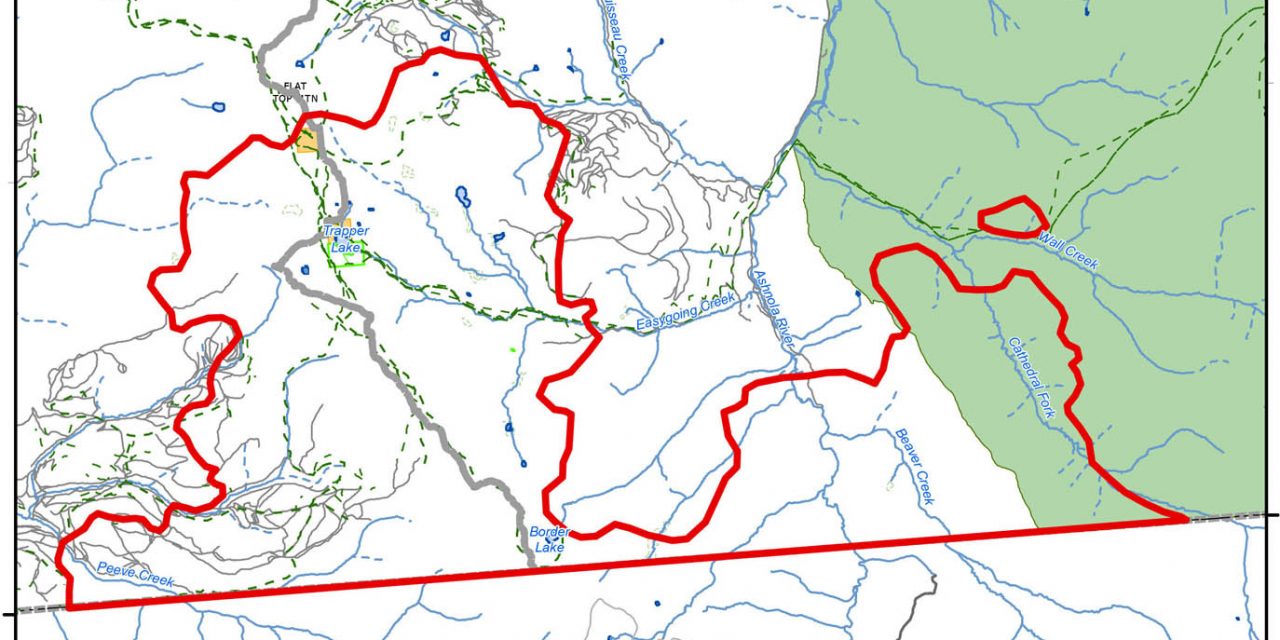
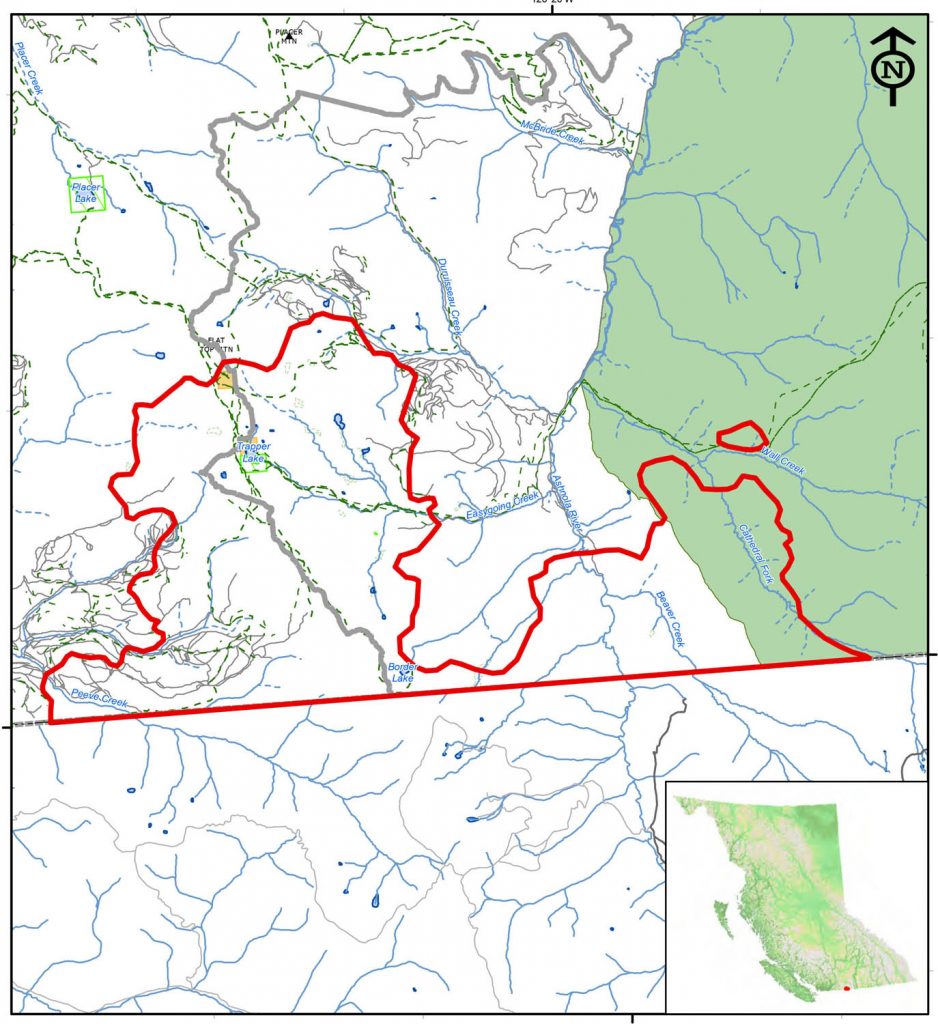
The Diamond Creek fire crossed into Cathedral Provincial Park last week. This map shows the extent of the fire as of last Friday. (BC Wildfire Service)
Temperatures have dropped and there is increased moisture, but several fires continue to burn in the South Okanagan and Similkameen.
On Sunday afternoon, skimmer planes swooped down on Osoyoos Lake repeatedly to pick up water to fight the K Mountain fire near Keremeos.
That fire, which remained at 6.9 hectares on Monday, is burning on top of the mountain and doesn’t pose an immediate threat to private property, structures or infrastructure.
Max Birkner, a fire information officer for the Kamloops Fire Centre, described its condition as showing rank one and rank two behaviour.
Rank one is a smouldering ground fire with no visible flame and rank two is a minimal flame moving along the ground.
This means the fire, which was discovered last Thursday, doesn’t pose a threat unless winds increase.
The Regional District of Okanagan-Similkameen (RDOS) said the K Mountain fire is not related to the much larger Diamond Creek fire that is burning 35 kilometres to the west between Manning and Cathedral provincial parks.
Birkner said a parattack crew, also known as “smokejumpers”, parachuted into the K Mountain fire area on the weekend.
They put in guards between two slopes in an accessible area to hinder the fire spread, he said.
“Of course, some of the challenges presented by mountain firefighting obviously begin with access,” said Birkner. “But they do have some people on that fire and they have been using terrain features to fight that fire where they can, because they can’t get to it everywhere.”
Another new fire at Blue Mountain west of Penticton was discovered Sunday, but Justine Hunce, also an information officer with the Kamloops Fire Centre, said that fire was quickly extinguished.
“We’ve already declared that fire out,” she said Monday.
The two most significant fires in the area, classed as “fires of note,” are the Diamond Creek fire to the west and the Finlay Creek fire 7.5 km southwest of Peachland.
The Diamond Creek fire was discovered in Washington State on July 23 and it crossed into Canada in late August.
Birkner said the Diamond Creek fire covers an estimated 8,334 hectares on the Canadian side and about 46,300 hectares in the United States.
In a bulletin released Monday, the U.S. Forest Service said the fire, which is believed to be human caused, was 30 per cent contained and involved 94 personnel.
Fire behaviour on the weekend was moderated by cooler temperatures and higher humidity, U.S. officials said.
Although several communities in Washington are under evacuation alert, the fire doesn’t pose an immediate threat to structures in Canada.
On the Canadian side, the fire crossed into portions of Cathedral Provincial Park on Sept. 3, and the entire park has been closed since late August.
“A modified response is being used to manage this wildfire,” the BC Wildfire Service says in an information bulletin. “The fire is burning in alpine forests and assessments indicate there is no threat to public safety and there is a limited threat to structural values at this time.”
The Wildfire Service notes that in certain circumstances a wildfire may be deemed beneficial and therefore warrant a modified response, with crews monitoring and managing a fire rather than fighting it.
“Fire removes low-growing underbrush, cleans the forest floor of debris, opens it up to sunlight and nourishes the soil,” the bulletin said. “This leads to healthier forests and stronger growth.”
Suppression may be used with a combination of tactics, both direct and indirect with monitoring to steer, contain and otherwise manage fire activity in a pre-determined perimeter, the bulletin said.
BC Wildfire Service is flying over the area twice daily by helicopter when safe to map the fire and monitor its growth.
Four firefighters, one helicopter and eight pieces of heavy equipment along with five support personnel are working on this fire.
The Finlay Creek fire was estimated at 2,228 hectares on Monday and is 65 per cent contained.
Structural protection personnel have assessed the southern flank and set up equipment on properties where necessary. This fire is classed as an interface fire, meaning it poses a threat to buildings.
An evacuation alert remains in effect and smoke will continue to be visible in the surrounding area for some time, BC Wildfire Service says.
RICHARD McGUIRE
Osoyoos Times
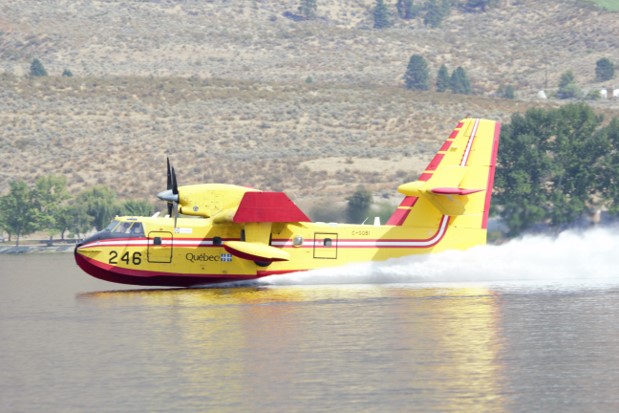
A skimmer plane lands on Osoyoos Lake to pick up water to fight the K Mountain fire near Keremeos. (Tom Harvie photo)
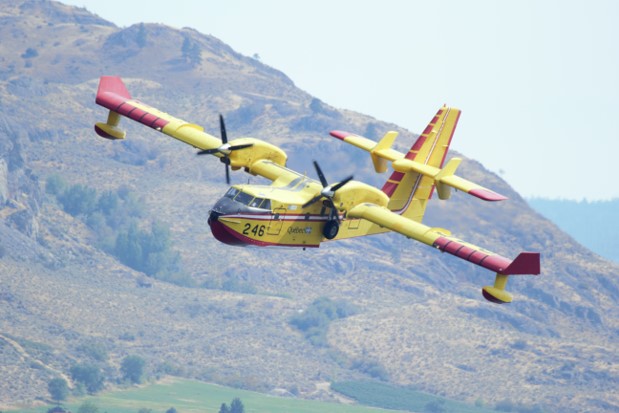
A skimmer plane prepares to land on Osoyoos Lake to pick up water to fight the K Mountain fire near Keremeos. (Tom Harvie photo)
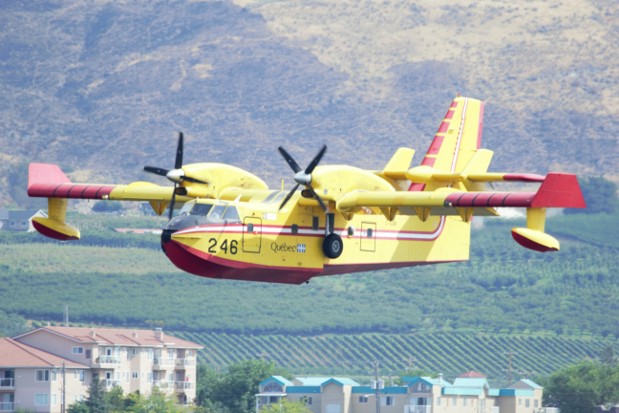
A skimmer plane prepares to land on Osoyoos Lake to pick up water to fight the fire on K Mountain near Keremeos. (Tom Harvie photo)