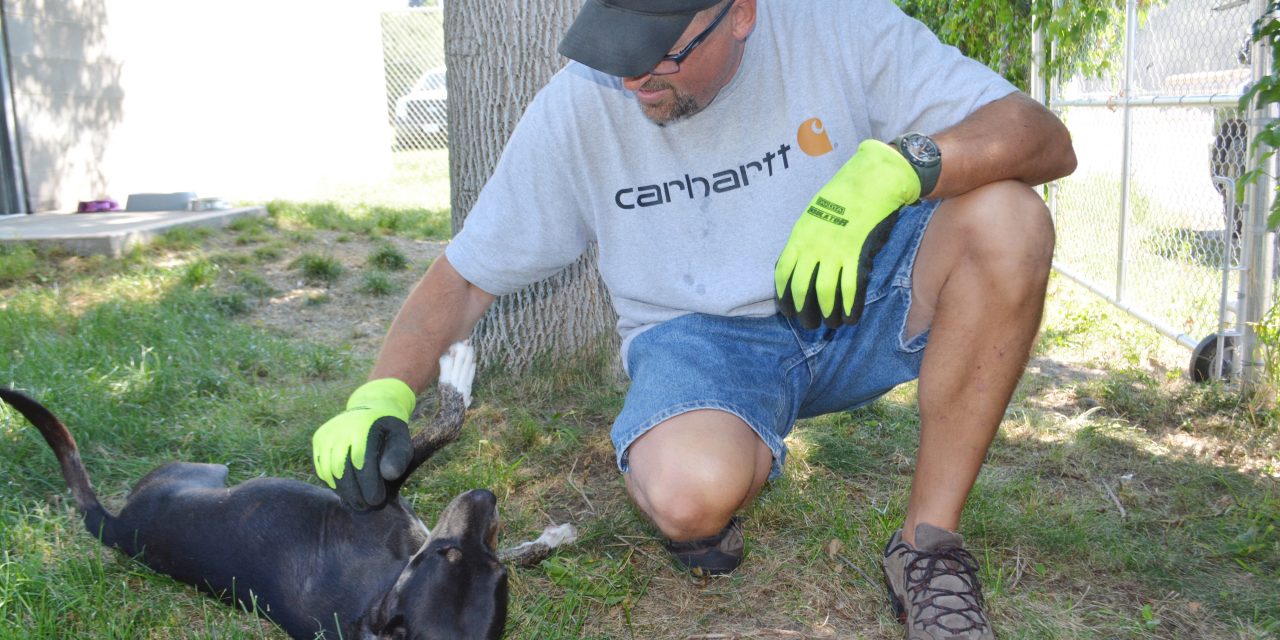
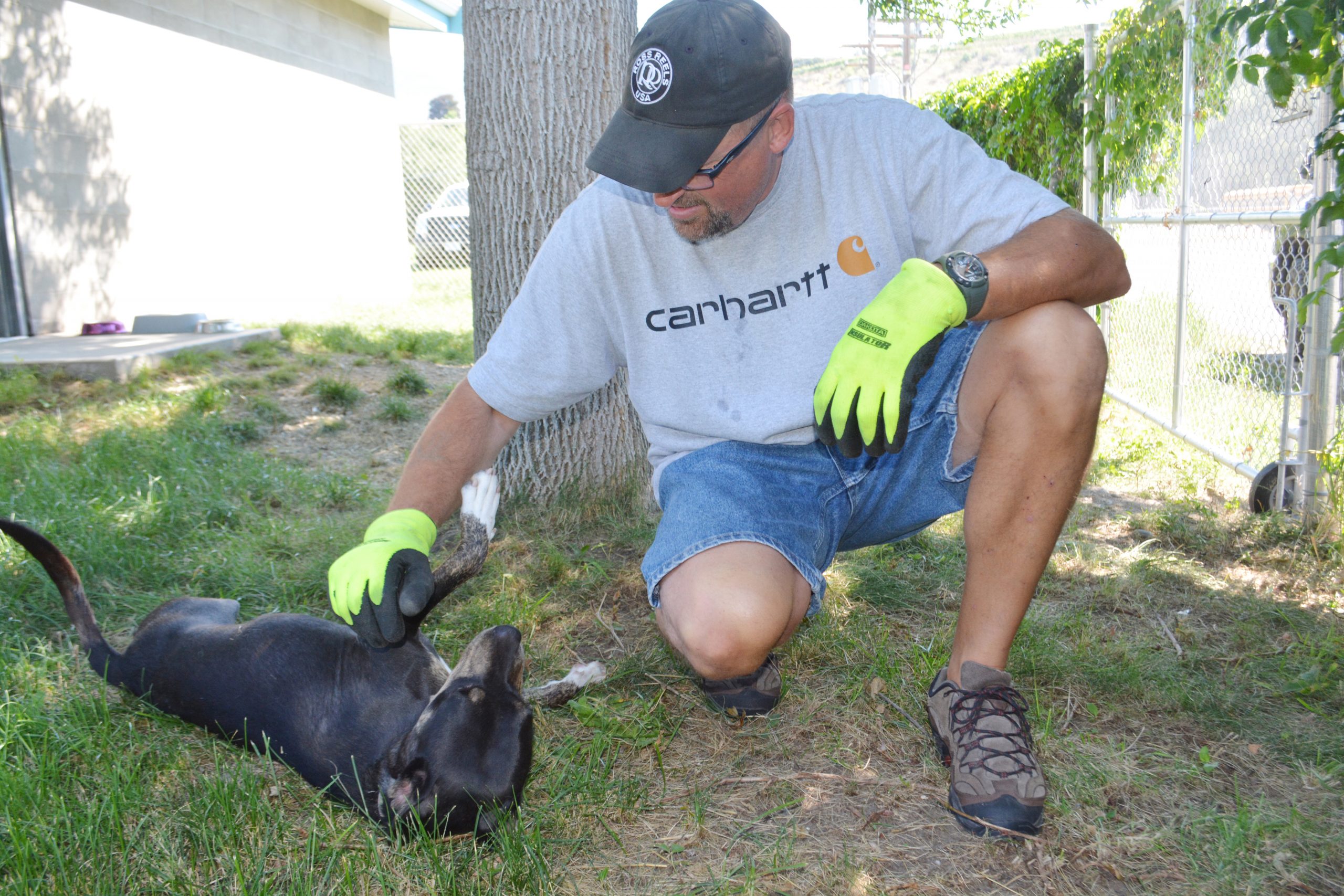
Donald Lowndes, a former bylaw enforcement officer with the Town of Oliver, now works as an animal control officer with South Okanagan Security Services, contracted by the regional district. Lowndes is responsible for enforcing the Dog Control Bylaw in rural areas, including Oliver and Osoyoos. (File photo)
By Lyonel Doherty
Aberdeen Publishing
Despite a perception (by some) that dog control enforcement is a bit harsh, the regional district is standing behind its contractor.
Development Services general manager Brad Dollevoet told the board last week that staff prefer to continue with South Okanagan Security Services that enforce the Dog Control Bylaw in rural areas, including Oliver and Osoyoos.
Dollevoet said the contractor has been a receptive agency to work with.
“It is administration’s belief that most of the community concerns has stemmed from the increased level of service of enforcing the parameters of the Dog Control Bylaw.”
Dollevoet reported they have received 11 complaints about animals in rural Oliver, but he’s unsure if any tickets were issued in those complaints.
“We have had no complaints from Oliver residents with regards to the service specifically.”
The officer enforcing the Dog Control Bylaw is Donald Lowndes, former bylaw enforcement officer for the Town of Oliver. Lowndes resigned in 2016 after a dispute with Town management regarding the cancellation of infraction tickets that he issued to offenders.
• Read more: RDOS ups animal control presence
Dollevoet said the animal control service provided by a previous contractor was not satisfactory because complaints were not followed up on in a timely manner, and no active patrolling was carried out.
“This allowed the public to become comfortable with a reduced enforcement service.”
With a new full-time officer actively patrolling rural areas, it can be surmised that many people have been “caught off guard.”
But Dollevoet pointed out that the officer’s apparent enforcement approach has resulted in some complaints and disputed tickets.
Perhaps a more friendlier, educational approach would result in more success, he noted.
But he acknowledged that finding a qualified individual to enforce these rules is a difficult task.
“The position is often subject of significant verbal and sometimes physical abuse, and the officers are not held in the public’s eyes as high of a degree as RCMP officers.”
Don Moore, president of SOS Security, said their officers spoke with more than 500 people regarding observed/reported infractions of the Dog Control Bylaw between May and September of 2018.
Of those, 58 tickets were issued, with eight being disputed.
Moore said the majority of observed infractions were related to dogs running loose in parks, on beaches and in playgrounds. Often the dogs were observed defecating in the park without the required clean-up by their owners, he stated.
In many cases the dogs were not licensed, Moore said.
The president added that some files related to dogs killing chickens, attacking other dogs and biting people.
Moore reported that a total of six complaints were made about an enforcement officer’s manner, mainly by people who had received a fine. In almost every instance, the complainant’s version of events was markedly different than the officer’s, he pointed out.
Regional district Development Services general manager Brad Dollevoet said animal control officers are subject to significant verbal and sometimes physical abuse on the job. (File photo)
“Our primary, full-time dog control officer has been castigated, slurred and denigrated on social media by a couple of people who had been caught afoul of the bylaws.”
Moore said these people have spread gossip, some of which has been echoed by elected officials before evidence is brought forward.
Moore reiterated that hostility against officers is more common than many people would think.
He said the former animal control officer for Penticton and Summerland had such encounters, including physical assault and threats. The Peachland dog control officer quit the job due to gossip, threats and harassment, even off the job, Moore added.
And a former officer in the South Okanagan had a breakdown over similar hostilities.
“In my 20-plus years providing bylaw enforcement to the RDOS, I had not encountered the situation as has now arisen with dog control enforcement,” Moore said.
He even noted that a few regional district officials have taken a complaint from someone as immediate proof of misconduct by an officer before any investigation.
Moore said one area director received a complaint regarding the conduct of an officer and immediately told the complainant that the officer had exceeded his authority and would be called to task on it. Subsequently, it was found there was no misconduct and that the officer acted within his authority, Moore said.
“There is always much more to the story.”