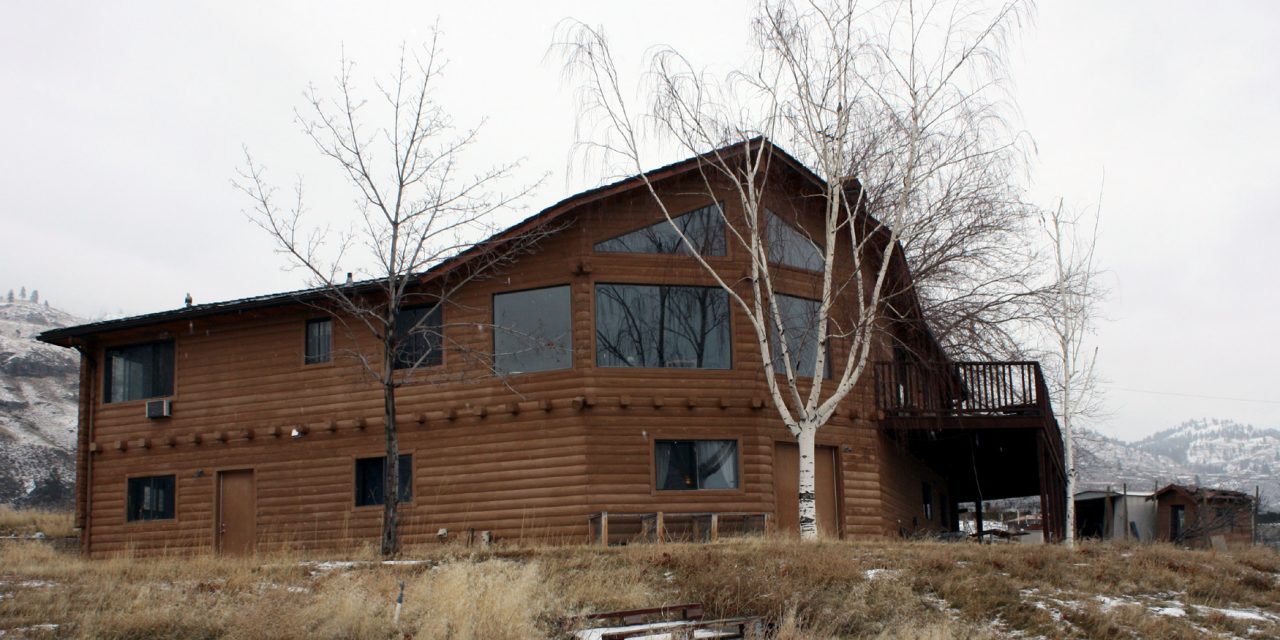
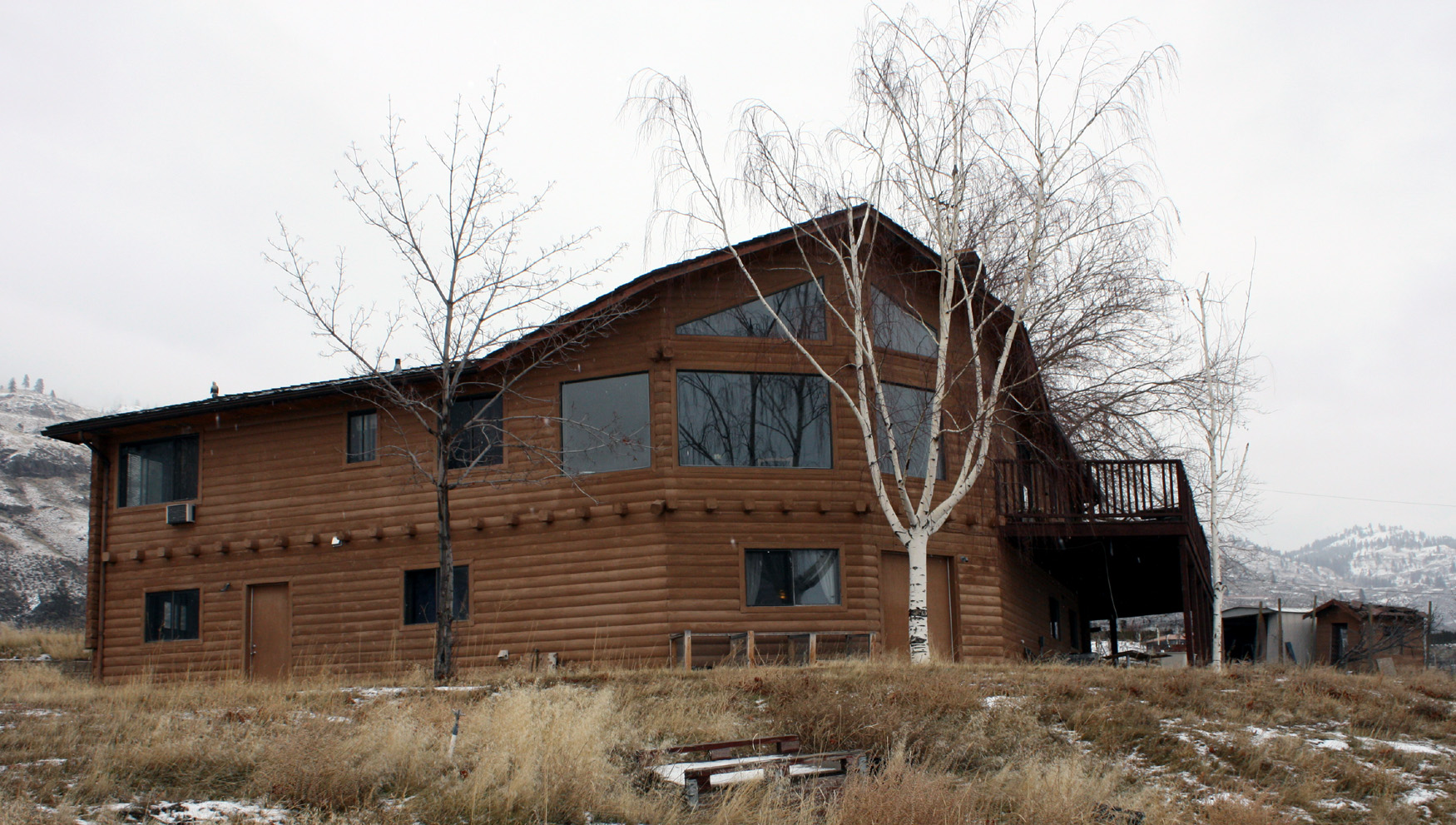
Correctional Service Canada staff were impressed by the turnout and questions asked by 30 members of the public who attended an open house at the proposed aboriginal offender residential facility in Osoyoos last Tuesday evening. The residence is owned by the Osoyoos Indian Band, who will contract CSC staff to operate it. Photo by Keith Lacey
Correctional Service Canada (CSC) staff are thoroughly impressed with the community’s response to the planned opening of a Community-Based Residential Facility (CBRF) for aboriginal offenders by the Osoyoos Indian Band (OIB) in Osoyoos.
“It has all been very respectful, which isn’t always the case,” said Lorrie Kelsey, area director for the north/interior area community corrections branch of CSC, who would manage the rehabilitation program in the halfway house owned by the OIB near the Spirit Ridge development in Osoyoos.
About 30 local residents attended an open house last Tuesday evening at the residential facility. Kelsey was joined by CSC community corrections project manager for aboriginal development Melissa Taylor, members of Town of Osoyoos council, members of the advisory planning committee with the Regional District of Okanagan-Similkameen (RDOS) and Chief Clarence Louie and other top administrators from the OIB.
The open house was all about answering questions and providing information and the evening was extremely productive, said Taylor.
“A lot of people asked questions and they were answered in a very open way because all of the key partners were in attendance,” said Taylor. “The general consensus remains that the community remains very supportive of the program in general and that’s very encouraging.”
Several members of the public who live near the residential facility had some tougher questions to ask and they seemed generally pleased with the answers they received, said Taylor.
“One neighbour, whose land would be closest to the facility, had a number of concerns and that’s not unexpected at all,” she said. “Our staff has committed to a further meeting with this gentleman to address all of his concerns. Besides that, the other neighbours voiced their concerns and received the answers they were looking for and they seemed quite supportive.”
The program is designed to attract only those aboriginal offenders who proceed through a detailed and complicated screening process and display a strong commitment to finding full-time employment and full integration into society, said Taylor.
There are literally hundreds of similar residential facilities operating across British Columbia and Canada and there have been very few problems, she said.
Once that information is related to members of the public, most fears are alleviated, she said.
“The bottom line is some people may have some fears until the facility is open and they see how it operates and those fears go away,” she said.
Until the RDOS gives approval to rezone the land where the house is situated, partners in the program won’t be spending any money to upgrade the house, but that will change in a hurry once approval is given, she said.
“It has to go to the RDOS board for first and second reading and then before Town of Osoyoos council for final reading before we can begin renovations and get the house ready for habitation,” she said. “Once renovations begin, it shouldn’t take too long to get the house ready and our goal remains to be open by sometime this fall if everything falls into place.”
Having the good name and solid reputation of the OIB and Chief Louie involved in this project has quelled the concerns of many people, said Taylor.
“Chief Louie has decided to do right by the First Nations people in the correctional system, which represent a disproportionate percentage of the inmate population in this province and country,” she said. “The reality is he could make a small fortune for the band by selling the land where this house will be located, but he wants to get involved in a program that will make a difference for his people.
“His motivation is really strong and sound and his band does have such a wonderful reputation so it sure has helped in terms of community relations.”
Kelsey agreed the community response to the halfway house has been very encouraging as CSC staff often runs into immediate negative public pressure whenever a program of this nature is announced.
“What impresses me the most about Osoyoos is the willingness of the people there to listen to our presentation before coming to any kind of decision on this project,” she said. “They have listened to what we have to say and how the program will operate before forming any strong opinions and that is so nice to see.”
To have 30 people show up at an open house is encouraging as it shows the community is informed about the project and wants some questions answered before voicing any concerns, she said.
The size and scope of the project has also met with approval, said Kelsey.
“We can’t forget this is a home for five people who want to find full-time employment and reintegrate back into society,” she said. “There’s no intention ever of a 30-bed facility. We might add a bed or two somewhere down the road, but that’s it.”
Louie could not be reached for comment.