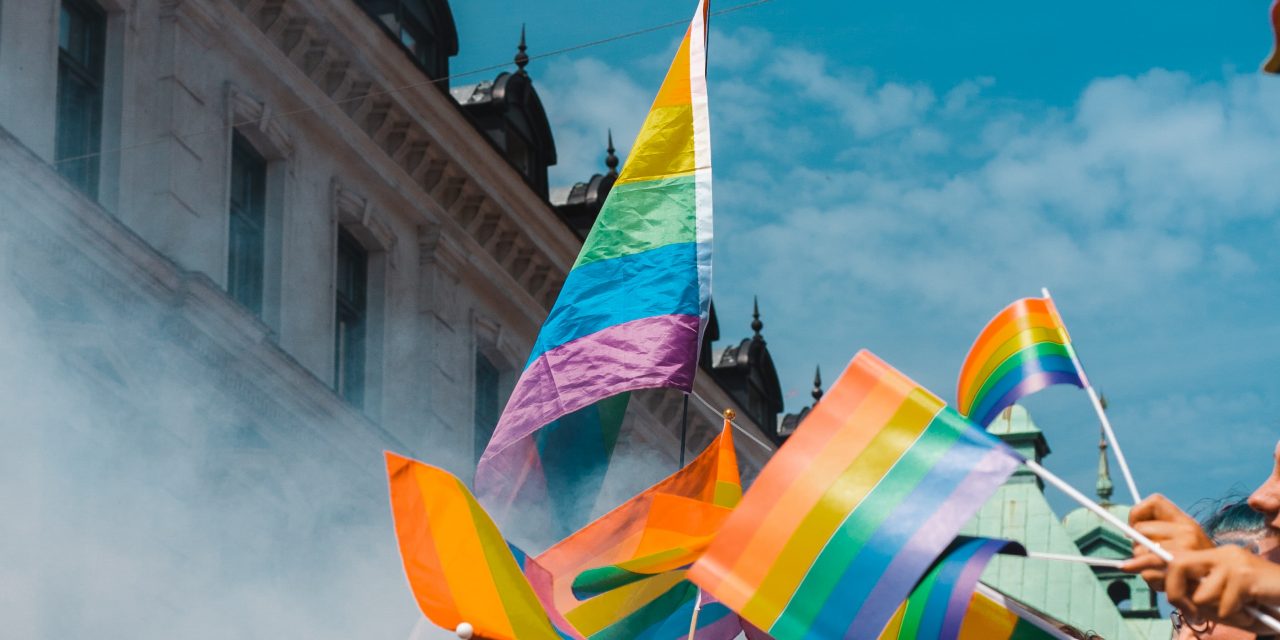
As places around the world are starting celebrations of the 51st annual Pride Month, smaller, rural towns in Canada are no exception to uplifting LGBTQ2S+ folks.
Organizations like the South Okanagan Similkameen Pride (SOSPride) based in Penticton have been doing the work of advocacy, education, outreach, and creating safe spaces for the LGBTQ2S+ community in the region for many years.
Melisa Edgerly (they/them or she/her) became the president of SOSPride two years ago and explains that the organization tries to get a grasp on small rural communities in the area.
“We have a meeting once a month and we talk about what we want to achieve with the board, the directions we’re going, and how we can help educate the community,” says Edgerly. “We plan things like Pride Month, and what’s going to happen.”
This year, after SOSPride sent out proclamations applciations to a number of communities, Oliver, Osoyoos, Penticton, the Lower Similkameen Indian Band and the Upper Similkameen Indian Band are all acknowledging June as Pride Month.
Pre-COVID, SOSPride would also plan socials and have activities as well, which has become more challenging with COVID-19 gathering restrictions.
Even their Pride Month events this year are all virtual, but nonetheless aim to uplift LGBTQ2S+ voices and celebrate the community.
Edgerly however, does acknowledge the lack of visibilty in smaller communities, which is one of the elements that SOSPride works to improve.
Edgerly says that they know many people who live in the city that feel a lot more comfortable being themselves in a big metropolis. That they can walk down the street and not deal with judgemental glances shot in their direction and not feel overly fearful.
“Whereas within smaller communities, I am going to say that it is a little more challenging to be yourself and feel included, and not almost fearful. Even though we are in 2021, it’s still a fear, I think on queer people’s minds like ‘what is going to happen if I walk down the street showing my pride or with my partner?’” says Edgerly.
A new study released by Deloitte and Canada’s LGBTQ2S+ Chamber of Commerce (CGLCC) shows the discrimation and systemic challenges that the community continues to face.
CGLCC estimates that of the 100,000 LGBTQ2S+ owned companies in Canada, 20 per cent stated they faced challenges building up their businesses as a result of being part of the LGBTQ2S+ community, while 25 per cent state that LGBTQ2S+ ownership resulted in a loss of opportunities for their company to some extent.
Edgerly explains that a huge part of visibility and creating an inclusive environment is education. Knowing the history of pride, understanding the issues still present within the community today is an integral part of being a good ally, she says.
“These parades still need to happen because LGBTQ2s+ people are still marginalized, they’re still being harassed, they’re still being verbally assaulted, physically assaulted, death is still a huge thing that happens, and mostly to trans Black women,” says Edgerly, who adds that this is an ongoing fight until everyone can live in harmony.
“Things like Pride Month and pride parades are us putting ourselves in the community and showing that we belong, and allowing our allies to celebrate us,” says Edgerly.
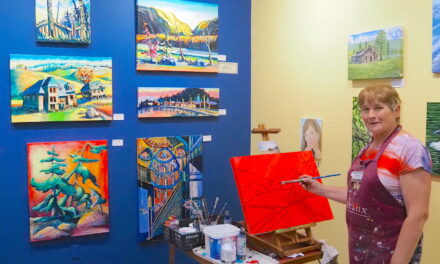
Wina Poliquin (she/her), vice president of the Wide Arts National Association (WANA) and owner of Art Therapy Corp., says she’s interested in organizing pride celebrations in Osoyoos as soon as possible.
Though unsure how big an event could be considering the arts society has had their hands full with many projects unfolding this summer, Poliquin says a parade of some sort would be great.
With a number of WANA’s board members being part of the LGBTQ2S+ community and strong allies, Poliquin says visibility is a huge step, and it’s definitely something they want to help reflect within Osoyoos.
“For me, being the owner of Art Therapy Corp., and the curator, I see lots of that younger generation that we associate with the [LGBTQ2S+] community. And I feel like they would be seen a little more and feel like they have some type of support.”
“There’s also lots of stigma in smaller rural communities as well, so just to kind of balance this aspect, I think will be really beneficial for all of us,” says Poliquin.
But visibility needs to happen in conjunction with safety.
Edgerly says that “it’s not necessarily up to the queer community to make themselves feel safe. I feel like it’s everyone’s job to make everyone feel included and safe.”
With that, being a good ally also comes with taking the time to listen to marginalized voices and educate yourself, adds Edgerly.
“Be confident for the people that are part of the LGBTQ2S+ community. Just be confident in who you are and don’t be afraid. And that’ll trickle down to others and give them the courage to also be confident in who they are.”