Long-awaited federal regulations that allow border officials to stop and detain boats carrying invasive mussels came into effect last week.
The regulations under the federal Fisheries Act prohibit the import, possession, transport and release of specified invasive species.
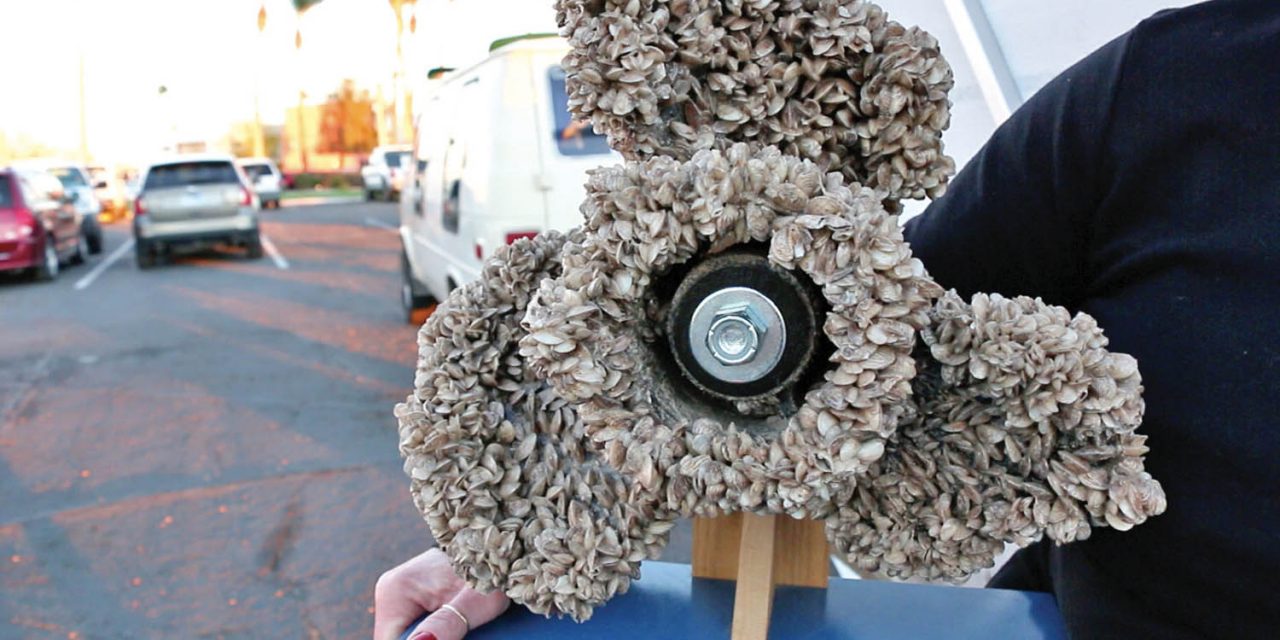
The major species identified as threats are zebra and quagga mussels and Asian carp.
The Canada Border Services Agency (CBSA) said some of its officers have already received training on mussel detection and protocols for handling possible threats and other officers will be trained in the future.
Zebra and quagga mussels are typically spread by recreational boaters who fail to properly decontaminate their boats after using them in infested waters. Mussels have now reached Manitoba and the Southwest U.S.
The implementation of these federal regulations now throws attention on the provincial government, which announced a mussel strategy at the end of March, but has failed to implement permanent inspection stations on highway crossings from Alberta as organizations like the Okanagan Basin Water Board (OBWB) have been calling for.
Instead, the province opted for three roving inspection stations.
“It’s really great news,” said Anna Warwick Sears, OBWB executive director referring to the federal regulations.
The announcement of the federal regulations and the training of CBSA officers means the Canada-U.S. border is taken care of, Warwick Sears said. This means the urgency is now getting the province to arrange and staff inspection stations on the Alberta border, she said.
James Littley, operations and grants manager with the OBWB, acknowledged that the province has been proactive about training CBSA personnel, but said there is no sign of any movement from the province on adding inspections on the Alberta border.
“They’ve taken a ‘wait-and-see’ approach,” said Littley. “They are really relying on neighbouring jurisdictions.”
Warwick Sears noted that Alberta, which has permanent inspection stations, has already intercepted several boats this season carrying invasive mussles.
“Thank goodness for the Albertan stations,” she said. “It just goes to show that there must be a lot of boats flowing through if they are intercepting them that regularly. If we’ve seen three in Alberta in the last two or three weeks, that means there’s a very high volume of boats that are passing through.”
Warwick Sears said local CBSA officers are well aware of the threat, but she worries that some in the Lower Mainland may not take the threat as seriously because they don’t perceive it to have a direct impact on their areas.
RICHARD McGUIRE
Osoyoos Times