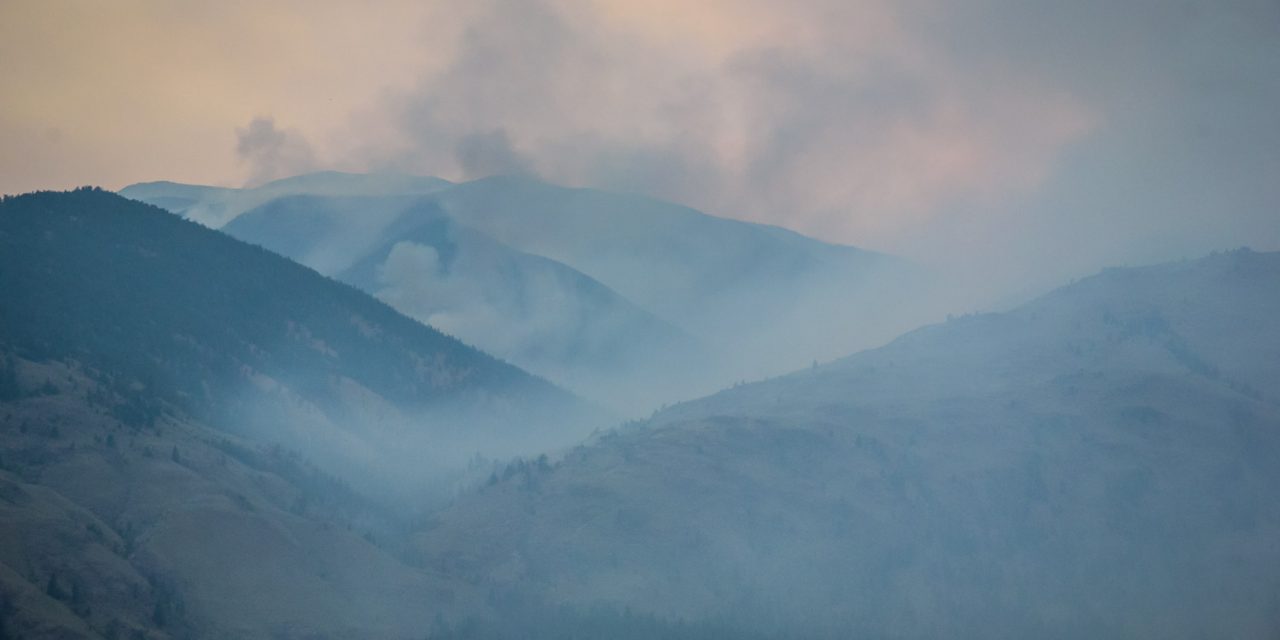
Various regions of B.C. are currently being impacted or set to be impacted by wildfire smoke over the next 24-48 hours, according to B.C. health authorities’ latest Smokey Skies Bulletin. Significant smoke from major fires in several regions will impact communities across the province, it says.
Although the main impact in our region will be felt primarily in the Central Okanagan – including Kelowna, Lake Country, West Kelowna, and Peachland – Osoyoos and Oliver are nonetheless expected to continue experiencing mild smoke.
The Regional District of Okanagan-Similkameen (RDOS) also reminds residents and visitors that during a wildfire, smoke conditions can change quickly over short distances and can vary considerably hour-by-hour.
People with pre-existing health conditions, respiratory infections such as COVID-19, older adults, pregnant women and infants, children, and sensitive individuals are more likely to experience health effects from smoke exposure.
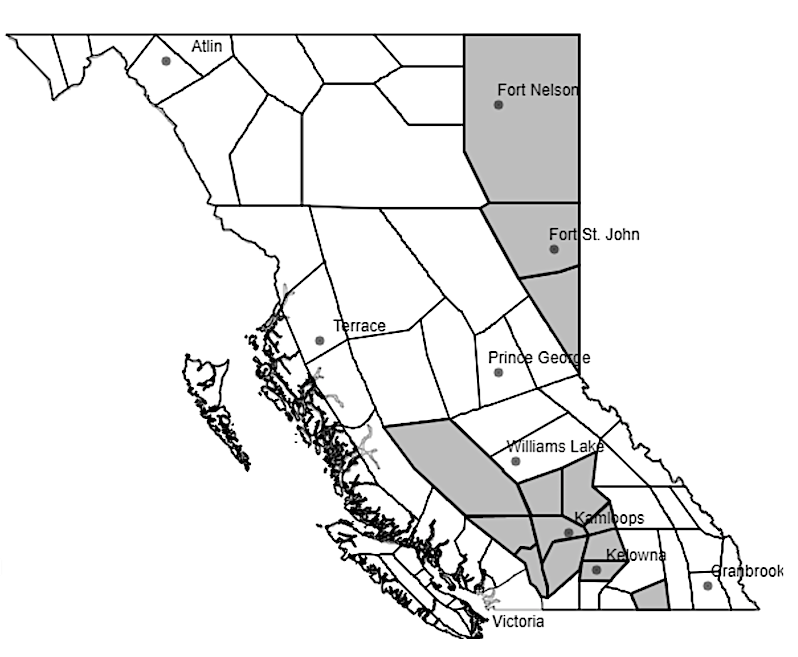
The Regions of BC highlighted on the map are being impacted or are likely to be impacted by wildfire smoke over the next 24-48 hours.
The Bulletin recommends the following during smoky conditions:
Follow your common sense
- Stop or reduce your activity level if breathing becomes uncomfortable or you feel unwell.
- Stay cool and drink plenty of fluids.
- If you have asthma or other chronic illness, carry any rescue (fast-acting) medications with you at all times and activate your personal care plan that has been designed with your family physician.
- Make sure that children and others who cannot care for themselves follow the same advice.
Monitor your symptoms
- People respond differently to smoke. Mild irritation and discomfort are common and usually disappear when the smoke clears.
- Exposure to wildfire smoke and the virus that causes COVID-19 can both result in respiratory symptoms such as a dry cough, sore throat, or difficulty breathing. Use the BC COVID-19 Self-Assessment Tool to help determine whether you need further assessment or testing for COVID-19.
- If you are unsure whether you need medical care, call HealthLink BC at 8-1-1.
- If you are experiencing difficulty in breathing, chest pain or discomfort, or a severe cough, contact your health care provider, walk-in clinic, or emergency department. If you are having a medical emergency, call 9-1-1.
Tips to reduce your smoke exposure
- Smoke levels may be lower indoors but will still be elevated, so stay aware of your symptoms even when you are indoors.
- Running a commercially available HEPA (high-efficiency particulate air) filter can improve indoor air quality in the room where the device is located.
- If you have a forced-air heating/cooling system in your home, it may help to change the filter and set the fan to run continuously.
- Reduce indoor air pollution sources such as smoking, burning incense, and frying foods.
- If travelling in a car with air conditioning, keep the windows up and the ventilation set to recirculate.
- If you are very sensitive to smoke, consider moving to another location with cleaner air, but be aware that conditions can change rapidly.
- Maintaining good overall health is a good way to prevent health effects resulting from short-term exposure to air pollution.
More information can be found here:
Air quality data
Smoke forecasts
• Environment and Climate Change Canada FireWork prediction system
• Blue Sky Canada Smoke Forecasting System
Wildfire smoke and your health
• Wildfire smoke and your health
Provincial health authorities
• First Nations Health Authority
• Interior Health Authority (Environment Tab/Emergency Information)
Information for working outdoors