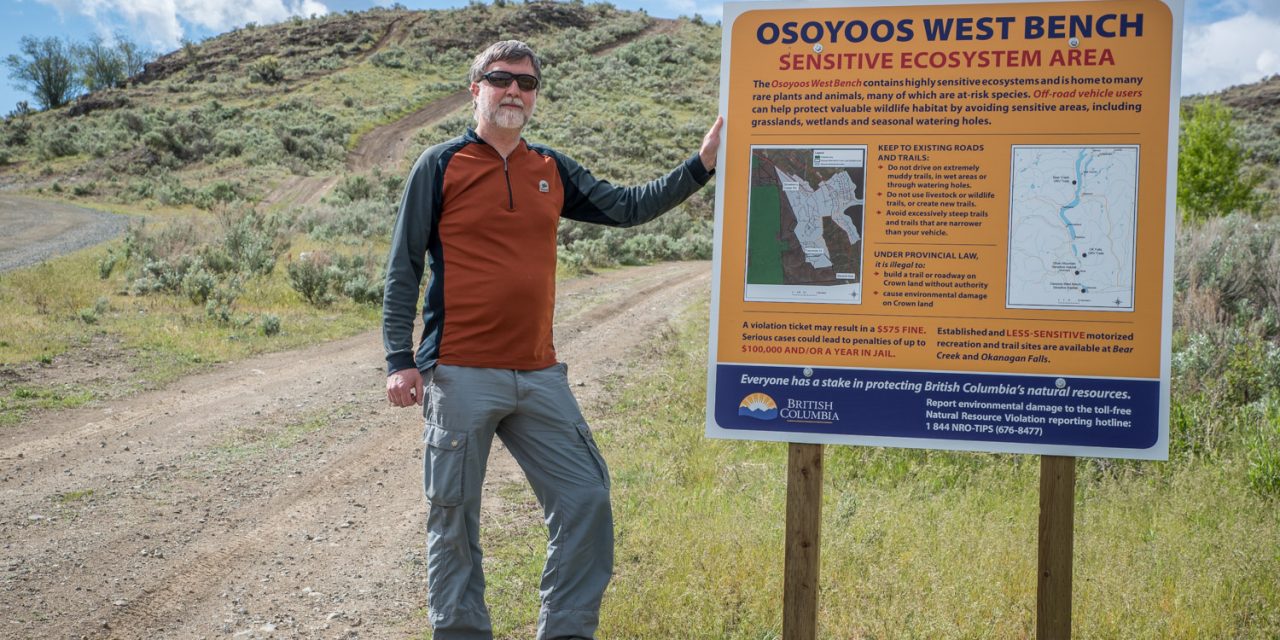
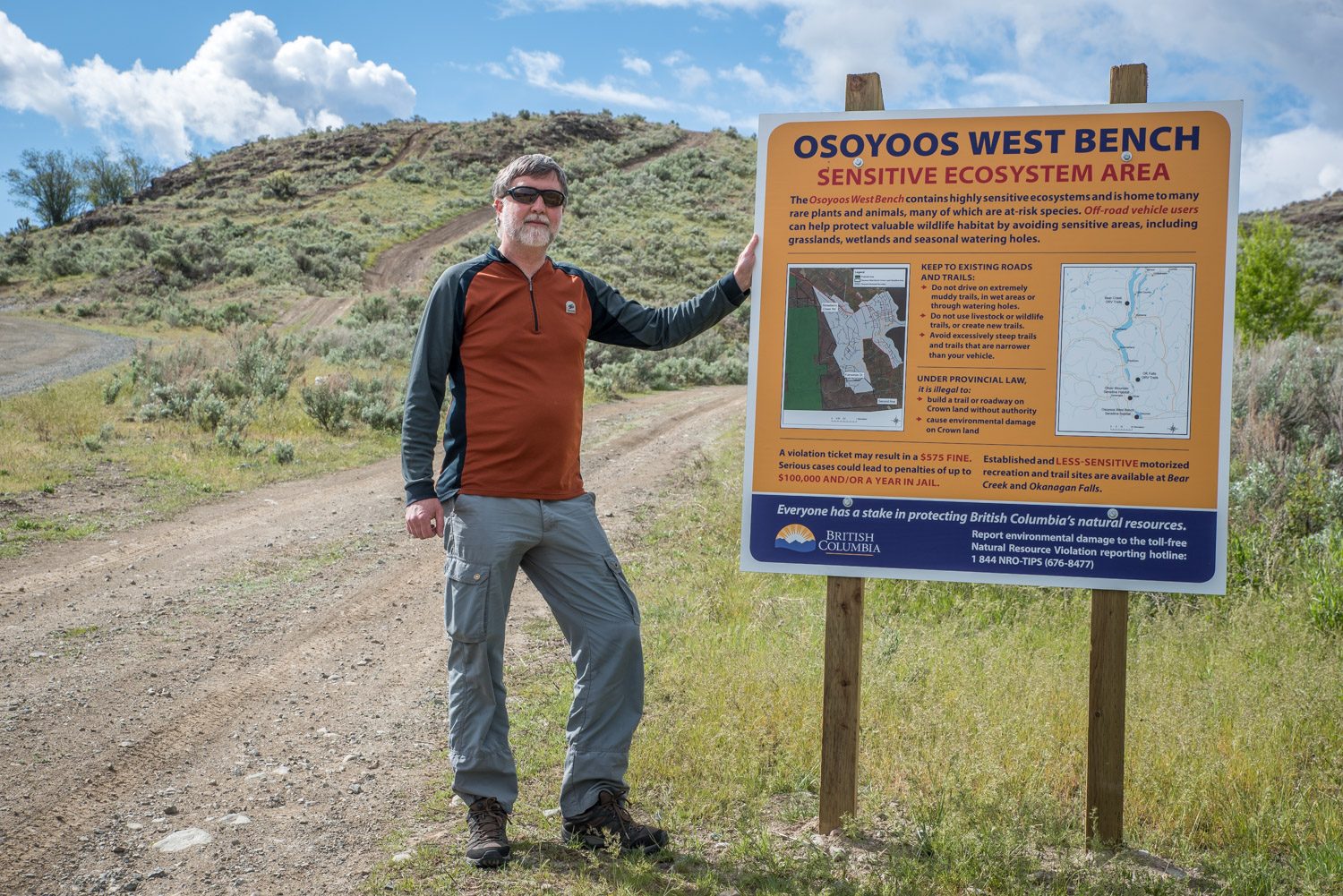
Orville Dyer, a biologist with the Ministry of Forests, Lands and Natural Resource Operations, shows a sign recently installed at the entrance to the Osoyoos West Bench. The sign warns of the sensitive ecosystem and asks users of off-road vehicles to avoid sensitive areas. The ministry hopes to educate ATV users about this habitat. (Richard McGuire photo)
At the top of the Dividend Ridge subdivision, above the Osoyoos Golf Club, a gateway opens to a hilly area covered in grass, sagebrush and antelope brush.
Depending on whom you talk to, this area, known as the Osoyoos West Bench, is either an off-road vehicle paradise or the endangered habitat for a number of rare plant and animal species, many found only in the South Okanagan.
The area is mostly on provincial Crown land and the Ministry of Forests, Lands and Natural Resource Operations (FLNRO) is increasingly concerned about damage caused by all-terrain vehicles (ATVs) and other off-road vehicles.
Recently FLNRO biologist Orville Dyer took the Osoyoos Times on a tour of the Osoyoos West Bench to show some of the environmental destruction that is causing the most concern.
FLNRO held a public meeting in March in Osoyoos to flag concerns and seek input into solutions.
The meeting, mostly attended by off-road vehicle enthusiasts, was testy, with many fearing the provincial government planned to close off the areas where they like to ride.
Dyer insists the ministry would rather educate off-roaders about the sensitive environment, hoping if they understand the problems, they will choose to behave responsibly.
Written feedback gathered after the March meeting is still being compiled, he said, and will be taken into account as the ministry plans next steps.
“I want to make it clear we’re not talking about stopping off-road vehicles everywhere,” said Dyer.
Since the March meeting, FLNRO has installed a new sign at the entrance to the West Bench, warning that the area is environmentally sensitive.
It tells people to stay on existing roads and trails and warns that creating new trails or causing environmental damage is an offence.
Beyond the sign, the roads and trails branch out in every direction, criss-crossing over the hillsides. Some tracks are well established. Others look like the work of just a few ATVers who have found a new and challenging route up a steep hill.
Still other trails were once cow paths, but vehicles have followed them, making them wider.
“It wasn’t that huge an issue five years ago,” said Dyer, adding that use of the area has proliferated in recent years.
The scale of the damage becomes even clearer when the area is viewed as satellite imagery on Google Maps. Lines of varying thicknesses intersect and carve up the terrain in a complex web.
“You can see how the trails are expanding through these habitats,” said Dyer, indicating an area of particularly heavy activity where the native plants have largely been wiped out. “It’s being driven to the point where the shrubs and the grasses are no longer there and there’s just bare soil left.”
This raises several concerns for biologists.
Firstly, it removes the habitat that a number of rare plants and animals depend on. Secondly, it allows invasive plants to become established instead.
Some of these, like the noxious weed cheatgrass, alter the fire ecology of the area, re-establishing faster than native species after a burn and choking out other plants. Puncturevine is another invasive plant, often spread by vehicle tires.
The Osoyoos West Bench is largely made up of two “red-listed ecosystems” that are rare in B.C. and are under a high threat.
Endangered species and ecosystems in B.C. are classified as red list or blue list, depending on how seriously they are threatened. Those on the red list are extirpated, endangered or threatened – this is the most serious provincial designation.
Blue-listed species are of special concern and are vulnerable and at risk, but they aren’t considered extirpated, endangered or threatened.
These two West Bench ecosystems are known as the “antelope brush needle and thread grass ecosystem” and the “bluebunch wheatgrass and sagebrush ecosystem.”
“They are named after the key shrub species that you see most often in them,” Dyer explained.
Antelope brush itself isn’t threatened, but a number of other plants and animals that co-habit with it in that ecosystem are, he said.
Within Canada, these ecosystems are rare and the South Okanagan is one of the few places they exist. But over the years, agriculture has eliminated about 70 per cent of the antelope brush needle and thread grass ecosystem. There are protected patches here and there, but with human activity, they are rapidly disappearing.
“There’s not much left,” said Dyer. “What’s left supports a whole gamut of rare species, either red or blue listed from the province, or a whole bunch of federally listed ones that require protection under the Species at Risk Act.”
The Species at Risk Act (SARA) was passed into federal law late in 2002 and aims to protect the most seriously threatened species of animals and plants.
Because B.C. signed an accord with the federal government under SARA, it is legally required to show that it is protecting these federally listed species.
The Behr’s Hairstreak butterfly is one such federally listed species living in the antelope brush. Its range is very small, so destruction of its habitat is especially serious.
Dyer points to a depression in the ground with some bushes and dried mud.
In July, a rare red-listed plant called annual paintbrush starts to bloom. This plant, which is a candidate for the federal list, is only found in B.C. at six locations, all in the South Okanagan.
In the depression, however, are telltale vehicle tracks.
When the ground is wet, off-roaders tear through it and engage in mud bogging, Dyer said. Mud bogging is a sport where off-roaders drive through wetlands to tear up the ground.
Even though the mud boggers may not go through when the annual paintbrush is in bloom, they churn up the ground at other times of year and destroy the plants.
“Running over this habitat over and over again isn’t going to be helpful for it,” he said.
Dyer, who has worked as a biologist his entire career, rhymes off names of one animal and plant species after another that is under threat and is only found in Canada in small areas of the South Okanagan such as the Osoyoos West Bench.
These include:
- The Grand Coulee owl-clover, a federally listed and globally vulnerable plant;
- The Great Basin spadefoot, a small, toad-like amphibian;
- The tiger salamander, a red-listed species adapted to the desert environment;
- The western rattlesnake, a federally listed threatened species;
- The sage thrasher, one of the rarest birds in Canada, whose nesting is disrupted by the noise of loud vehicle engines;
- The lark sparrow, a red-listed bird that survives in only a few remaining areas of antelope brush;
- The Nuttall’s cottontail, a rabbit, which in B.C. is limited to the Okanagan and Similkameen valleys;
- The pallid bat, one of the most rare mammals in B.C., found only in part of the valley south of Okanagan Falls.
Dyer said he hopes off-roaders will stay on existing roads in the area and not create new paths. He also hopes the new signage will educate riders.
They should also stay off sensitive areas whether it’s grassland shrub steppe, wetlands or riparian areas.
“We want to protect those two red-listed ecosystems that are rare and already heavily impacted,” he said. “And we want to protect the species that are rare – particularly the federally listed species, but the provincially rare ones as well – that depend on those ecosystems.”
RICHARD McGUIRE
Osoyoos Times
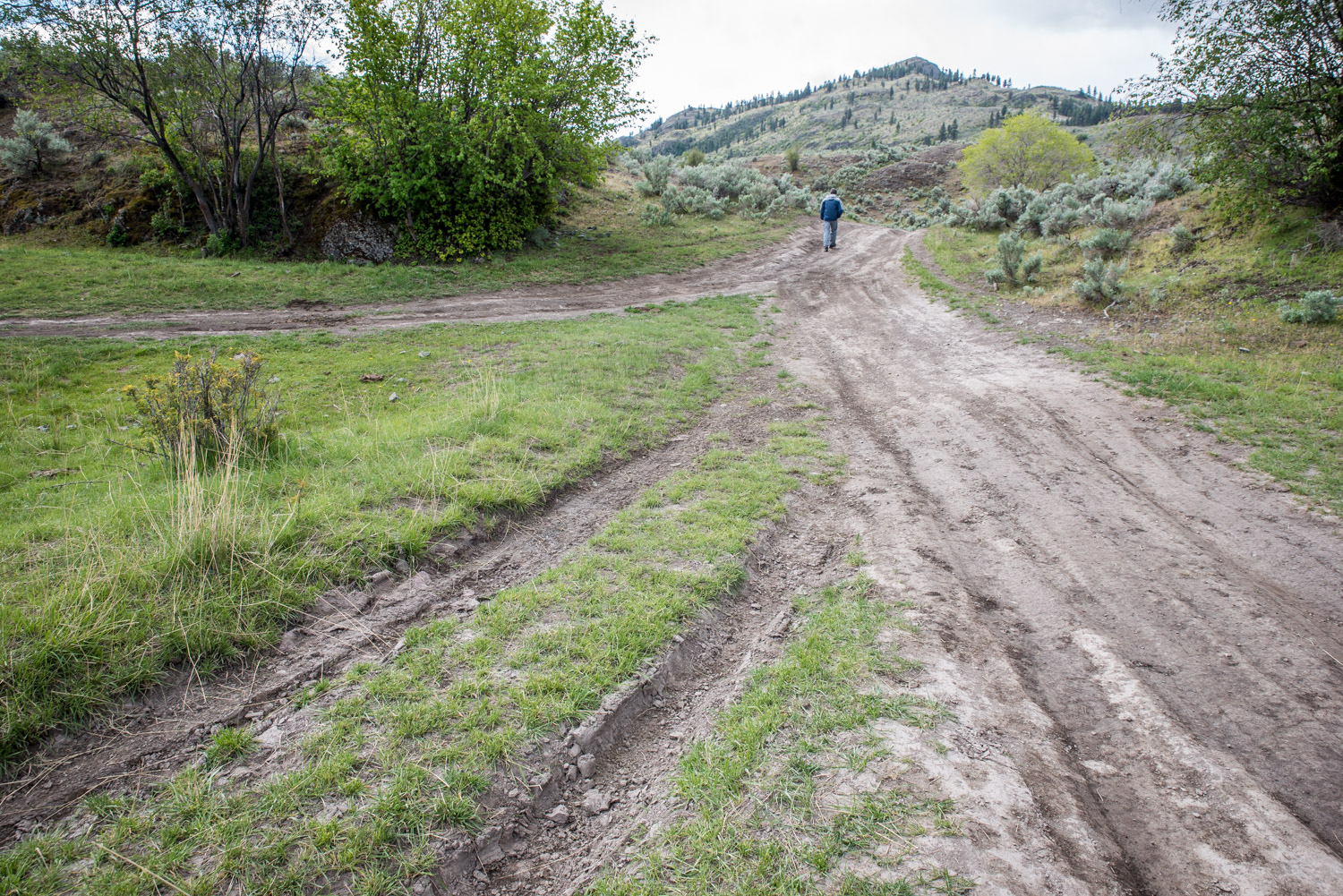
Users of off-road vehicles have created numerous roads running beside each other across sensitive environment. The Ministry of Forests, Lands and Natural Resource Operations urges ATVers to stay on the main road and not to create new roads. (Richard McGuire photo)
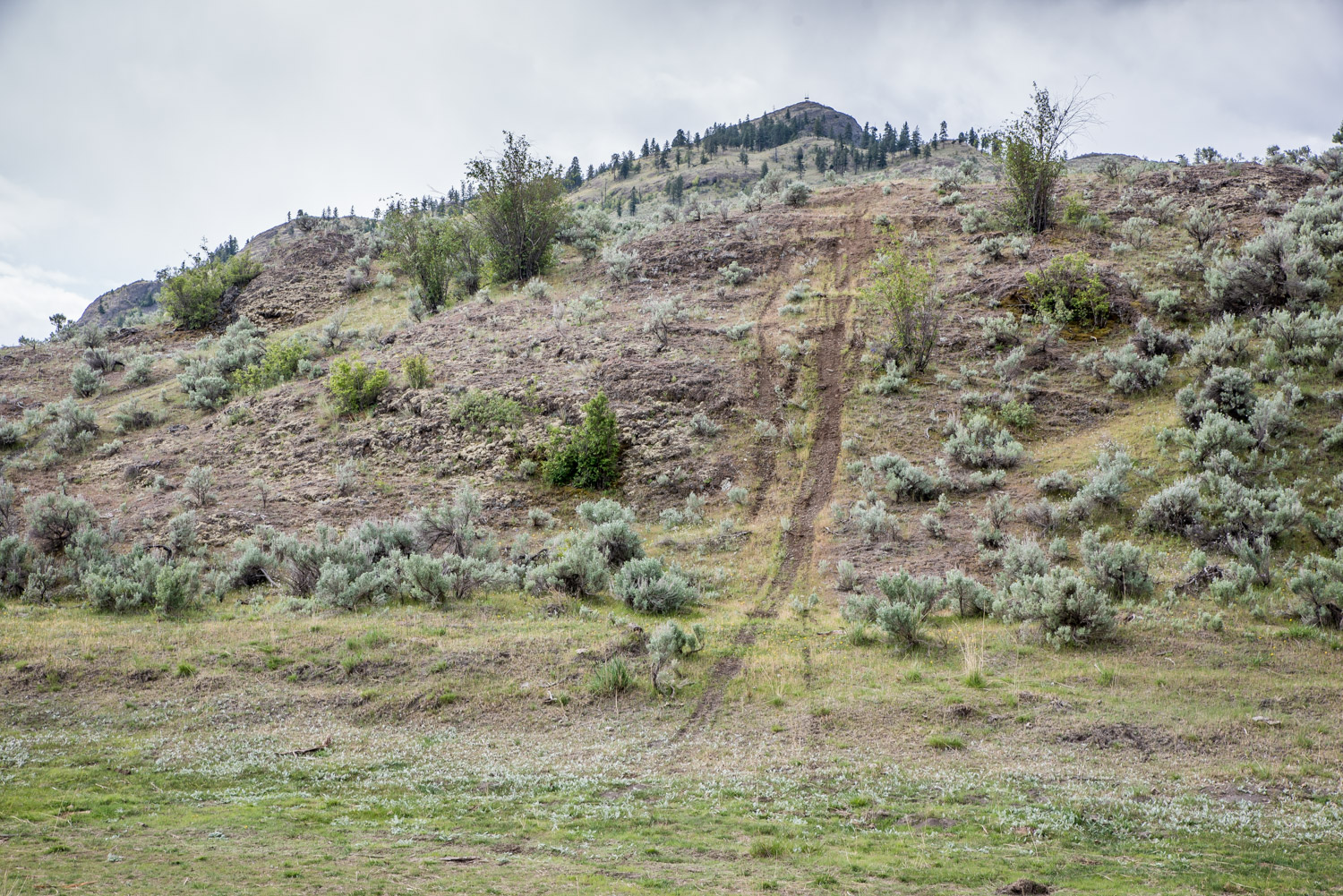
Motocross bike users have carved a new trail onto an embankment. Causing environmental damage by creating new trails is illegal. (Richard McGuire photo)
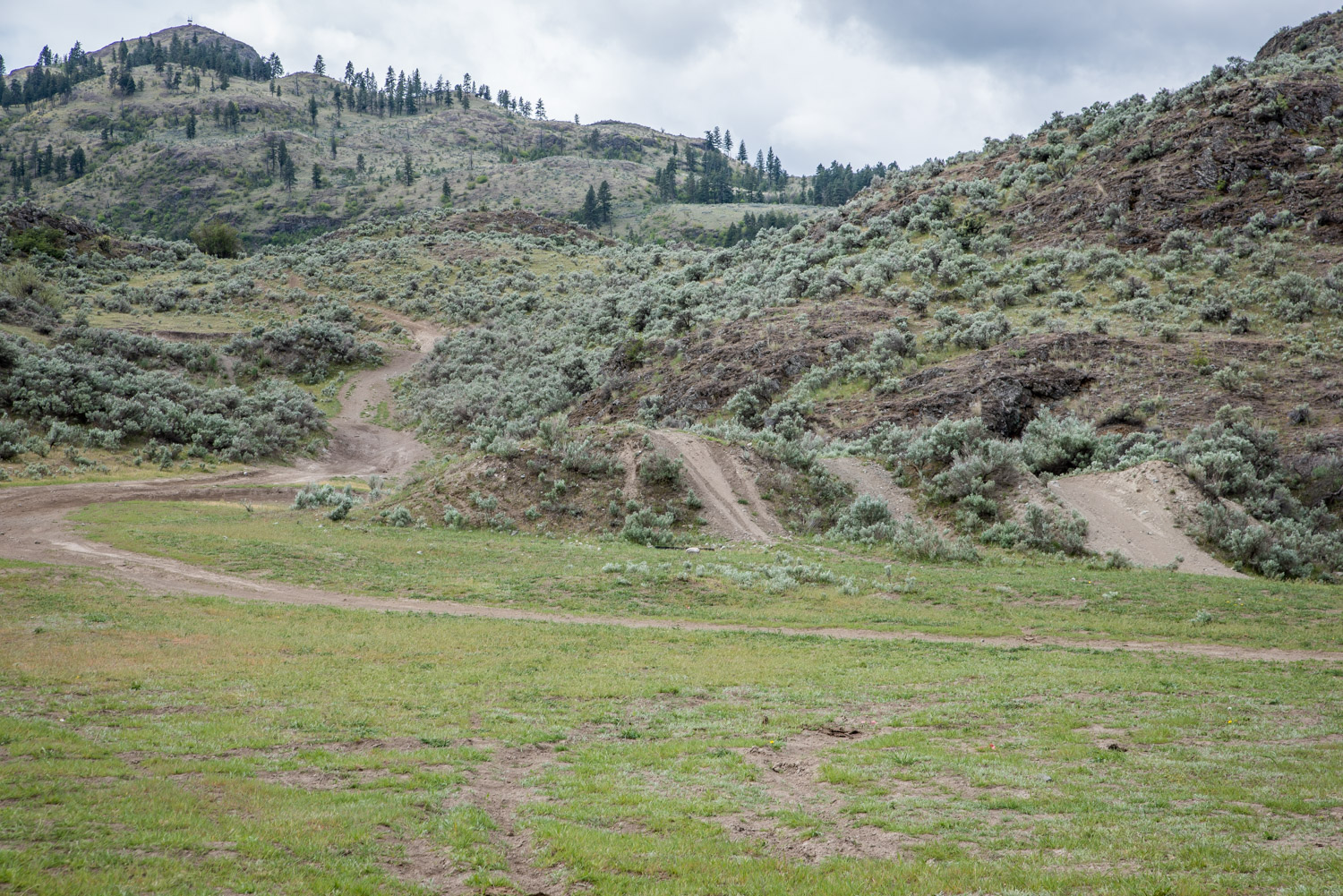
Users of off-road vehicles have created numerous roads running beside each other across sensitive environment. The Ministry of Forests, Lands and Natural Resource Operations urges ATVers to stay on the main road and not to create new roads. (Richard McGuire photo)
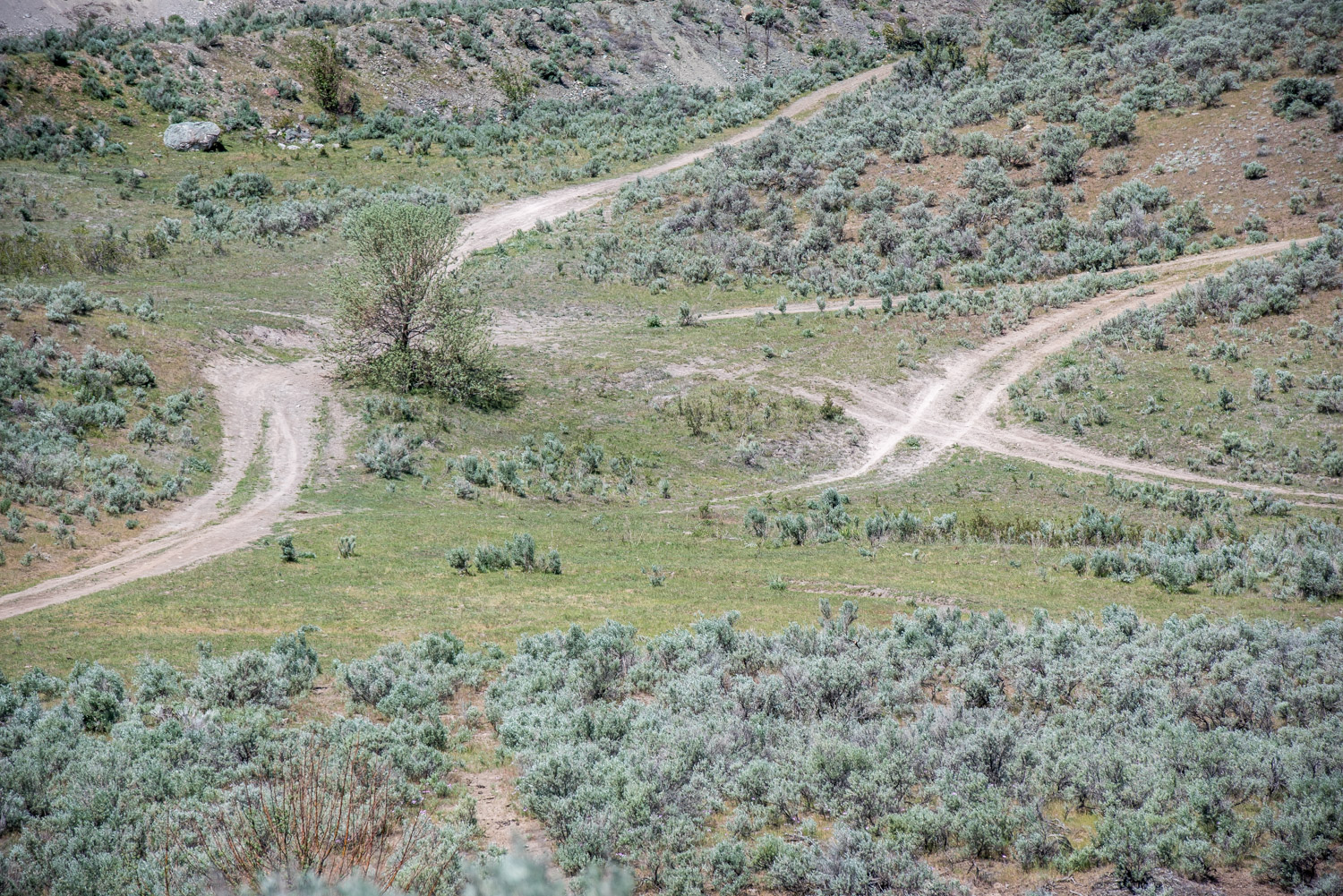
Roads and trails criss-cross on the Osoyoos West Bench where off-road vehicles have carved out trails on environmentally sensitive habitat. (Richard McGuire photo)