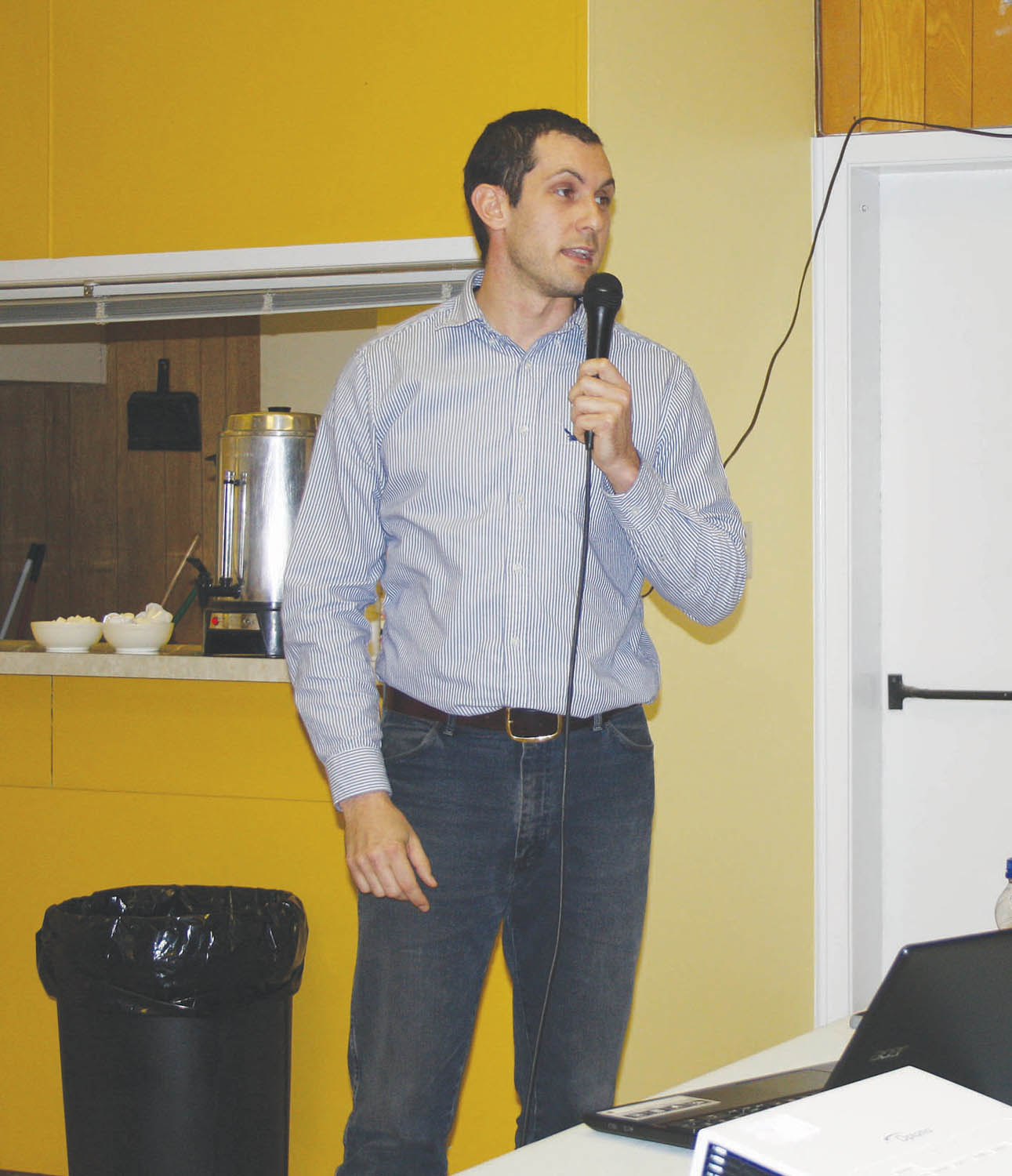
Jesse Zeman, the resident priority program manager with the BC Wildlife Federation, told members of Town of Osoyoos council last week why his organization is opposed to the proposed national park reserve for the South Okanagan-Similkameen region. (File photo)
The best way to ensure the conservation of biodiversity in the South Okanagan would be a provincial park built after full consultation with all stakeholders and conservation partners and not through a national park reserve, says a senior representative with the BC Wildlife Federation.
Jesse Zeman, the resident priority program manager for the BC Wildlife Federation, made a presentation to Town of Osoyoos council last week entitled, “Conserving Biodiversity in the South Okanagan.”
Mayor Sue McKortoff told Zeman she appreciated his presentation, but council has made it very clear it strongly supports a national park reserve for this region and will continue to do so.
Parks Canada has an exceptionally poor record of ensuring biodiversity remains a top priority within its national park system and doesn’t have stable funding to ensure any promises it might make to improve its record in this area can be attained or sustained, said Zeman.
“Parks Canada doesn’t have the pillar of consistent funding needed to ensure the long-term viability” of a national park reserve in the South Okanagan-Similkameen, said Zeman.
The BC Wildlife Federation currently has more than 45,000 members and that number is expected to exceed 50,000 in 2016, which makes it the largest and oldest volunteer run charitable conservation program in British Columbia, he said.
“It’s our membership of hunters, anglers and conservationists whose aims are to protect, enhance and promote the wise use of the environment for present and future generations,” he said.
The current membership is made up of over 100 clubs across the province, including the Osoyoos Wildlife Federation.
The federation’s top strategic objective is to ensure the sound, long-term management of British Columbia’s fish, wildlife and outdoor recreational services in the best interests of all B.C. residents and to co-ordinate all interested in that objective, he said.
A big part of their mission statement is to develop a comprehensive educational program to make all B.C. residents aware of the value of fish, wildlife, park and outdoor recreational resources and to arouse in the public conscience a recognition of, and respect for, the place of fish, wildlife and outdoor recreation in the wise integrated use of the nation’s natural resources, said Zeman.
The guiding principles that have been voiced by the provincial government when it comes to the possibility of establishing a national park reserve in this region, include extra protection of species would be beneficial, management would be shared with First Nations, existing users would be recognized, respect for private land holders and active promotion of tourism, said Zeman.
The problem is the focus should be on promoting biodiversity and maintaining ecological integrity, he said.
Any national park must be a public resource managed for public understanding, appreciation and enjoyment, while being maintained in an unimpaired state for future generations, he said.
Parks Canada has been responsible for poor ecosystem management decisions that resulted in legislative, funding and science-based changes dating back more than 20 years, he said.
Parks Canada has shifted away from science-based ecosystem management to commercialization and privatization and has continually “flip flopped on policy and agency-based interests,” he said.
Zeman cited several instances where Parks Canada has commercialized and privatized many of its assets over the past several years. They include the proposed expansion of the Lake Louise ski hill facility into wilderness areas within an established caribou range, expanding the Mount Norquay ski hill summer operations into grizzly bear habitat and turning the Glacier Skywalk facility into a pay as you go tourism attraction.
Several renowned ecologists have spoken out against Parks Canada policy in recent years, he said.
The BC Wildlife Federation has numerous partners in the South Okanagan, including the Habitat Conservation Trust Foundation, Nature Trust of BC, South Okanagan-Similkameen Conservation Program, Ducks Unlimited and The Nature Conservancy of Canada, he said.
“Not one of these partners have been consulted by Parks Canada,” he said. “Private landowners were not consulted. Parks Canada was not aware of the new direction the province is taking.”
Establishing a provincial park in this region would include a policy that all existing users are recognized, including hunting and angling groups that are not First Nations, horseback riding, wood cutting, hand gliding and motorized recreation, he said.
Resident hunters in B.C. have increase from 84,000 to over 100,000 in the past decade and the fastest growing segments are women and children, he said.
The average resident hunter spends $2,900 annually and over 14,000 B.C. residensts hunt in the Okanagan region, he said.
Resident hunters are likely to be the biggest users of the proposed national park reserve area and the ones most affected and the divisive policy approach that has been used by Parks Canada has fragmented those who live in this province, he said.
McKortoff repeated to Zeman that council has been very consistent in its decision to support the establishment of a national park in the South Okanagan-Similkameen, believing it would stimulate massive tourism opportunities, while protecting endangered species.
But she thanked Zeman for his presentation. It’s now up to the province to gather and assess information presented from the public as part of its “intentions paper” to look at all of the options relating to a possible national park for this region, said McKortoff.
Zeman assured council the concerns of the BC Wildlife Federation have been presented to the province.
KEITH LACEY
Osoyoos Times