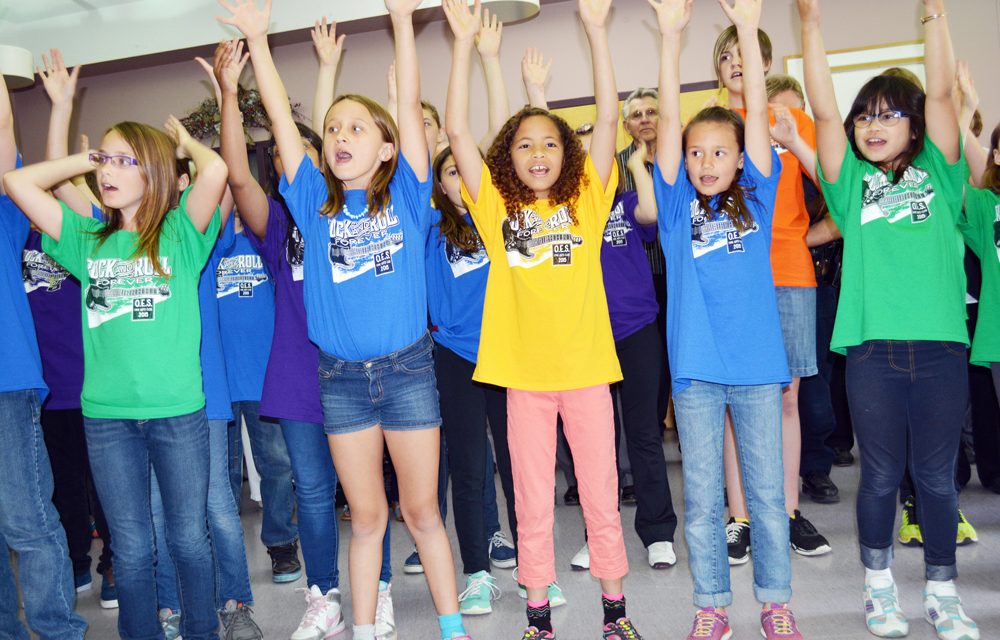

Back to school jitters are common this time of year, but much of this anxiety can be managed with simple breathing techniques, realistic thinking and positive self talk. File photo
After students suspend their academic responsibilities for two months to enjoy the summer, the thought of spending the next 10 months in a classroom can be stressful to anticipate.
“They begin to think a lot about it; begin to get worried, and that can lead to physiological problems,” said counsellor Joyce Steeves, who has a private practice in Osoyoos. “Kids will feel like they have headaches or stomach aches; they’ll try and avoid going to school because of their anxiety.”
If students do begin to miss school because of their anxiety, the problems are likely to compound.
“The longer they stay away the more difficult it becomes to go,” said Steeves, who taught for 18 years.
She said the feeling of anxiety is a natural response to danger that’s meant to keep us safe, but at times it can be difficult to interpret. In the right environment, anxiety can be motivating, whereas other times the feeling causes people to feel overwhelmed and debilitated.
“For example, many people feel anxious when in high places or near deep water. Anxiety also helps students perform their best on a test or a class presentation. It is important to remind your child that anxious feelings do not last.”
But no matter how it’s being dealt with, anxiety is a natural feeling that everybody experiences.
“Sometimes it can be like a smoke alarm that goes off because you burned toast,” she said. “There isn’t really a danger, but your body will sometimes overreact as if there is more danger.”
Steeves said one of the most effective ways of dealing with anxiety is to learn simple breathing techniques.
“Show your child how to calm down by slowing down his breathing. Ask him to put his hands on his belly and breathe very slowly through his nose and pretend to fill up a balloon. Then he can let the air out of the balloon through his mouth even more slowly. Have him start off with five calm breaths. Then each day he can add a breath until he is able to do 20 calm breaths comfortably.”
When negative thoughts cross a student’s mind, it’s important that they analyze them properly, and not get bogged down by irrational anticipations.
“She may be thinking, “What if I don’t have any friends in my class this year?” Or “What if I don’t understand the math?”
As a tonic, Steeves encourages parents to re-enforce realistic thinking upon their kids.
“Encourage your child to use realistic thinking. For example, ‘I made new friends last year. I can make new friends again this year.’ Or, ‘I figured out the math last year. I will figure it out again this year.’”
A simple therapy developed by Steeves is a positive self-talk chart. It’s best that each chart is personalized for the student using it, though she came up with a well-rounded template:
I can use positive self-talk to take care of myself and change my thinking. I can think:
1. Anxiety is normal. Everyone has anxiety.
2. My anxiety won’t last. I will get over this.
3. I can slow down my breathing with calm breathing.
4. I made new friends last year. I can make new friends again this year.
5. I can ask someone I like to play at recess or lunch.
6. I figured out the math last year. I will figure it out again this year.
7. If I don’t understand something, I can ask my teacher for help when she is not teaching a lesson, at recess, at lunch or after school.
For further information, Steeves recommends visiting anxietybc.com, and said the books, Worry Dragons and Worry Taming for Teens are worth a read. But if these coping techniques fail to quell a child’s anxiety, she said it may be best to seek help from a mental health professional.
Steeves has a Master’s degree in counselling psychology and has worked as a counsellor for 10 years. She recently opened a private counselling practice (for adults, adolescents and children) in Osoyoos, and can be contacted through her website, joycesteeves.com.
By Dan Walton