By Lyonel Doherty, Times Chronicle
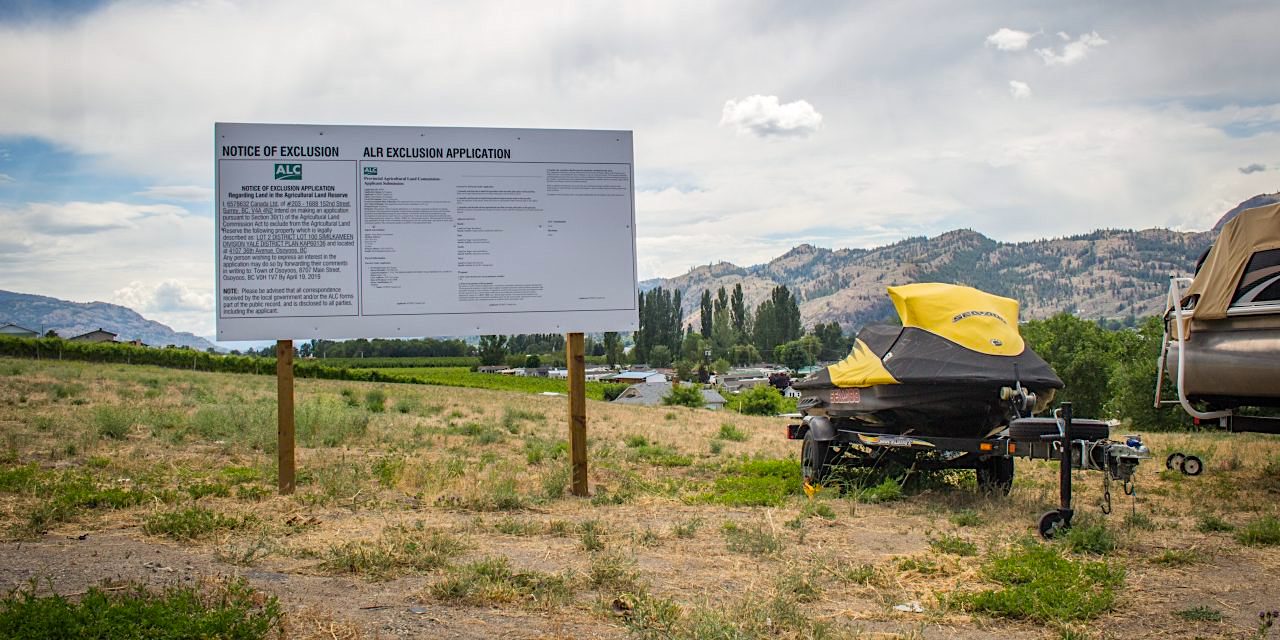
Agricultural Land Reserve (ALR) challenges, inconsistencies, changes, and enforcement were the highlights of a presentation to the regional district last week.
Kim Grout, chief executive officer of the Agricultural Land Commission (ALC), answered questions from directors about the ALR and its effect on development.
Grout began by saying that five per cent of this region is in the ALR. In the Okanagan, the total area in the ALR is
224,702 hectares, she added.
She said there is nothing in the ALR act that impairs the validity of local government bylaws unless there is a conflict with the ALC’s mandate to preserve farmland.
But Grout acknowledged the confusion some people have when comparing local zoning laws with ALR rules. “People believe they are conducting what is permitted in local zoning but discovering that it’s not permitted in ALC legislation.”
Grout outlined a couple of changes in this legislation, including “residential flexibility” when it comes to establishing small secondary residential units (for farm help) in the ALR. The legislation permits one additional residence if, at the time of construction, there is only one residence on the parcel.
She stated that local government has the authority to further regulate and restrict these units. “If a local government bylaw does not permit, then the use is not permitted.”
Grout also spoke about soil and fill regulations in the ALR, noting the top enforcement complaint is illegal soil and fill (which represents more than 40 per cent of complaints). The legislation allows 1,000 square metres of fill for a principal residence.
Grout pointed out the top land use planning challenges within the ALR include: unauthorized land use, additional dwellings, agri-tourism, subdivisions, and unauthorized fill. Much of these same issues also fall under the top bylaw enforcement challenges.
Grout said the ALC only had two officers enforcing the rules between 2007 and 2016. It has six officers now. She noted that another officer will be working out of Oliver starting in mid-June.
Grout stated that enforcement work is based on complaints only, adding that anyone can initiate a complaint through their website. She reported that 46 per cent of complaints last year came from other governments, while 54 per cent came from the general public.
Grout made it clear that the ALC is a tribunal, which makes it quite different than local government. She said they don’t have ticketing power or fining provisions, and no mechanism to recover penalties. However, they can issue notices, stop-work orders, and compliance/remediation orders.
And all actions of the commission can be appealed, Grout said. “I often hear frustration about the timing of enforcement, it’s a fairly long process,” she said.
She pointed out there are 600 active case files in B.C., adding they close between 250 and 300 per year. She said some of their most successful compliance and enforcement actions come through collaboration with local government. “Often it takes both of us working together.”
Area C director Rick Knodel said the function of the ALR is vitally important to the farming industry.
But Area G director Tim Roberts raised a concern about apparent inconsistencies in ALR approvals. For example, an application for a farming production plant is turned down in one area but permitted in another. “There seems to be a disconnect . . . no consistency.”
Grout acknowledged this, saying that some wine tasting establishments look like restaurants, while other agricultural developments look like industrial operations. “We only know what we know from complaints,” she said, adding the ALC would be pleased to collaborate with local governments on these issues.
Area B (Cawston) director George Bush raised a concern about the proposed national park and what impact that will have on the ALR. He said there is probably 4,046 hectares of ALR land in the park boundaries, adding at least 404 hectares is prime agricultural land in Cawston.
“Over the next 100 to 200 years there’s a possibility of losing a lot of agricultural land there,” Bush said.
Grout said the challenge comes with the fact that parks are an outright permitted use if they are designated by the government. Knodel said he fielded at least one concern about non-food products like cannabis being grown on agricultural land.
Area D director Ron Obirek said he sees a lot of conflict and confusion between local zoning and the ALR. “Why don’t we (RDOS) make our legislation clear that the ALC rule is what we support?” Grout agreed that the bylaws should be consistent.