By George Lee, Local Journalism Initiative Reporter
Invasive mussels hitching a ride on watercraft received a less-than-warm welcome from strong and free Alberta over the summer.
In 2025, the province became the first in Canada to make inspections mandatory of boats, jet skis, canoes and other watercraft arriving from high-risk areas.
Enforcement teams inspected more than 21,900 watercraft, setting a new provincial record in a program aimed at protecting waterways from destructive zebra and quagga freshwater mussels, the legislature heard last week.
Over 4,700 proof-of-inspection stickers were handed out, along with 14 fines for failing to stop at an open inspection station and three fines for failing to remove drain plugs.
Enforcement officers prevented 13 contaminated boats from entering Alberta’s waterways, where colonization would have a high likelihood of destroying shorelines, choking out native plants and animals, blocking sunlight from reaching native flora, and clogging irrigation and drainage infrastructure like valves, pipes and culverts.
Last year, government staff inspected 13,408 watercraft — the most since 2019 — and 15 watercraft were confirmed positive for invasive mussels and prevented from spreading them.
Livingstone-Macleod MLA Chelsae Petrovic said that Albertans “have shown commitment to protecting our lakes and rivers, with enforcement and education being a cornerstone of that success.”
Grant Hunter, Alberta’s associate minister of water in the UCP government, said that “the success of this program depends on all of us doing our part.”
He continued: “When our government stepped up to protect our water bodies and water infrastructure from invasive species, so did Albertans. We thank them for the work they’ve done.”
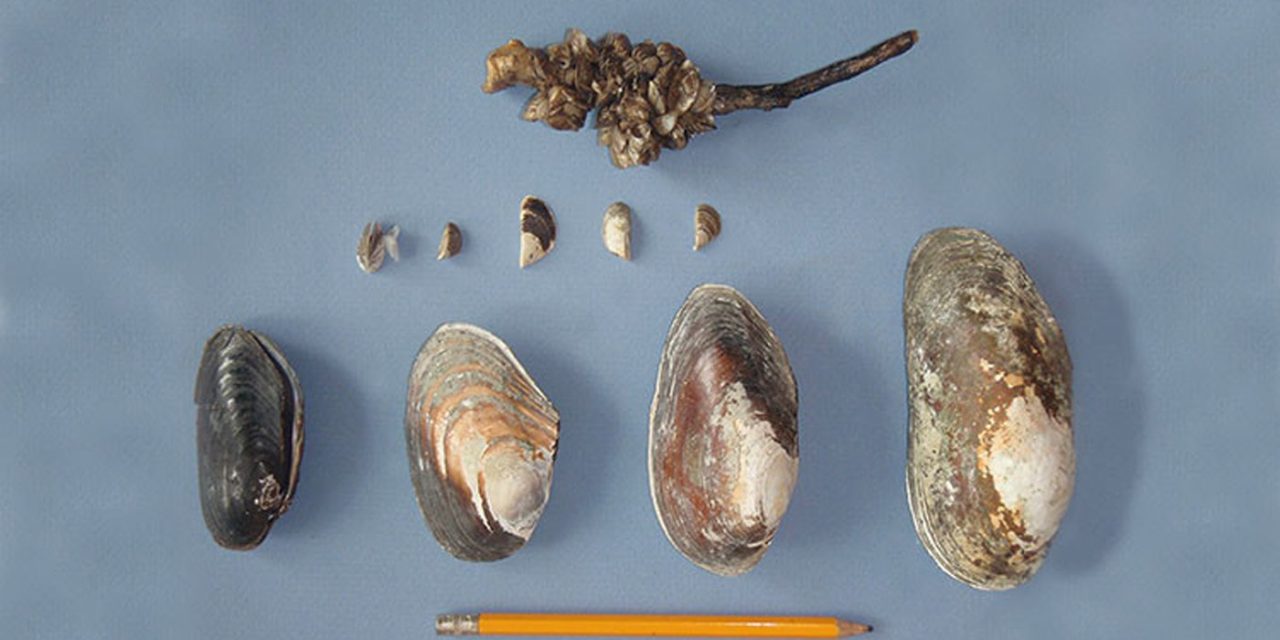
Sometimes two inches long as adults, the mussels are often half that size or smaller, travel well on transported watercraft and breed quickly. Larvae are invisible to the naked eye and, like the adults, can sometimes survive for weeks in undrained, unclean and undried boats.
Hunter, the member for Taber-Warner, said the province is putting $18 million over five years towards keeping the mussels out and employing cutting-edge technology like environmental DNA testing.
Boaters and other watercraft enthusiasts in Alberta could even end up opening their wallets for annual passes to help stop the invasive mussels from getting a shell-hold here.
The province collected Albertans’ thoughts on the idea in a survey earlier this year. Results remained unpublished at press time.
Native to Eurasia, zebra and quagga mussels started arriving in North America in their larval stage in the 1980s via the discharge of ships’ ballast water. Now established in Ontario, Quebec and Manitoba, untold billions exist and breed on this side of the Atlantic.
The survival rate of larvae is low, but a single female lays up to a million eggs for each of her three to five years of life.
B.C. and Saskatchewan, like Alberta, have prevented the mussels from establishing themselves. But quagga larvae and some adults have been discovered over the last few years in Idaho, and dozens of other U.S. states have sustaining populations of one or both species.
Governments in the Great Lakes region of Canada spend about $500 million a year to keep intakes and valves clear of mussels, various reports say.
This article first appeared in The Macleod Gazette