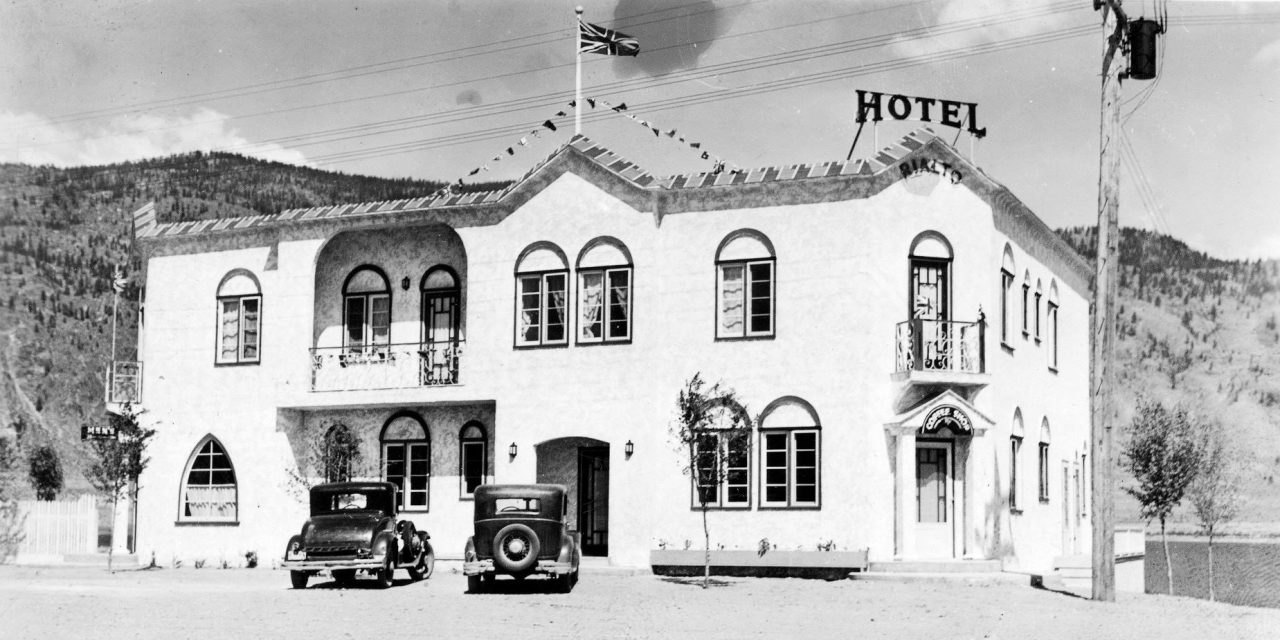
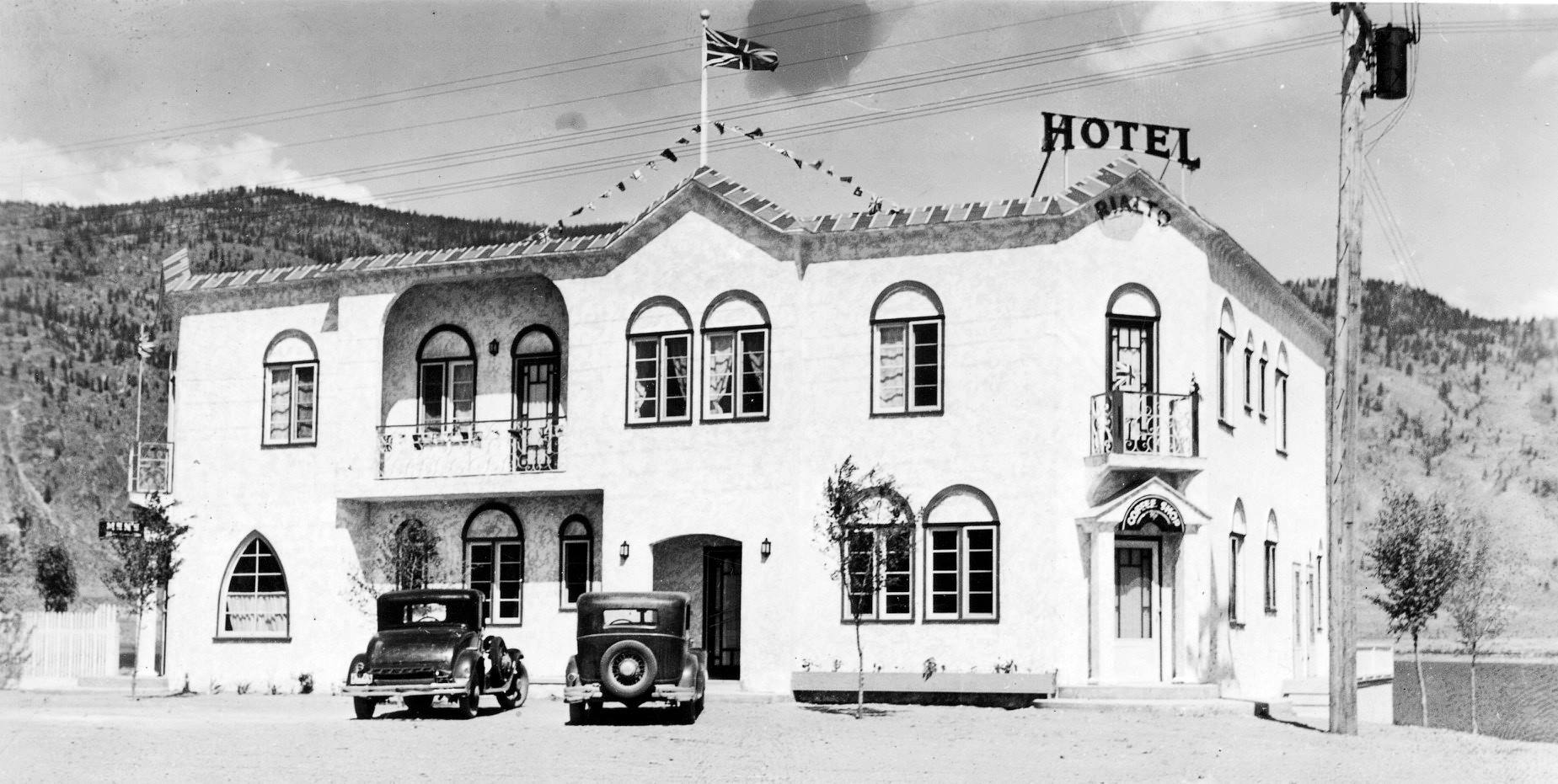
The Rialto Hotel.
Dale Boyd
Osoyoos Times
Author Glen Mofford is exploring history in the Southern Interior a unique way, through the lens of the people and stories that pass through the area’s historic hotels.
The Rialto Hotel in Osoyoos, which was established in 1939 and burned down in 1995, caught his eye as he was conducting research on over 200 hotels in the area seeking stories of the people whose lives intersected with the historic landmarks.
After getting his degree in history from Simon Fraser University, Mofford aimed to apply those skills with his first book which looked at the history of hotel bars and saloons in his hometown of Victoria entitled “Aqua Vitae: A History of the Saloons and Hotel Bars of Victoria, 1851-1917.”
“I figured the beer and the history make a good partnership. So that’s where the social history came in. I started studying about history of hotels, and particular social history,” Mofford said.
After the end of prohibition, hotels had the monopoly on beer parlours, Mofford said, but the focus of his work expanded as he discovered the interesting stories that passed through the parlours.
“So it was initially going to be about drinking establishments. But then the more I researched about hotels and especially historic hotels going back to the 1890s, long before the beer parlour was even thought of, I came up with some great non-fiction stories,” Mofford said.
His expanded scope has led to his current research on the people who stayed at hotels, proprietors and more. This opened the door to a treasure trove of stories for Mofford.
Particularly, the Rialto, which in its own way tells the story of Osoyoos.
“I found it very interesting because they didn’t really have a hotel in Osoyoos until the Rialto came along. I’m not saying they didn’t have motels, but they didn’t have a hotel,” Mofford said.
“The Rialto building itself over different owners expanded. It was a small, cute kind of Spanish missionary type look initially and then it got larger because it was very popular. And also the town was growing so really the hotel reflected the strength of Osoyoos itself as Osoyoos became more popular.”
Mofford was interested in stories passing through the Rialto like that of John Vargovcsik, the then-Village of Osoyoos’ first and only barber for some time. Vargovcsik operated out of a rented room at the Rialto before building his own barber shop.
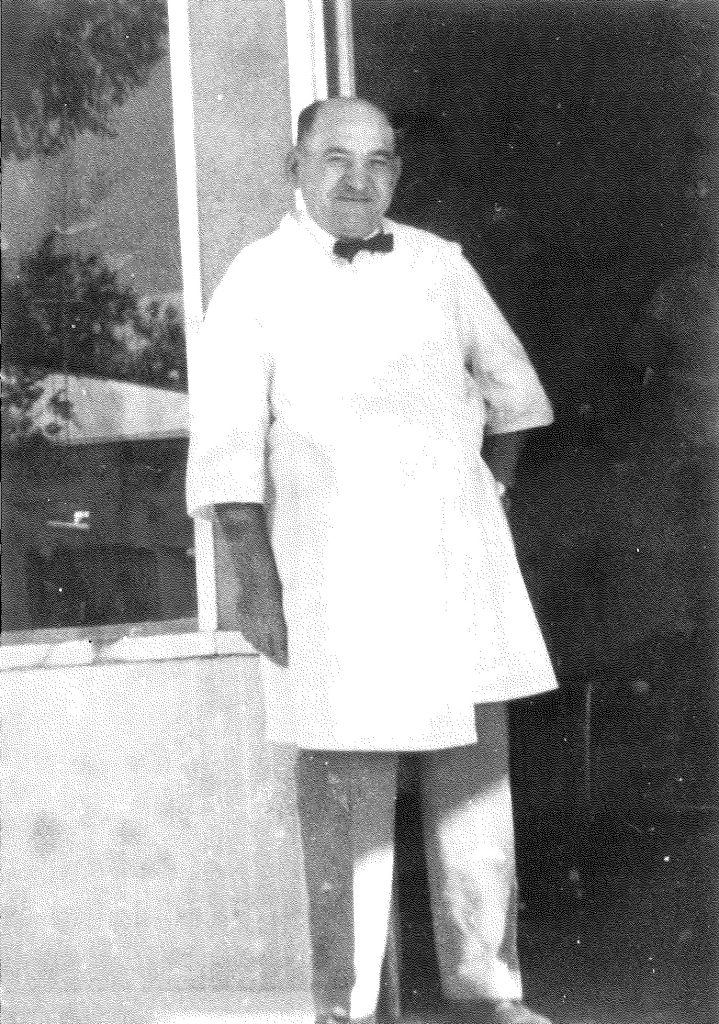
John Vargovcsilk
“It’s really a record of what happened at these places, where they were, how long they were there, how they were modified and how time changes things,” Mofford said. “That’s really what I’m
after.”
The Okanagan, the West Kootenays and Boundary areas are “a different animal than on the coast,” where his first book was centred, Mofford said.
A former Iron Man Canada participant, Mofford is no stranger to the Okanagan, and plans to return to Osoyoos soon to see some of the areas he is writing about again with his own eyes.
“I learned a lot about the area through (participating in the Iron Man). I’ve always been a historian but two and two never came together until much later. I’m in my 60s now, so I don’t do triathlons anymore, but I do do a lot of research and I’m very enthused about the topic.”
He is also active in Facebook groups, often talking to those who have lived in the area for a long time to flesh out stories and find topics or points in history to explore.
“People from that area, who have lived there, sometimes all their lives in some cases, know what the hell they are talking about,” Mofford said. “So I do test out some of the things I’ve read and some of the things I put together, and it’s very important to get this stuff accurate, because (otherwise) what’s the point.”
Mofford is always open to receiving more information, and anyone who feels they have a story to tell can email him at [email protected].
“The more information the better. It doesn’t necessarily mean it’s going to be used. It goes into a file and I have it all set up date-wise, and I generally get a kick out of it. Then I have to figure out what I should use to actually write about,” Mofford said. “Whatever people have to say is another little piece of the puzzle giving us a great idea of what the place was like back then.”