Being diagnosed with dementia is not a “death sentence” and the vast majority of those affected can enjoy an outstanding quality of life as long as they have support systems in place.
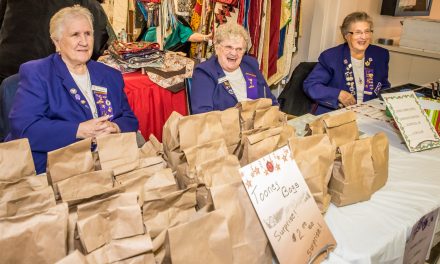
That was one of the key messages as the Alzheimer Society of British Columbia sponsored a recent “Dementia Friends” workshop at the Oliver Seniors Centre.
Laurie Myers, the support and education coordinator for the South Okanagan and Similkameen regions, said dealing with her own mother’s battle against dementia inspired her to pursue a career helping others who suffer from the illness and providing caregivers with valuable information to help loved ones who have been diagnosed with dementia.
Myers told an audience of about 40 how the Alzheimer’s Society is “rolling out” a new program to try and make towns and cities across the province “dementia friendly.”
“We can really make a difference and help people in small towns like Oliver,” she said.
In general terms, dementia is a progressive deterioration of brain function and leads to such symptoms as short and long-term memory loss, the inability to remember words and sentences, and growing anger and frustration performing simple tasks, said Myers.
“There is no known cause . . . and no known cure,” she said.
A program called “First Link” is being established across the South Okanagan that will provide those diagnosed with dementia and their loved ones with a list of contacts and support services across the region, said Myers.
“They will be able to contact the various support services as soon as possible after being diagnosed,” she said.
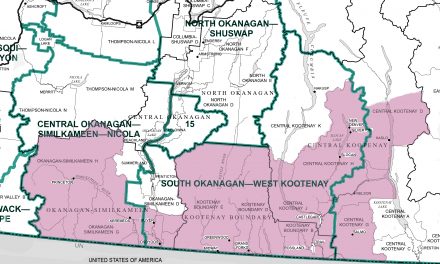
Support services are offered across the entire region, including Bridesville, Cawston, Greenwood, Keremeos, Oliver, Osoyoos, Penticton, Princeton and Summerland, she said.
The Alzheimer Resource Centre is located at 104-35 Backstreet Boulevard in Penticton.
There are currently 70,000 B.C. residents that have officially been diagnosed with one form of dementia and 10,000 are under age 65, said Myers.
“Many people think of dementia and Alzheimer disease as old person’s diseases . . . but that’s not the case,” she said.
It’s estimated that close to 180,000 B.C. residents will be living with the disease within the next 30 years and that’s why it’s crucial the education awareness campaigns be promoted and accessed, she said.
There are different types of dementia, including young onset dementia (beginning before age 65 … about one in every 1,000 Canadians under age 65 develops dementia); vascular dementia, which occurs when the cells of the brain are deprived of oxygen and blockage of the vascular system takes place; Lewy body dementia, which is a form that occurs because of abnormal deposits of a protein called alpha-synuclein inside the brain’s nerve cells called lewy bodies that interrupt brain messages; and frontotemporal dementia, which tends to occur at a younger age than Alzheimer’s disease and can affect men and women. This type of dementia resemebles Alzheimer’s disease in that it also involves a progressive degeneration of brain cells that is irreversible.
Getting a proper diagnosis is critical to getting proper treatment, support and education about the illness, said Myers.
“Alzheimer’s disease and other dementias are not a normal part of aging,” she said.
There are at least 10 warning signs that will help people understand if they should seek out medical assistance.
They include:
– Memory loss that affects day-to-day abilities such as forgetting names or appointments.
– Difficulty performing familiar tasks.
– Problems with language and completing words or sentences.
– Disorientation in time and space.
– Impaired judgment such as wearing heavy clothing on a hot day.
– Problems with abstract thinking such as balancing a chequebook or understanding simple numbers.
– Misplacing things such as a wallet or keys.
– Changes in mood or behaviour.
– Drastic changes in personality.
– Loss of initiative where person who is normally active and engaged in daily life becomes apathetic and passive.
Dementia is not genetic or preventable, but you can enjoy many years of happiness and a productive life after being diagnosed, said Myers.
“You can maintain brain health and most of your abilities,” she said. “It doesn’t mean the end of a meaningful or fun life.
“And dementia affects every single person differently.”
While the effects are different with each individual, caregivers can take certain steps and precautions once a loved one has been diagnosed with dementia, said Myers.
They include speaking in a soft and non-threatening tone, making eye contact, explaining things slowly and removing the loved one from a hectic or busy location when explaining a thought or concept, she said.
“And if they remain agitated and become aggressive or violent, then phone 9-1-1,” she said.
The regional office is holding a fundraising walk at Skaha Park in Penticton on Sunday, May 1.
A support group for those diagnosed with dementia and caregivers takes place every third Thursday afternoon each month in a meeting room at the Oliver Seniors Centre.
By providing the tools, education and information that all community members need, the Alzheimer Society is helping municipalities, professionals and corporations, as well as the public, to develop communities where those suffering from dementia and caregivers can work together to become dementia friendly communities, said Myers.
The First Link dementia hotline can be accessed by calling toll-free at 1-800-936-6033.
Myers can be reached by calling her office in Penticton at 1-250-493-8182 or toll-free at 1-888-318-1122.
By Keith Lacey