A group of more than 80 homeowners from the “East Bench” area just outside Town of Osoyoos legal boundaries would like to officially become Osoyoos residents.
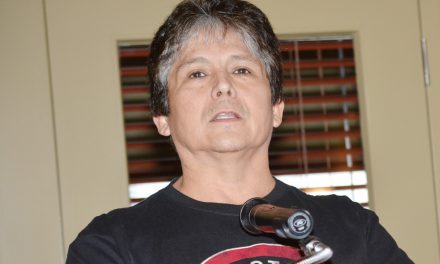
The majority of those homeowners who support a boundary extension to become part of the Town of Osoyoos live in the area between 30th Street and 25th Street on the East Bench – which has long been part of the Regional District of Okanagan-Similkameen (RDOS), said Hart Buckendahl, during a presentation to Town of Osoyoos council on Monday.
Buckendahl has been living in a home on the East Bench since 1955.
Close to 70 of the 84 homeowners on the East Bench that he has approached have signed a petition and are strongly in favour of joining the town if a boundary expansion is allowed by the provincial government, said Buckendahl.
“I think that has been tried before,” he said.
A total of 66 homeowners have signed the petition and another five or six have indicated to him they would sign the petition, but they are out of town on holidays, he said.
“When you have 70 of 84 … you know you are talking about people who are keenly in support,” he said.
Barry Romanko, chief administrative officer for the Town of Osoyoos, said the provincial government must approve any boundary expansion.
“The next step would be to contact the Province and see which way they want to go,” he said. “I can contact the Province and see what the next steps are.”
It would require a referendum with the majority of Osoyoos residents in favour of approving boundary expansion for the East Bench homeowners to join the town, said Romanko.
The majority of the homes built on the East Bench in his neighbourhood were built 30 and 40 years ago and are running out of sewer capacity on their respective property, he said.
Much of the excess sewer runoff, especially during rainy weather, runs down the hill towards Lakeshore Drive and much of it ends up in Osoyoos Lake, he said.
The homeowners he has talked to about wanting to join the town and hook up to the municipal sewer system “want to do our part” to ensure polluting Osoyoos Lake from their sewer systems can be mitigated, he said.
They are also keenly aware it’s going to cost each homeowner significant dollars to hook up to the town’s municipal sewer and water systems, he said.
“We’re not naïve … we know it will cost money,” he said. “We are willing to pay our part.”
The majority of homeowners on the East Bench are regularly under a boil water advisory and this has become tiresome and frustrating, he said.
“It makes sense for us to be part of Osoyoos, not the RDOS,” he said.
The fact not all of the homeowners on the East Bench are in favour of remaining in the RDOS is not surprising, but the fact such a strong majority are in favour is very telling he said.
In the Town of Oliver, there have been three boundary extensions over the past several years where neighbourhoods in the RDOS were granted boundary extensions to join the town and they all went off without a hitch, said Buckendahl.
“I see this as being an exact duplicate of what’s been done before (in Oliver),” he said. “I don’t think you will be wasting your time.”
The additional tax base to the Town of Osoyoos would be considerable and the affected property owners would enjoy immense benefits in return, he said.
When asked by Coun. Mike Campol how much it costs to replace a septic system for an old home built 40 years ago, Buckendahl said it has become prohibitive.
“It costs roughly $25,000, compared to $3,000 in the old days,” he said.
Coun. C. J. Rhodes said he would personally be in favour of accepting these homeowners into the Town if it meant less sewage and pollution streaming into Osoyoos Lake.
Mayor Sue McKortoff thanked Buckendahl for his presentation and said town staff will prepare a report after making contact with the provincial government about a possible boundary expansion.
“We are all looking forward to moving this forward,” she said.
KEITH LACEY
Osoyoos Times