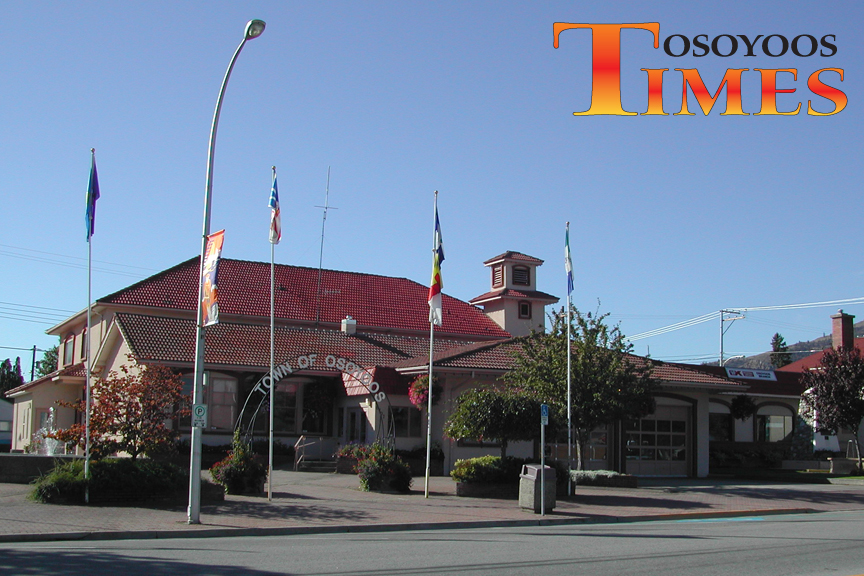
Town of Osoyoos council will be formally asking trustees and senior administration with School District 53 to form two “inter-governmental committees” to ensure municipal leaders play a much more significant role in this region’s education system moving forward.
School District 53 had requested that Osoyoos council review its efforts to try and engage stakeholders in an attempt to allow trustees and senior administration to work more closely with municipal leaders.
Barry Romanko, the town’s Chief Administrative Officer (CAO), made a presentation to town council on Monday providing details of council’s desire to meet regularly with trustees and senior administration with SD 53.
“The school district currently lists accountability to involve students, parents, staff and community members, but there is no recognition of local government councils,” said Romanko.
Mayor Sue McKortoff and members of council made it very clear during discussions held when it appeared Osoyoos Secondary School was going to close this spring that they wanted to be play a more integral role and have input relating to key decisions being made about schools in the district, said Romanko.
“Council has expressed a willingness to work with the school district to develop stronger local and regional school services,” said Romanko. “Currently there doesn’t appear to be any formal recognition of local government in education services decision making processes.”
Town administration has reviewed school district policies and is recommending consideration of developing two additional committees to the school district committee structure, said Romanko.
The committees would meet at least once per school year to discuss such key topics as:
– Overall health of education services and factors influencing service development;
– Development of long term strategic plans for the delivery of education services in the region;
– Factors influencing education funding and delivery of services;
– Opportunities for partnership to assist in maintaining or enhancing education services;
– Proposed budget and program changes that will impact the levels of service in individual municipal jurisdictions.
The first committee would be a regional committee focused on consultation and would include at least one school district trustee, one member of town council in every community where a district school is located, the superintendent of education, the CAO from each community where a school is located and one representative from the board of the Regional District of Okanagan-Similkameen (RDOS), said Romanko.
This committee would discuss the overall health of the education system, long-term strategic planning in the region, school funding and service delivery and any significant budget and service delivery issues within the school district, he said.
The second committee would serve more of an advisory role and would concentrate more on local issues within each school district, he said.
The formation of these two committees would “certainly put more pressure on the school board” and result in more meetings for trustees, but Osoyoos council has made it very clear municipal leaders want to have a more important role in decisions being made by the local school district, said Romanko.
During the controversy surrounding the possible closing of Osoyoos Secondary School, four trustees who don’t live or work in Osoyoos voted in favour of closing the school.
Those same four trustees rejected an offer from Osoyoos town council to contribute $1.2 million over three years to keep the local high school open.
Only days before OSS was scheduled to close, the provincial government announced the formation of the Rural Education Enhancement Fund (REEF) and a contribution of just under $500,000 to keep the school open for at least the next two years.
The advisory committee would offer advice and make recommendations, although it would not be a decision making group.
The consultative committee would provide expertise and would also not be a decision-making body as all final decisions would continue to be made by school district trustees.
There are policies in place within the SD 53 framework that allow for the formation of standing committees, said Romanko.
The standing committee chair, in consultation with the board chair, must complete a form as the committee is created and file it with the executive assistant at the district office.
When the committee is brought to closure, it is the responsibility of the chair to inform the executive assistant. The board chair is a member of all committees approved by the board.
KEITH LACEY
Osoyoos Times