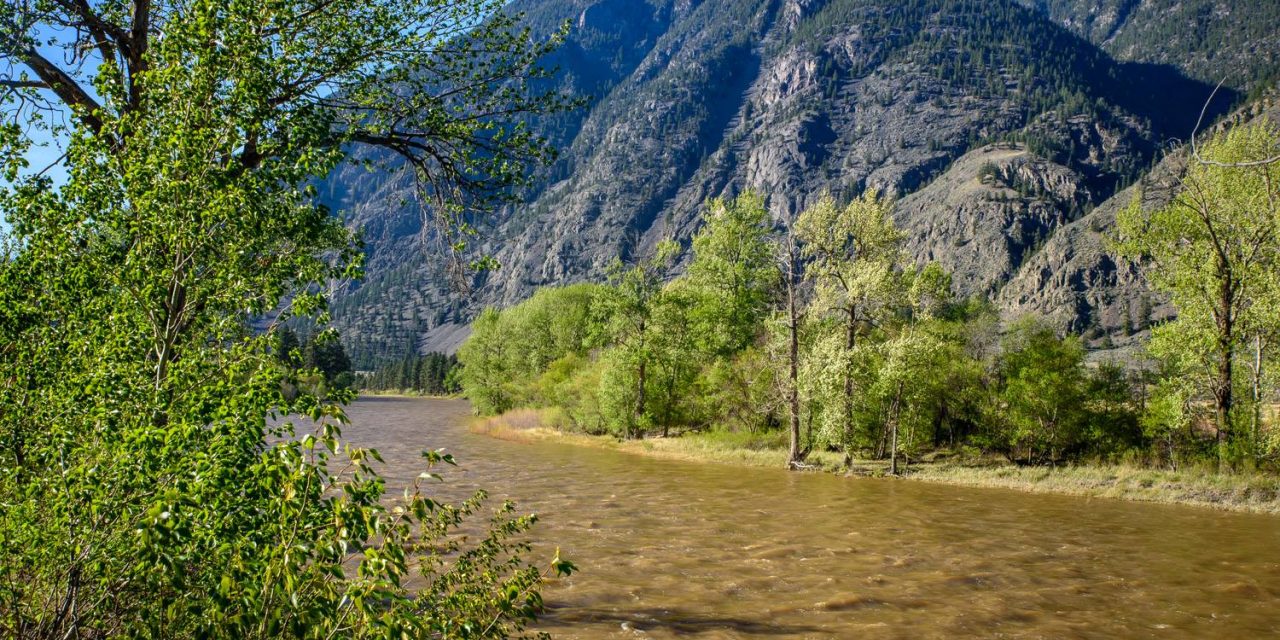
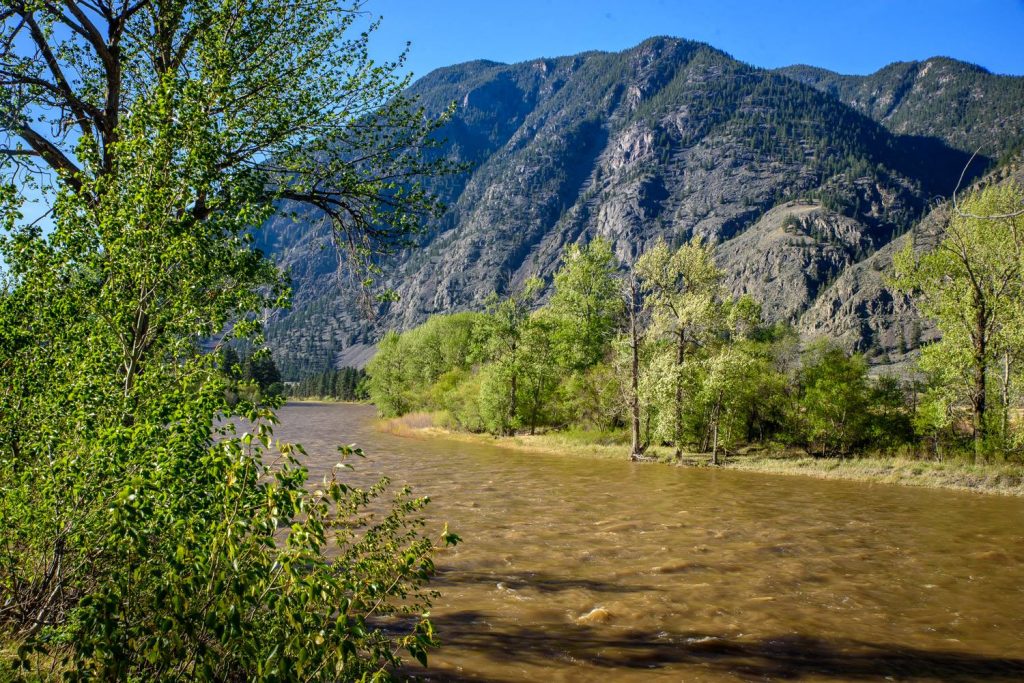
Water levels in the Similkameen River were high in mid-April with the early melt. Snowpack there was just 12 per cent of normal on May 15. (Richard McGuire file photo)
This year’s warm spring led to a very rapid snow melt that could have a number of impacts heading into the summer.
“Our snowpack this winter was far above average,” said Anna Warwick Sears, executive director of the Okanagan Basin Water Board (OBWB). “But in April, it just fell off a cliff. It melted very, very rapidly.”
May snow surveys and water supply bulletins from the B.C. River Forecast Centre also highlight this trend.
“The extremely warm periods in April led to significant and rapid melt of the provincial snowpack,” said a bulletin issued early this month.
What started as an above average snowpack quickly turned into a new record low for May 1 across the province.
As of May 15, the Similkameen River basin was at only 12 per cent of normal snowpack. The situation in the Okanagan was somewhat better, but still severe, at 35 per cent of normal.
Snow melt and river flow conditions on many rivers were three to four weeks ahead of normal, the River Forecast Centre said.
Sears said reservoirs filled to capacity early this year and then started to spill. The early season has meant that farmers are starting to irrigate earlier, she said. Also, water evaporates early, so this will put pressure on water supplies.
“It’s been quite a dry spring,” she said. “From the point of view of drought, it won’t be the same situation as last year, but it could be difficult for people who are getting their water from streams that aren’t backed up by storage.”
Warm temperatures are having other impacts, she said.
Although they mean an early fruit harvest, they are also causing milfoil to grow rapidly in the Okanagan lakes. OBWB has had to allocate another staff person to milfoil control, she said.
High temperatures could increase demand for electricity as people switch on air conditioning.
For farmers, the warm temperatures could bring good growing conditions or it could get really hot, causing problems with fruit quality, Sears said.
While snow melt and temperatures are important determinants of upcoming drought conditions, the other big factor is precipitation. And this is harder to forecast beyond a week, meaning long-term forecasts are not reliable.
May and June are typically the wettest months in the B.C. Interior.
The amount of rainfall that comes in June, said Sears, will help to determine the severity of drought conditions later in the summer.
Environment Canada is forecasting above-normal temperatures across B.C. between May and July and into late summer.
RICHARD McGUIRE
Osoyoos Times