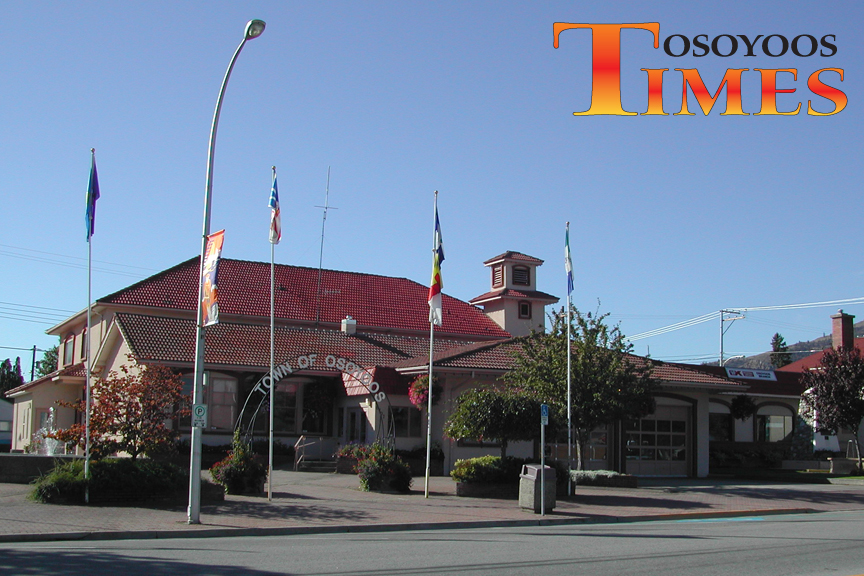
Town of Osoyoos council is considering adopting a new policy that would allow local property owners to share the costs with the municipality for local road improvement projects that might otherwise not be completed for years to come.
“Presently, the town does not have a policy outlining cost sharing between the municipality and property owners for various types of local improvement projects,” said Jim Dinwoodie, the town’s director of operational services during a presentation to council on Monday. “Local improvements typically comprise road related works representing a higher standard.
“The most common local improvement projects involve upgrading a local rural road to an urban standard, including curb and gutter, drainage, sidewalks, roadway paving, landscaping and streetlight installation. Having a policy on neighbourhood road improvements will enable council to provide consistent decision making and a clear message to residents that cost-shared investment is needed for a neighbourhood road improvement.”
The town has a five-year capital plan that includes future investment in “major arterial roads” that need continual investment to maintain good quality major thoroughfares in the community, said Dinwoodie.
Having a cost share policy will enable administration to adequately plan for the redevelopment on future funding of neighbourhood roads, which often remain low on the priority list for upgrades during the annual budget process, he said.
Currently, there are two local improvement projects that are noted in the five-year capital plan. They include the reconstruction of Harbor Key and Jasmine Drive, said Dinwoodie.
“Local residents have requested improvements to these non-arterial roads and their redevelopment continues to be pushed back due to other road projects that are arterial or feeder roads,” he said. “Arterial or feeder roads are subject to more community base traffic, therefore, the basis for providing community investment upgrades are based on the concept that the wider community uses the road, so the community should make more investment into these roads.
“Neighbourhood roads generally serve the local neighbourhood, so improvements serve a small amount of the community and add value to the area and property.”
Local improvement projects can be initiated by either the municipality or by property owners, said Dinwoodie.
For sidewalk, curb and gutter, storm and drainage, roadway paving and streetlights, the individual portions of the owners’ share for each property would be determined by the proportional length of the abutting property lines for the benefitting property, he said.
Notices would be prepared and sent to the owners of each benefitting property, outlining the proposed work, their estimated share of the costs and the protocol for making payment and/or petitioning for the cancellation of any proposed project, he said.
If the majority of benefitting properties sign a petition against the proposed upgrades during this period, the project would not proceed, he said.
In other communities that have adopted cost share policies, property owners are typically given the option of paying a lump sum or amortizing the amount over a given number of years for any works project approved.
For sidewalks installed only on one side of a street or roadway, the costs are apportioned two-thirds to the property abutting the sidewalk and one-third to the property owner on the other side of the road from the sidewalk.
An analysis of numerous communities in the Lower Mainland and West Kootenay areas indicate the property owners and the municipality share the costs 50/50 for street construction, sidewalk, curb and gutter, storm drainage, retaining walls and handrails, while the property owners pay two-thirds for ornamental streetlights, said Dinwoodie.
Several councillors said this cost sharing policy would allow many projects that might not be completed for many years to proceed, while benefitting local neighbourhoods and saving significant taxpayer dollars.
Coun. C. J. Rhodes said roads in the Harbor Key subdivision have been affected by the lack of drainage in the area and local residents should not have to bear the additional costs involved in making certain upgrades to the infrastructure in this area.
Dinwoodie agreed and said the town would have to hire geo-technical experts to complete a report before any infrastructure upgrades would proceed in this part of town.
Rhodes said introducing this cost sharing policy is much needed and will allow residents in many neighbourhoods to contribute to local improvement projects that might not proceed for many years under the current policy.
KEITH LACEY
Osoyoos Times