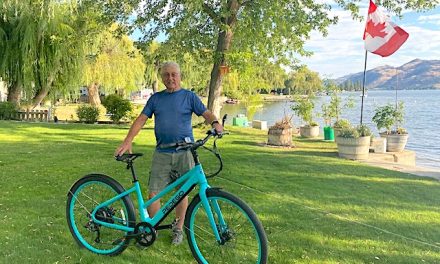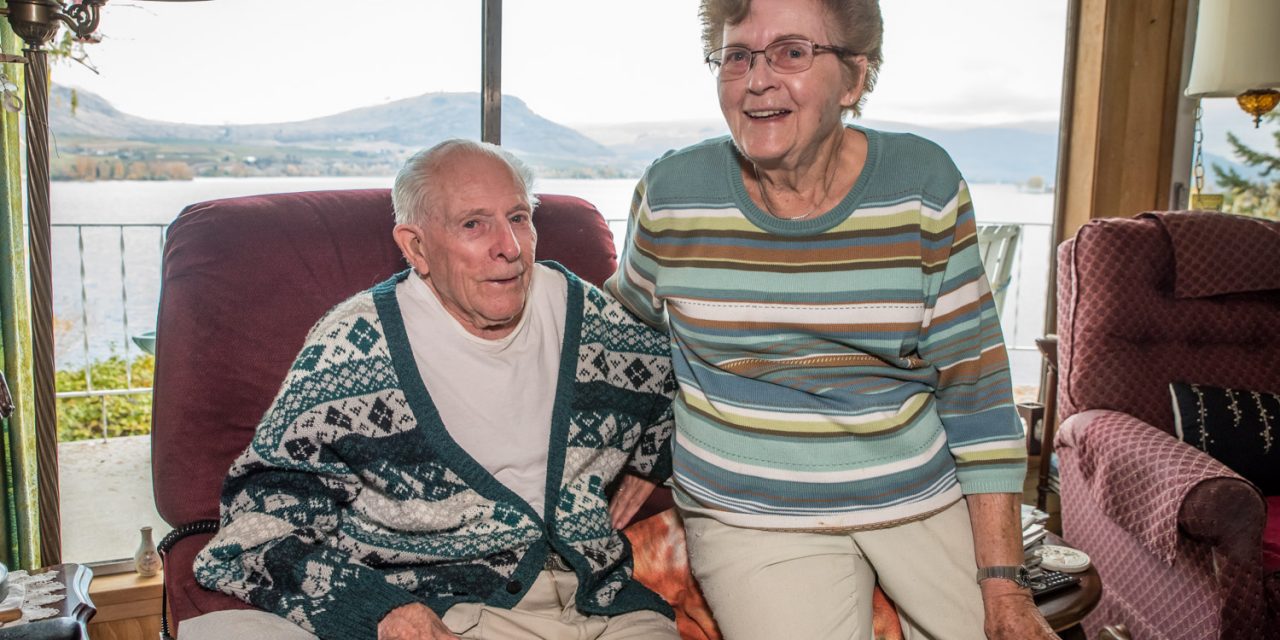
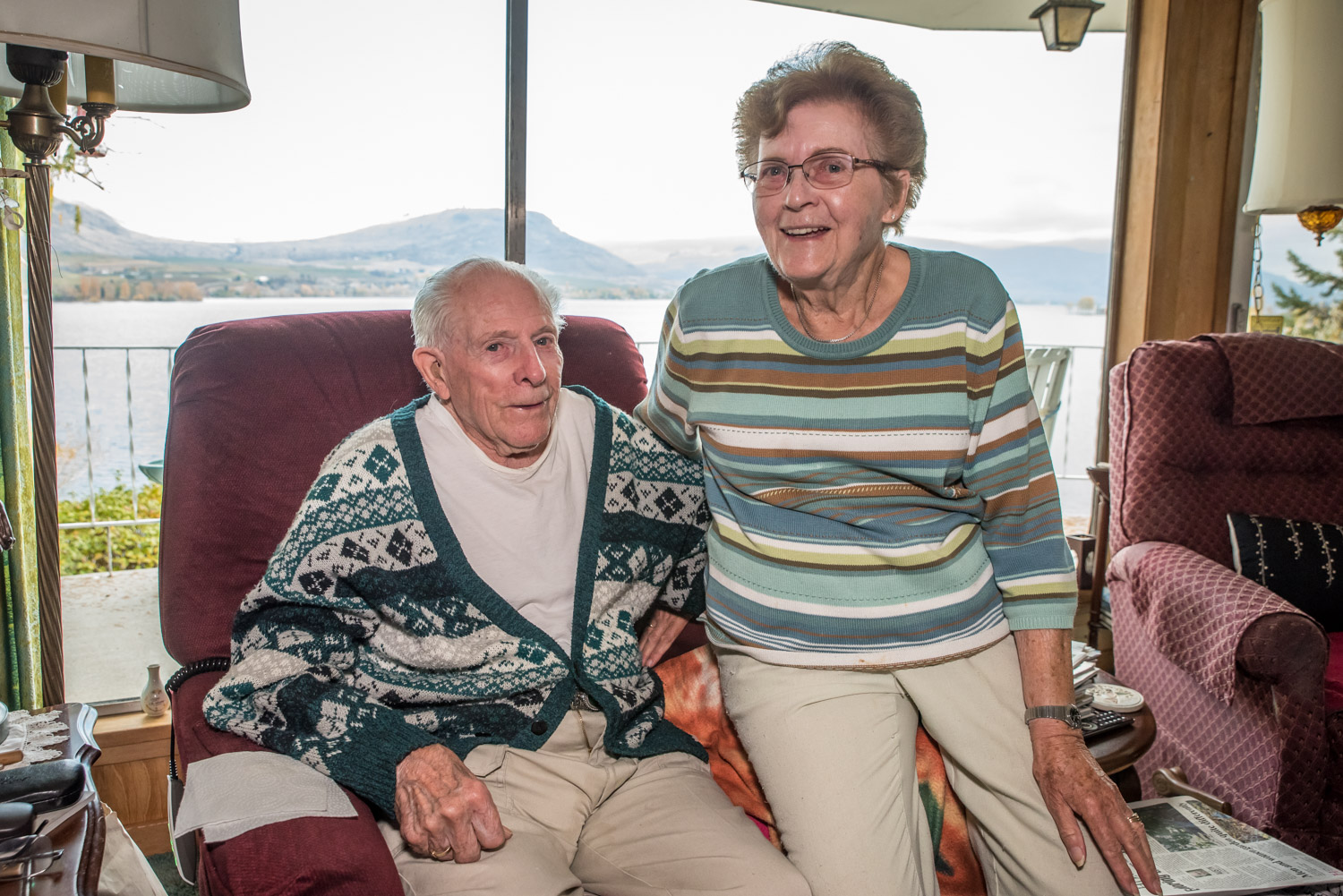
Dr. Gordon Shepherd was among the first Canadian airmen trained to perform para-rescue. He and his wife Marion have lived in Osoyoos since 1955. (Richard McGuire photo)
Dr. Gordon Shepherd, now 94, still remembers very well the terror he felt before he made his first parachute jump during World War II.
Shepherd was never sent overseas during the war, but as one of the first dozen young men in the Royal Canadian Air Force trained in pararescue, he made history of his own.
“We were all sitting there nervous and the plane was flying,” recalls Shepherd. “We got in an area and they open the side door. We were all nervous and sweating.”
One young man, Emil Scarnati, sat next to Shepherd. Scarnati was first to jump. He waited in the door, his parachute attached to a static line, a taut cord from one end of the aircraft to the other.
“Scarnati was so nervous standing there that he was wiggling around,” said Shepherd. “He hooked the side of his parachute on the side, so when he jumped out, his parachute pulled out sooner than it should have and it hooked to the aircraft.”
Soon Scarnati was dangling from the tail of the plane, which circled in an effort to shake him off. Fortunately, when he was finally shaken free, he floated down and landed safely.
“And then I think they called me brown pants,” said Shepherd. “I was next.”
Thankfully, Shepherd made a safe landing, despite an encounter with a fence. In those days they were training by landing in farmers’ fields near Edmonton.
Shepherd, who became a physician after the war and moved to Osoyoos with his wife Marion in 1955, was born and raised in Calgary. He’s honest about why he signed up with the air force in 1942.
“I have to confess, I joined up because they would’ve put me in the army otherwise,” he said.
But despite the war raging in Europe and the Pacific in 1942, Shepherd was not trained as a pilot and never went overseas. Instead, for two years he worked on ground crew at an air force base at Gimli, Manitoba, north of Winnipeg.
“I got tired of it. I was stifled,” he said, describing working around small planes taking off, but never flying them himself.
Two years into it, however, in 1944, Shepherd saw a bulletin that changed his life. Volunteers were being sought to train for a new team of parachute rescuers.
Shepherd put his name in – just one of 20,000 applicants – and he was among the 12 young men selected.
The RCAF Rescue Service was put together by Wilfred Reid “Wop” May, a former bush pilot. In those days, thousands of aircraft were being sent to Russia from the United States over the Northwest Staging Route, an air route through Edmonton and Alaska used before the Alaska Highway could be built.
Many of these planes crashed in the north due to mechanical failure, bad weather, lack of navigational aids, or human failure. And many pilots were dying from exposure in the remote north.
May organized a rescue team that could parachute into crash sites, stabilize crash victims and bring survival necessities until the crash victims could be safely evacuated.
They parachuted from Norseman single-engine bush monoplanes. In total, Shepherd said he made 44 jumps.
The men were taught to steer with their parachutes, something that can be done to a degree, and they learned how to land in dense northern forests.
They were taught that if you have to land on a tree, land on one that is tall and bushy and can support your weight, without the limbs breaking and sending you crashing to the ground.
Then, the men would take a rope from a side pocket and lower themselves from the tree to the ground.
After landing, they established communication with the plane and asked for whatever supplies were needed to be dropped. They looked after the crash victims until help could arrive to evacuate them.
At that time Shepherd only dreamed of becoming a doctor, one of his early dreams in life, but it was only after the war that he was able to take formal pre-med and medical training. Still, his rescue missions often involved performing first aid and sometimes a bit of surgery.
In January, 1945, the initial group of 12 men was split up with some of the men, including Shepherd, remaining in Edmonton to train the next class for pararescue.
Shepherd was slated to go to Burma to assist with rescues of planes that crashed flying over the Burma Hump, the eastern end of the Himalayas that formed a barrier to allied efforts to resupply the Chinese war effort of Chaing Kai-Shek and American forces in China.
“Thank God the war ended before he had to do that,” his wife Marion said.
Although Shephard was released from the air force when the war ended, the pararescue initiative continued and spread across Canada. And it has evolved into the Canadian Armed Forces Search and Rescue, which exists today.
For Shepherd, his experience in the air force and para-rescue helped him with his dream of becoming a doctor. Before the war, he had been saving to study medicine, but it seemed the goal might be beyond his reach.
After the war, however, Canada created a benefit program for veterans that allowed him to enter pre-med training for two years and then four years of medicine in Edmonton.
Following that, he worked with a surgeon in Vancouver for two years, and in 1955 he moved to Osoyoos to set up a medical general practice. And he remained here, retiring as a doctor in 1984.
As with so many Canadian veterans, Remembrance Day for Shepherd is a time to recall others who served in wartime, including some friends and family who lost their lives.
“I lost some,” he said. “It’s part of war.”
RICHARD McGUIRE
Osoyoos Times
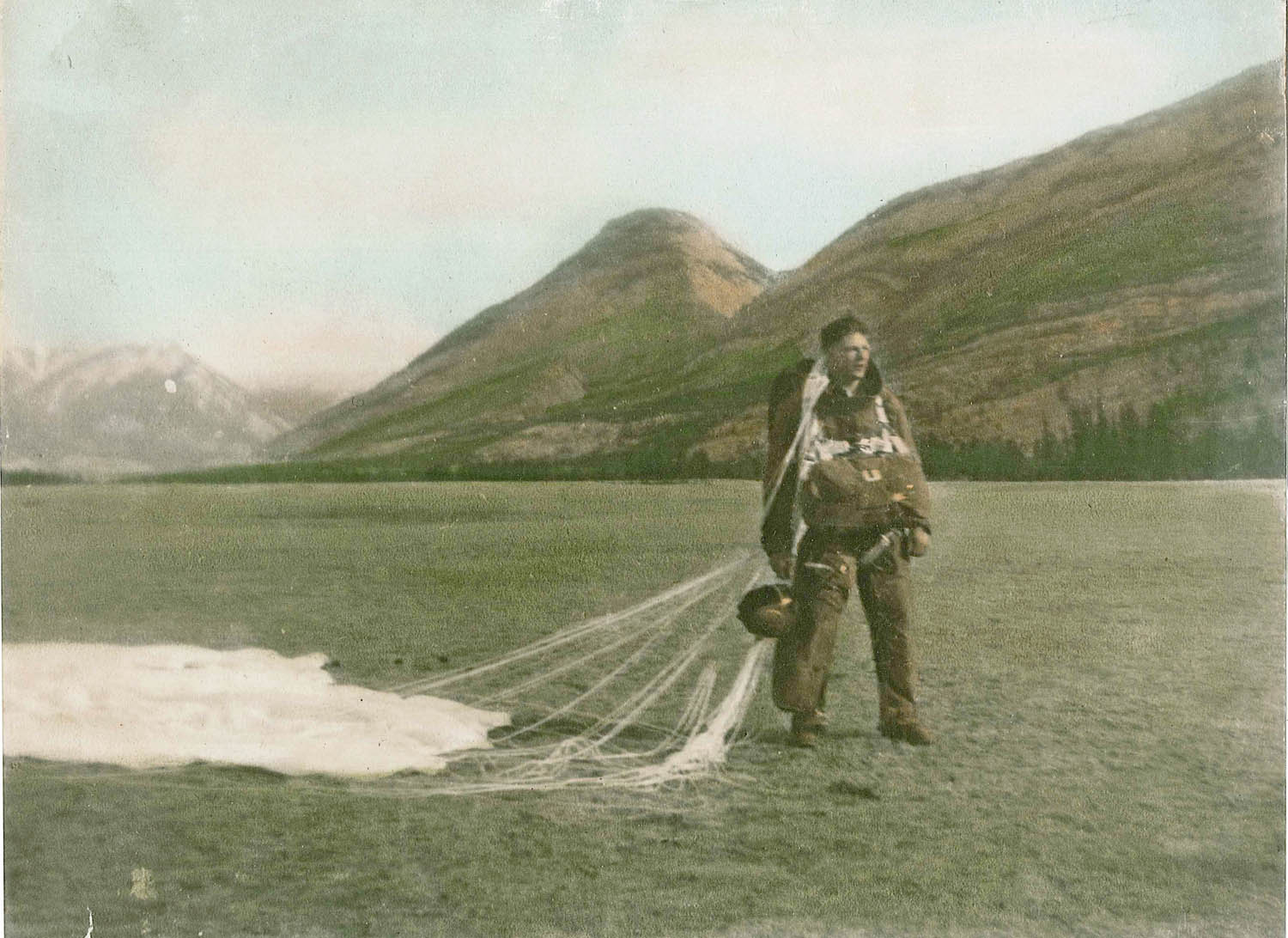
Gordon Shepherd was trained as a young man to drop by parachute into remote northern areas to rescue downed pilots. His first jump was terrifying. (Photo supplied)