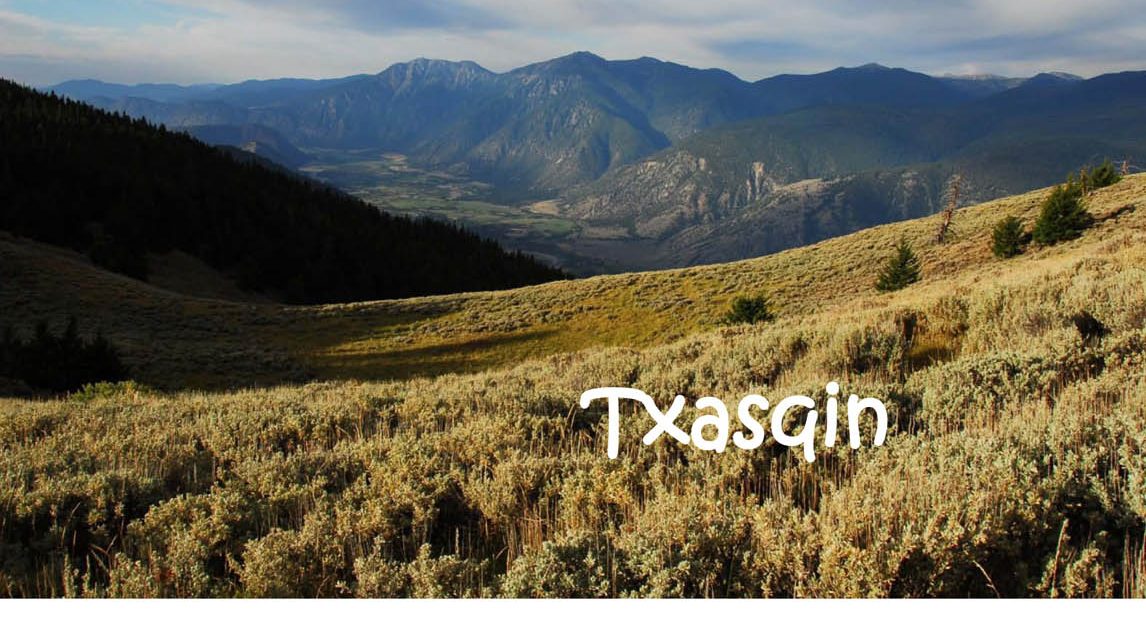
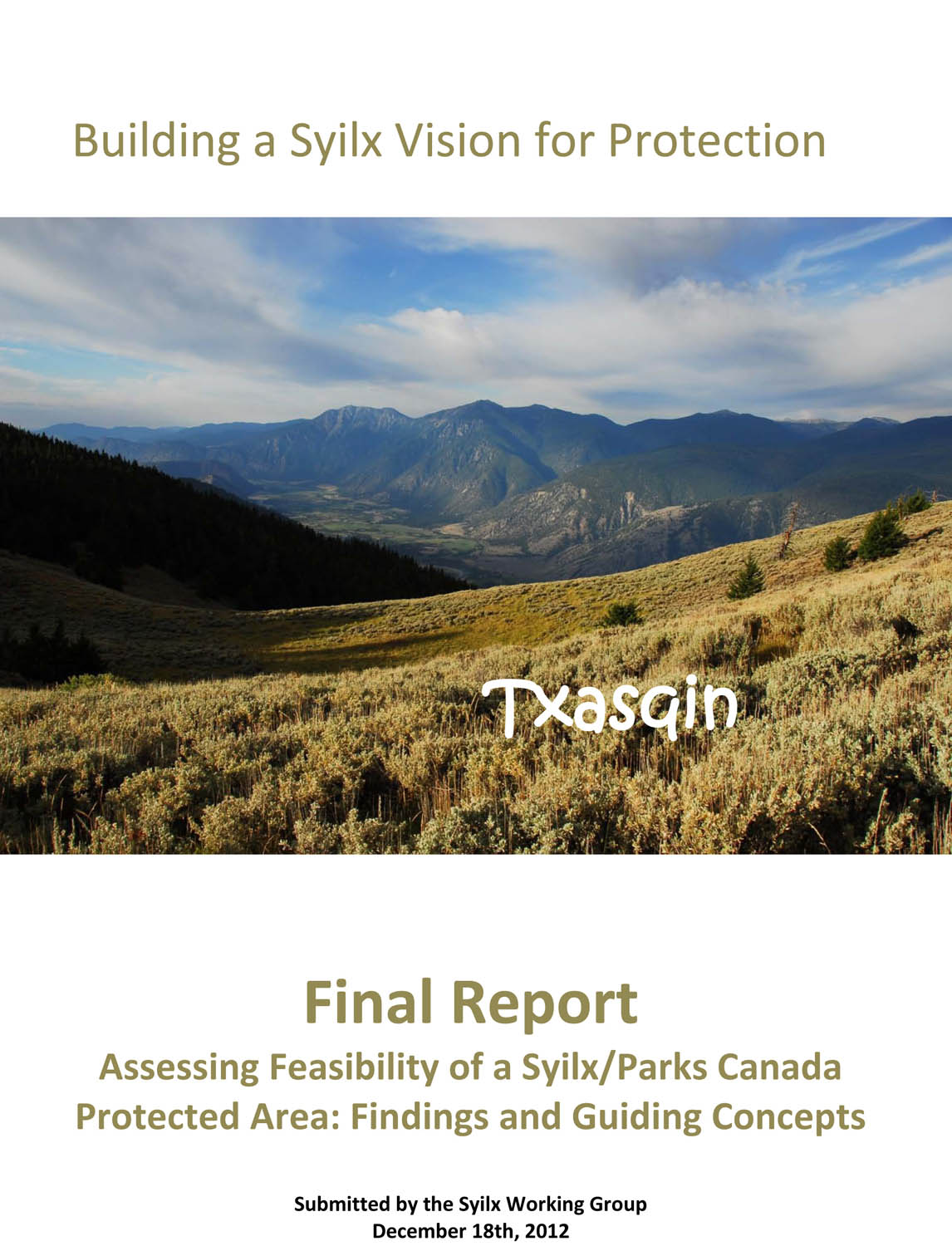
The report Building a Syilx Vision for Protection was funded by Parks Canada and completed by bands in the Okanagan Nation Alliance after the Province of B.C. secretly decided not to go ahead with a national park reserve in the South Okanagan-Lower Similkameen.
Parks Canada was unaware that the provincial government in B.C. had secretly killed a local national park reserve when the federal agency agreed to fund a comprehensive First Nations study.
In August 2011, Parks Canada signed agreements with the Osoyoos Indian Band (OIB) and Lower Similkameen Indian Band (LSIB) that provided each band with $200,000 and led to a study completed in December 2012.
Those agreements were previously made public under federal Access to Information laws.
The study, Building a Sylix Vision for Protection, Assessing Feasibility of a Syilx/Parks Canada Protected Area: Findings and Guiding Concepts, was released to the public in February 2013.
The agreements with the First Nations were reached after the B.C. Liberal cabinet secretly withdrew its support for a national park reserve in South Okanagan-Lower Similkameen (SOLS) in January 2011, but before it informed Parks Canada of its decision in December 2011.
Parks Canada has refused to provide information on how much in federal money was spent trying to advance the park in the fiscal year from April 1, 2011 to March 31, 2012.
Nonetheless, on top of the $400,000 provided to the First Nations over two fiscal years, the agency also brought First Nations representatives on a tour of Gwaii Haanas national park reserve.
Additionally, Parks Canada maintained staff devoted to the SOLS project and they held meetings with other stakeholders.
The Syilx report ultimately concluded that a national park reserve is feasible and would not mean diminishing protection of Aboriginal Rights and Title claims for the Okanagan Nation.
It called for a joint management of the park between First Nations and Parks Canada, similar to the model used in Gwaii Haanas national park reserve on Haida Gwaai.
By the time the report was completed, the province had already announced it was pulling out.
The Syilx report called for the province to re-engage in discussions.
It is not clear that the First Nations study would have gone forward if Parks Canada had known of the B.C. cabinet’s secret decision in January 2011 to end support for the park.
Parks Canada has refused all comment.
The study, which followed up on the formation of a Syilx Working Group (SWG) in November 2010, resulted in extensive community consultations, workshops, outreach and talks with Aboriginal elders.
A Parks Canada document obtained by the Osoyoos Times through Access to Information suggests that both Parks Canada and local First Nations engaged in extensive work in 2011-12.
“Parks Canada is entering a year-long process of intensive work with representatives of the Okanagan Nation,” said the draft document prepared for negotiations in September 2011 and labeled “DO NOT DISCLOSE.”
“This will involve frequent meetings of a Syilx/Parks Canada Working Group, as well as regular meetings between PCA (Parks Canada Agency) executive and Syilx leadership,” the document said.
Parks Canada was seeking to establish a national park reserve rather than a full national park because the reserve would not foreclose any settlement of Aboriginal rights.
A national park reserve also allows greater flexibility for traditional Aboriginal activities such as hunting to continue.
“In national park reserves in B.C. that are not in the area of a settled treaty, Parks Canada’s general approach to accommodating First Nations includes: establishing a national park reserve, entering into an arrangement for the First Nations to give advice or recommendations, employment opportunities and other projects within the community,” the Parks Canada document said.
The document points to Supreme Court of Canada rulings in the Taku and Haida cases in 2004 that said where the Crown has knowledge of the potential existence of an Aboriginal right or title and contemplates conduct that might adversely affect it, the Crown has a duty to consult and accommodate where appropriate.
“The Okanagan Nation bands strongly assert that they have Aboriginal rights and title in their territory and that the lands, water and resources belong to the Okanagan Nation and have never been ceded, sold or surrendered and that their territory is subject to jurisdiction of the Syilx people,” the Parks Canada document says.
It adds that the Province of B.C. has indicated that there are other First Nations asserting rights in the area including the Nicola Tribal Association, representing four bands, and the Nlaka’pamux Nation Tribal Council, representing two bands.
“Parks Canada will need to contact these nations to verify if they assert rights in the area and if they want to be consulted on the establishment of a national park reserve,” the document said.
It does not indicate whether these other First Nations were in fact consulted or what was the outcome if any.
Sections of the document have been redacted or censored dealing with Okanagan Nation expectations as well as legal interpretation of whether an analysis of the strength of Aboriginal claims is needed.
Nonetheless, the Syilx report makes it clear that in addition to protection of title rights, the Okanagan Nation wants protection of “traditional cultural purposes” in the national park reserve including harvesting, hunting, fasting, water use, spiritual retreat, gatherings, education and other uses.
They also want to see additional lands added to the park including lands in the White Lake area and McIntyre Bluff.
RICHARD McGUIRE
Osoyoos Times
Read the documents for yourself (PDF)
(Document names here are not their official titles)
- SOLS Issue Scoping Paper
- Assessing-Feasibility-Syilx-Final-Report-December-18-2012
- Syilx – Parks Canada contribution agreement