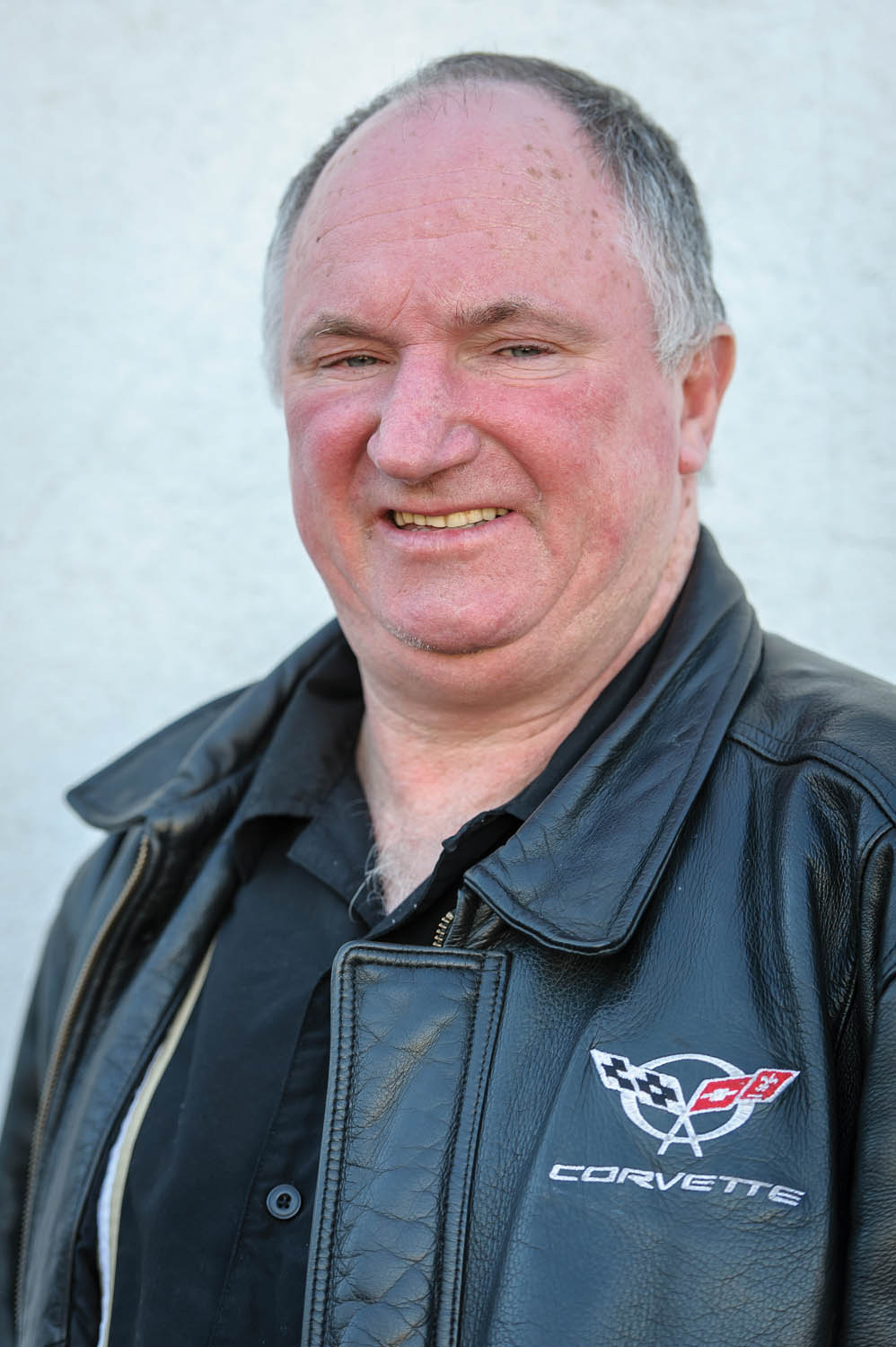
Steve Condon. (File photo Richard McGuire)
The man who says he was set up by Osoyoos RCMP to take the blame for two vehicles stolen in 2012 has filed a lawsuit against the RCMP, the province, the Town of Osoyoos and RCMP Constable Amit Goyal.
The suit was filed by Steve Condon’s lawyer, Paul Evans, on June 2 in the Supreme Court of B.C. at New Westminster. Not all defendants have yet been served, but the Osoyoos Times obtained a copy last week of the notice of civil claim, which outlines the allegations.
“As a result of the false allegation made by Cst. Goyal and subsequent police action, the plaintiff (Condon) has suffered loss of liberty, embarrassment, harassment, loss of livelihood, anxiety, periods of depression and sadness, emotional and psychological stress, difficulty sleeping,” the notice of civil claim states.
Condon, 54, has a criminal record that includes fraud, but he insists that he had nothing to do with the disappearance of the two vehicles from Goyal’s residence.
Condon says he submitted to an RCMP polygraph, a lie detector test, in May 2013 and passed with flying colours. At that time, he was informed by police that he was no longer a suspect.
A month later, in June 2013, Goyal was suspended with pay from the Osoyoos RCMP and he faces a disciplinary hearing in Vancouver on July 28.
On Oct. 31, 2012, a 2009 black Audi S5 owned by Goyal was reported stolen from his home on Cottonwood Drive. A week later, a 2008 black Ford Ranger truck on loan to Goyal from Collision Craft Auto, was also reported stolen from Goyal’s home. Both vehicles were later found abandoned and burned on Anarchist Mountain.
Trail RCMP were brought in to investigate because the incident involved a member of Osoyoos RCMP. After investigating Goyal’s involvement, they recommended to the Crown that charges of arson and fraud be laid, but none were.
Goyal has not been charged with any criminal offence related to the incident. None of the allegations against him have been proven in court.
While Condon’s lawsuit doesn’t set out a dollar amount being sought, he is seeking general and special damages; punitive aggravated and exemplary damages; costs and interest and “such further and other relief as this Honourable Court may deem just.”
Condon said that he has engaged Evans to represent him on a contingency fee basis. Because this means Evans only gets paid if Condon wins a monetary settlement or court decision, it indicates the lawyer believes Condon has a good chance of winning.
Condon, who lived in Osoyoos from 2011 to November 2012, says in his lawsuit that he moved from Osoyoos to the Lower Mainland, “because of the false allegations against him, his desire to avoid interactions with the RCMP, including Cst. Goyal, who he knew had implicated him in the theft of the Audi and Ford.”
Between February and May 2013, Condon was questioned on three different occasions about his involvement in the theft of the vehicles.
“He … was accused on repeated occasions of stealing the Audi and Ford,” says the notice of civil claim. “The plaintiff was subjected to aggressive interrogation techniques in an effort to get him (to) admit to involvement in the theft.”
On the second time, police came to his place of work and took him away for questioning and he was detained and questioned for several hours. That’s when he offered to take the polygraph.
The claim also outlines several previous run-ins that Condon said he experienced from Goyal.
On one occasion, he claims Goyal, while in uniform, approached Condon’s girlfriend “and told her she was too good to be hanging out with the plaintiff.”
On another occasion, Goyal and other officers dropped in on a private New Year’s Eve party with about 30 people at the Ridge Brewing Pub. Goyal informed Condon that he didn’t have a liquor license and so the party would be shut down.
When Condon produced the license, Goyal claimed he’d been told by the manager of another pub that there was drug dealing at the party. When Condon checked with that pub manager, he said he had not made any report to police.
Condon contacted the RCMP afterwards to file a formal complaint against Goyal, but he claims that no action was taken.
Another time, when Condon was serving an intermittent sentence at the Osoyoos RCMP Detachment cells, Condon claims that Goyal mocked him about the murder of another man in Mexico the previous month.
“He laughed at the plaintiff and said words to the effect of ‘Ha, your buddy got it,’” the notice of civil claim alleges.
In another incident, Goyal arrested Condon for driving while prohibited. The vehicle was registered in Condon’s girlfriend’s name and she was present during the arrest.
Even though she had given Condon permission to drive, Goyal allegedly told her that if she said she had not allowed Condon to drive, the vehicle would not need to be towed.
When she agreed to this, Goyal arrested Condon for taking a vehicle without the registered owner’s consent, contrary to the Criminal Code, even though Goyal knew she had in fact consented.
None of the statements in Condon’s notice of civil claim have been proven in court. Nor have any of the defendants yet filed their own statements in response.
The Osoyoos Times gave RCMP E Division media relations an opportunity to comment on Condon’s claims, however Sgt. Rob Vermeulen responded: “It wouldn’t be appropriate for us to comment at this point.”
Goyal could not be reached for comment. When last contacted by the Osoyoos Times in November 2013, he hung up the phone.
Evans, Condon’s lawyer, acknowledged that Condon has been considering a suit for some time, but he said they were concerned that delaying the suit could pass the limitation period of about two years.
Condon only became fully aware of malfeasance on the part of Goyal when the RCMP constable was suspended in June 2013, Evans said.
“The timing of course is a big factor in the lawsuit being brought forward when it has been,” he said.
Evans acknowledged that many of the facts are still relatively unknown, but he expects more details to come out during Goyal’s disciplinary hearing.
Information about the investigation done by Trail RCMP and involvement of other Osoyoos RCMP members will come out through the court process, Evans said.
The Town of Osoyoos is named as a defendant in the case because the B.C. Police Act says a municipality is liable for “a tort that is committed by any of its municipal constables.”
Asked why the lawsuit casts such a wide net, Evans said that as a general rule, it’s easier to narrow the focus later than it is to widen it.
RICHARD McGUIRE
Osoyoos Times
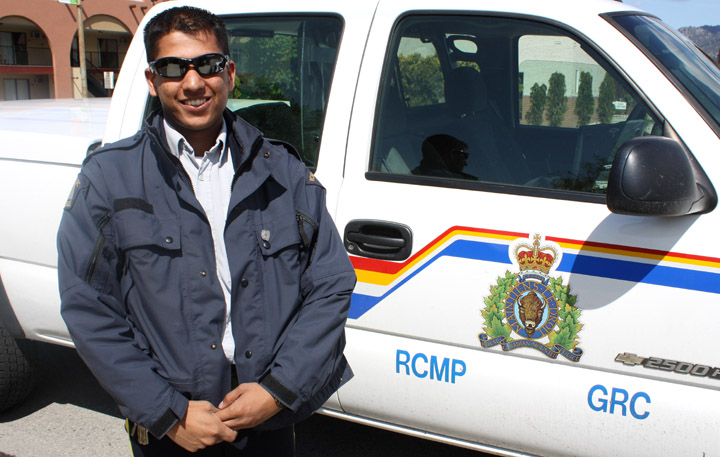
Const. Amit Goyal (Paul Everest file photo)