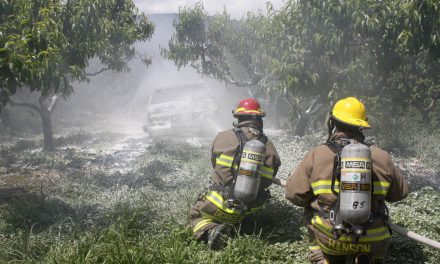
As a wildfire rages south of Lytton, the fire risk around Osoyoos remains only moderate and there have been fewer fires in the area this year than last.
That could change quickly, however, either due to drier conditions in June, lightning strikes or human activity.
This year there have been 67 wildfires in the Kamloops Fire Centre area, which includes Osoyoos, but extends north beyond Clearwater.
Last year at this time there were 72 wildfires, said Melissa Klassen, fire information officer. The 10-year average for this time of year is 84, she said.
The fire season starts April 1, but in the months of April and May, many of the fires tend to be human caused due to improper open burning, she said.
“I think that is why there’s been a bit of a difference in numbers,” Klassen said. “We didn’t have as many fires in those first early months, where open burning has gotten out of hand, so it’s actually a success for us.”
Heading into the rest of the fire season, however, the number of fires could rise, both due to lightning strikes and human activity.
The only major fire recently in the Kamloops Fire Centre area has been the current Cisco Road fire south of Lytton and west of the Fraser River.
As of Monday, that fire was 1,270 hectares in size and only 20 per cent contained.
In the Osoyoos area, there have only been two recently active wildfires, neither of which is class as being “of note.”
The Chopaka Mountain fire, which was discovered April 11, reached 100 hectares. It is believed to be person-caused.
A very small fire was also discovered May 24 on Mount Kobau and it’s believed to have been lightning-caused.
The biggest factor for predicting the kind of fire season is precipitation in June, Klassen said.
“We haven’t had as much precipitation this month,” she said. “We have had intermittent periods of heavy precipitation, so it largely depends on what we get for the rest of this month. That will be a good indicator as to how those forests dry out in the summer months of July and August.”
Long-term weather forecasts from Environment Canada indicate a high likelihood of above-normal temperatures across the province through the summer.
This is in part due to abnormal surface temperatures on the North Pacific Ocean and El Niño conditions in the equatorial Pacific. Rainfall is more difficult to predict.
Snowpacks were smaller and melted earlier this year due to a milder winter and spring.
Rain two weeks ago reduced the fire danger rating to very low in much of the fire centre area, but within a week to 10 days it was back up to moderate to high, Klassen said.
Currently there is a ban on category 2 and 3 open burning, which is determined by date rather than fire conditions, which started May 15. This includes burning of brush and waste.
There is no ban on campfires at present, though that could change if there are problems with unattended campfires or if the fire risk increases, Klassen said.
“We rely very much on the public to be vigilant with their fire use,” she said. “When we have reports about (abandoned or improperly extinguished campfires) happening, that is a concern for us.”
Campfires must be less than half a metre wide by a half-metre high and must never be left unattended.
Anyone lighting a campfire must ensure they have a hand tool such as a shovel or at least eight litres of water available to extinguish the fire. Ashes must be cold to touch before leaving the area.
To report a wildfire or unattended campfire, call 1-800-663-5555 or *5555 on a cellphone.
RICHARD McGUIRE
Osoyoos Times