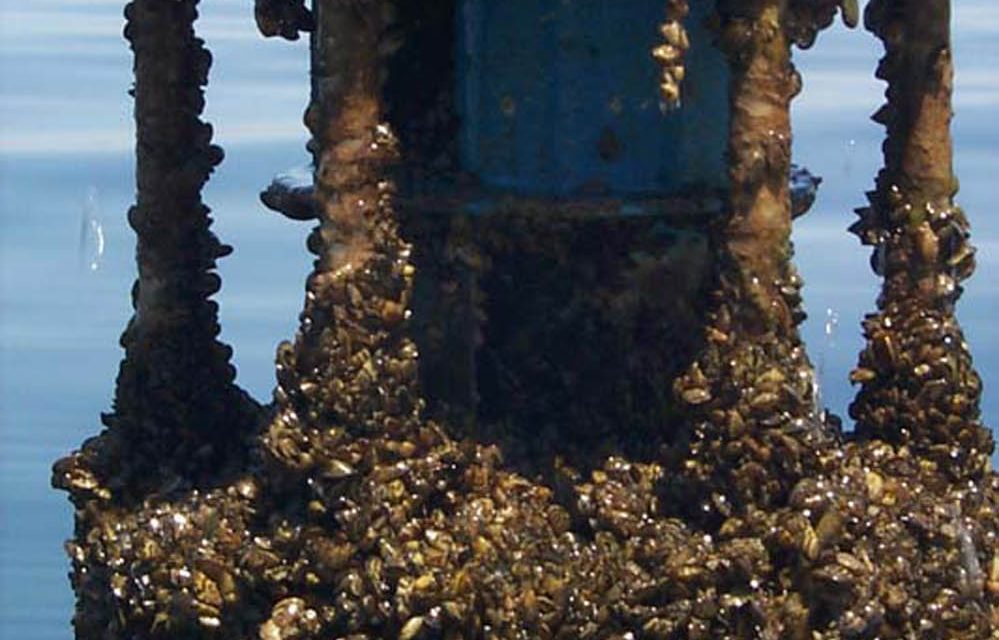
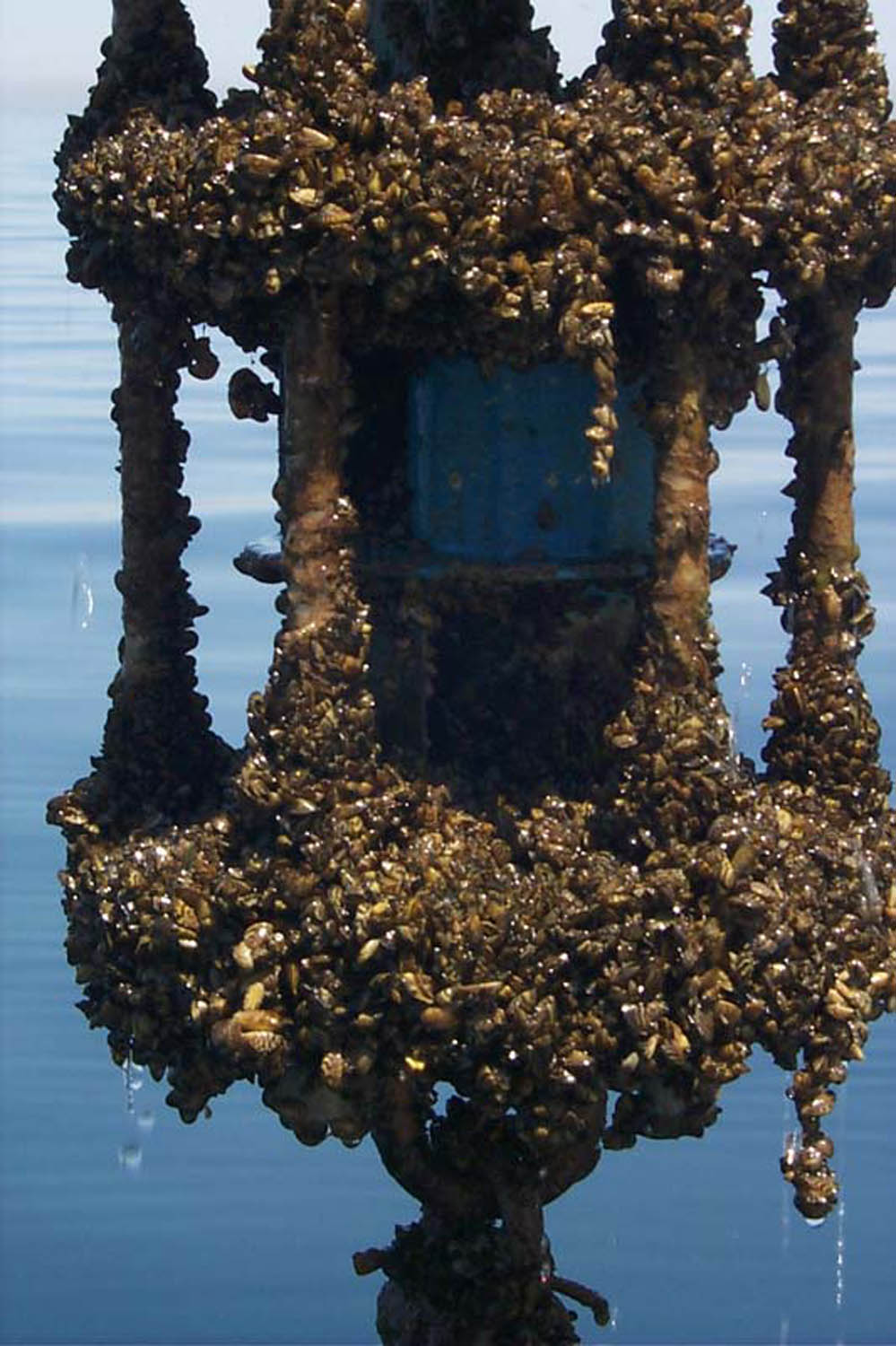
Zebra mussels encrust a current meter retrieved from Lake Michigan. Mussels cover every imaginable surface in the water once they infest a waterway. They are spread by careless boaters, but Canada lacks federal regulations needed to stop them at the border. (U.S. National Oceanic and Atmospheric Administration)
The provincial government on Tuesday announced a long-awaited strategy to deal with the threat of invasive zebra and quagga mussels.
The province has committed $1.3 million toward early detection and rapid response. The program begins in April for the 2015 boating season.
The start-up cost is $149,000 with operating funding of $600,000 annually.
The Okanagan Basin Water Board (OBWB) has long been lobbying the provincial government for action to prevent the spread of invasive mussels into Okanagan waterways. In June last year, Environment Minister Mary Polak told the OBWB that a mussel early detection and response plan “would be completed over the next several weeks.”
The plan was subsequently delayed due to a decision to make the plan more comprehensive.
The program announced Tuesday morning in Kelowna will consist of:
- Three mobile decontamination units;
- Six trained auxiliary conservation officers;
- Highway signage throughout the province;
- Expanded monitoring for zebra and quagga mussels;
- Expanded use of Report All Poachers or Polluters response line coverage to include invasive species;
- Increasing “Clean, Drain, Dry” education and outreach activities.
The government says teams will inspect and, if necessary, decontaminate boats entering B.C. from Alberta.
However, the announcement falls short of meeting the OBWB’s request for inspection stations on roads entering the province as is done in some U.S. states.
The government says teams will also respond to boats from the U.S. identified as a concern by the Canadian Border Services Agency (CBSA) as well as U.S. partner agencies.
In December the federal government introduced regulations that will allow CBSA officials to stop and detain boats carrying invasive species. The regulatory approval process is not yet complete.
The provincial teams will consist of trained auxiliary conservation officers coming from university compliance training programs.
The OBWB estimates that the annual cost of a mussel invasion in the Okanagan would be $43 million.
RICHARD McGUIRE
Osoyoos Times