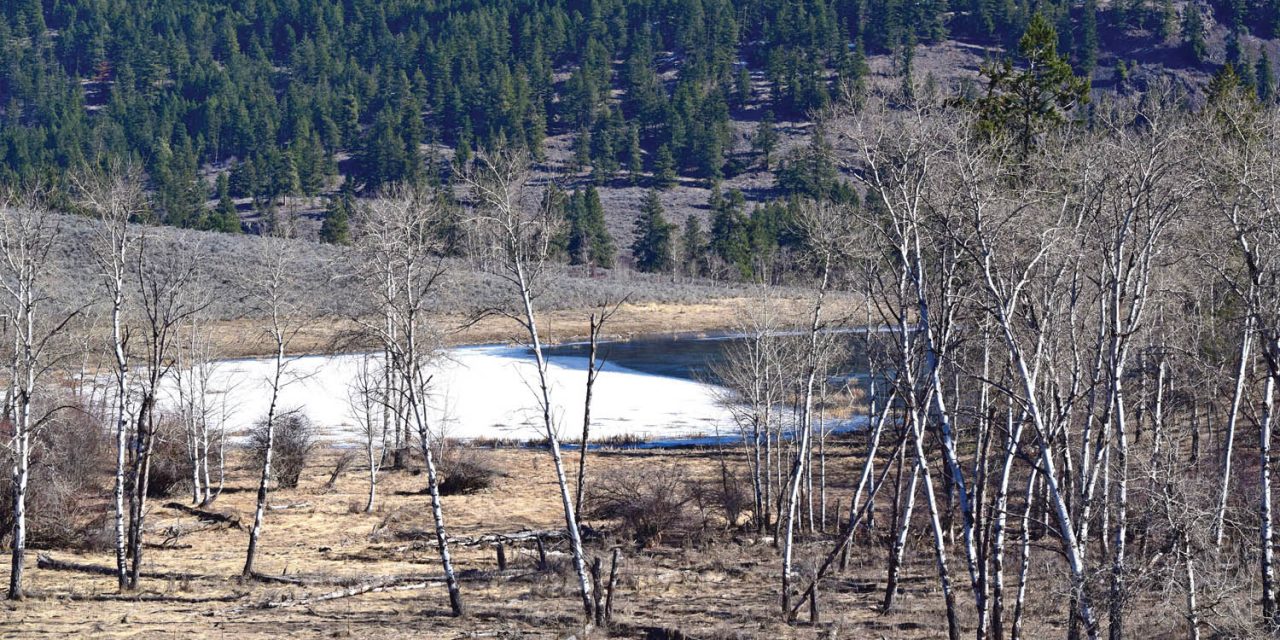
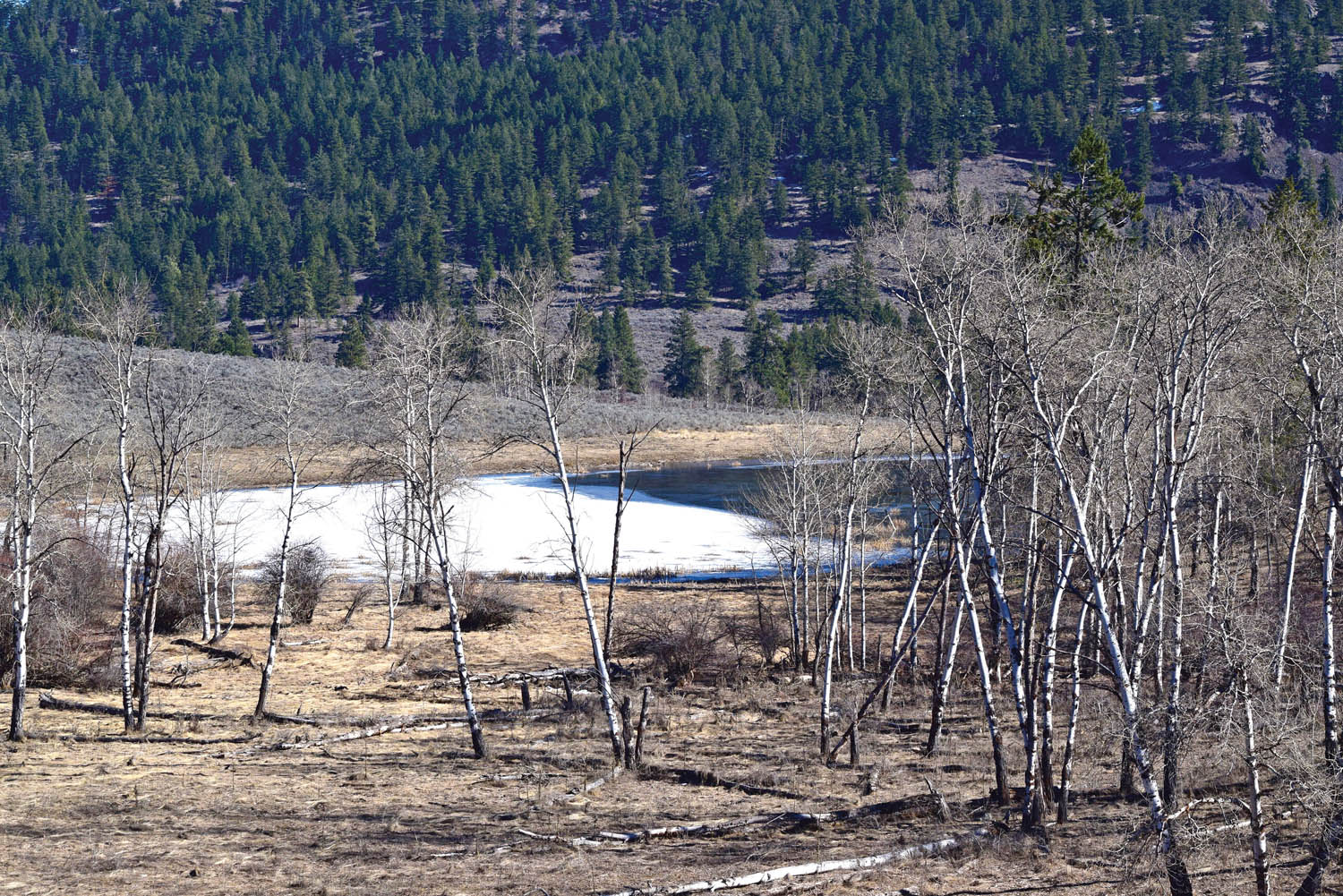
The Kit Carr property includes a lake, shown here in winter. (NCC photo)
A recent 320-acre land purchase by the Nature Conservancy of Canada (NCC) will link several other conservation and protected areas of the South Okanagan grasslands.
The addition of the “Kit Carr” property – named after its original homesteader – extends the Sage and Sparrow Conservation Area northward – giving it a total area of 3,340 acres (1,350 hectares).
It also bridges a gap between two portions of the South Okanagan Grasslands Protected Area to the north of Kilpoola Lake.
“Connectivity is really important in terms of biodiversity conservation,” said Barb Pryce, the NCC’s B.C. Southern Interior Program Director, adding this was a very important factor in the decision to purchase the property.
“If you’ve got small parcels scattered over the landscapes that’s a good thing, but it’s more effective if they are continuous parcels,” she said. “It allows for movement of species. So we always look at connectivity if we’re building on existing conservation work.”
The purchase from landowner George Thompson was concluded earlier in March, Pryce said.
“I didn’t want to see this land changed,” said Thompson. “I know the Nature Conservancy of Canada will take good care of it.”
The NCC is a major Canadian land conservation organization that aims to protect the most important natural areas and the species they contain.
Since 1962, the NCC and its partners have helped to protect more than 2.7 million acres (more than a million hectares) nationwide, with more than a quarter of these in B.C.
Kit Carr is the fourth land parcel to be added to the Sage and Sparrow Conservation Area. Since 2012, the NCC has obtained the Sparrow Grasslands, Sagebrush Slopes and South Block to the south and west of Kilpoola Lake.
Kit Carr adds more than just grassland habitat to Sage and Sparrow, the NCC says in a news release. It enhances the ecological profile by adding a 10-acre lake and mature Douglas-fir forest.
“Lakes and their associated wetlands are precious in this dry bunchgrass steppe environment,” the NCC says. “The forest provides habitat for flammulated owls, several species of woodpecker and other rare species.”
Pryce said it’s difficult to know how many new species will be added with the acquisition because a baseline inventory hasn’t been done.
“That is something that will unfold this spring and into the fall,” she said. “That involves us going out and mapping out the ecological systems and doing species surveys.”
These surveys include plants, birds and other animals, she said.
“We expect to find more,” she said. “We’ve been very pleasantly surprised by the diversity of species that we found on the other three parcels.”
Although Douglas fir exists on the other parcels, there’s been a history of fires to the south, but more of the forest on the Kit Carr parcel was unaffected by fire. This increases the likelihood of finding additional species.
The addition of grasslands is important, Pryce said.
“Our grasslands are pretty rare in British Columbia,” she said. “You look around and you think that they’re endless, but they’re not and there’s less than one per cent of the province covered in grasslands.”
The area is home to a diverse range of amphibian, reptile, bird and mammal species, some not found anywhere else in Canada or the world.
It is a crucial migratory corridor for species moving between the desert areas of the western United States and dry grasslands of the B.C. interior, the NCC says.
The $750,000 expansion initiative was funded by the federal government, the Sitka Foundation, Burrowing Owl Winery, South Okanagan Naturalists’ Club, Okanagan Similkameen Parks Society and other private donors.
These funds cover project development costs, purchase price and an endowment for the long-term care and management of the property.
The property will be managed the same as NCC’s other holdings, Pryce said. This means that while the NCC owns it as private land, people are welcome to go in and walk around and enjoy the landscape.
“But we absolutely do not want any sort of wheeled vehicles on the land because it is so sensitive,” she said. “It’s not really compatible with the goals that we’re trying to achieve there.”
RICHARD McGUIRE
Osoyoos Times
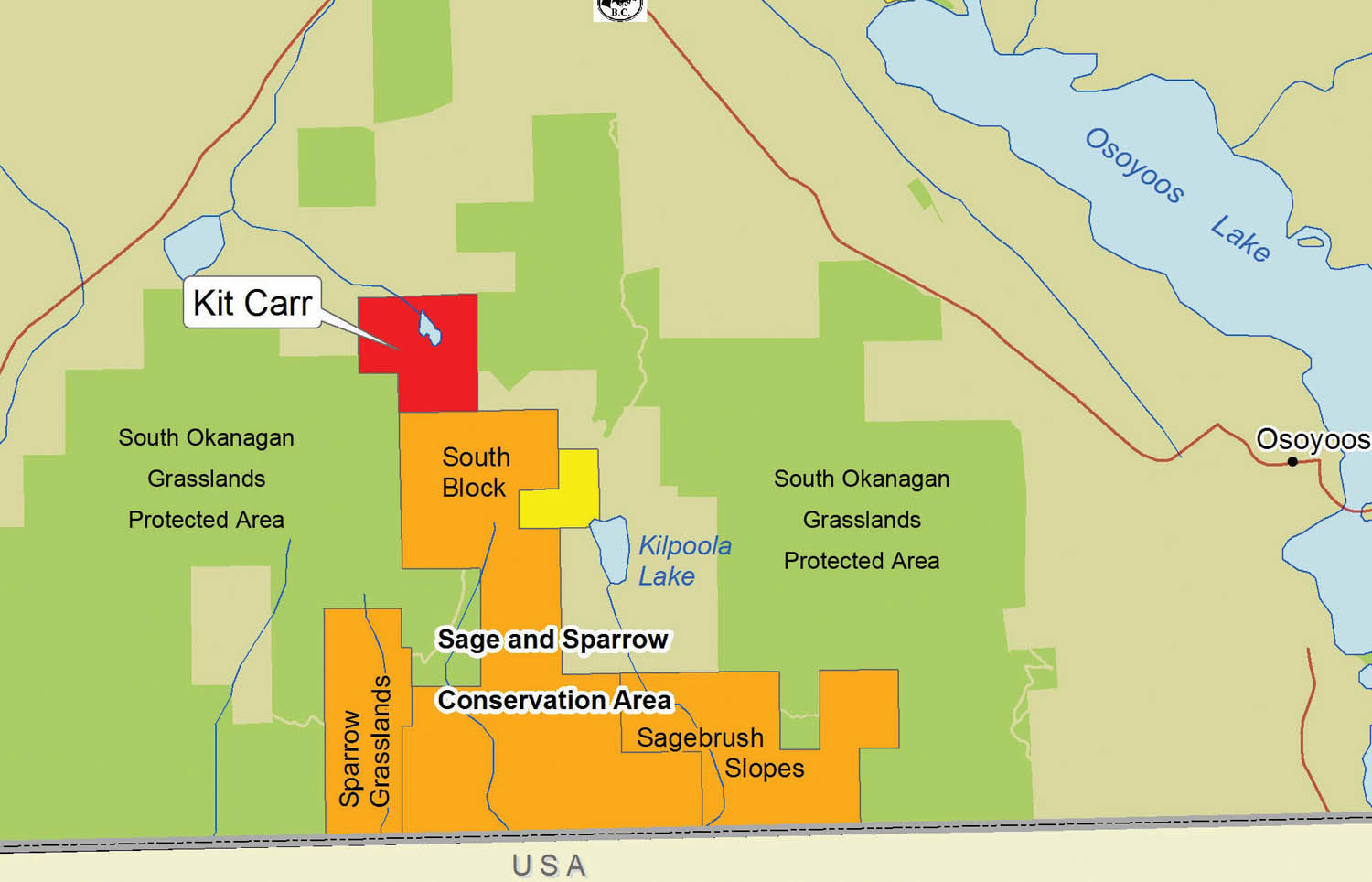
A map released by the NCC shows the location of the Kit Carr property in relation to others. (NCC graphic)
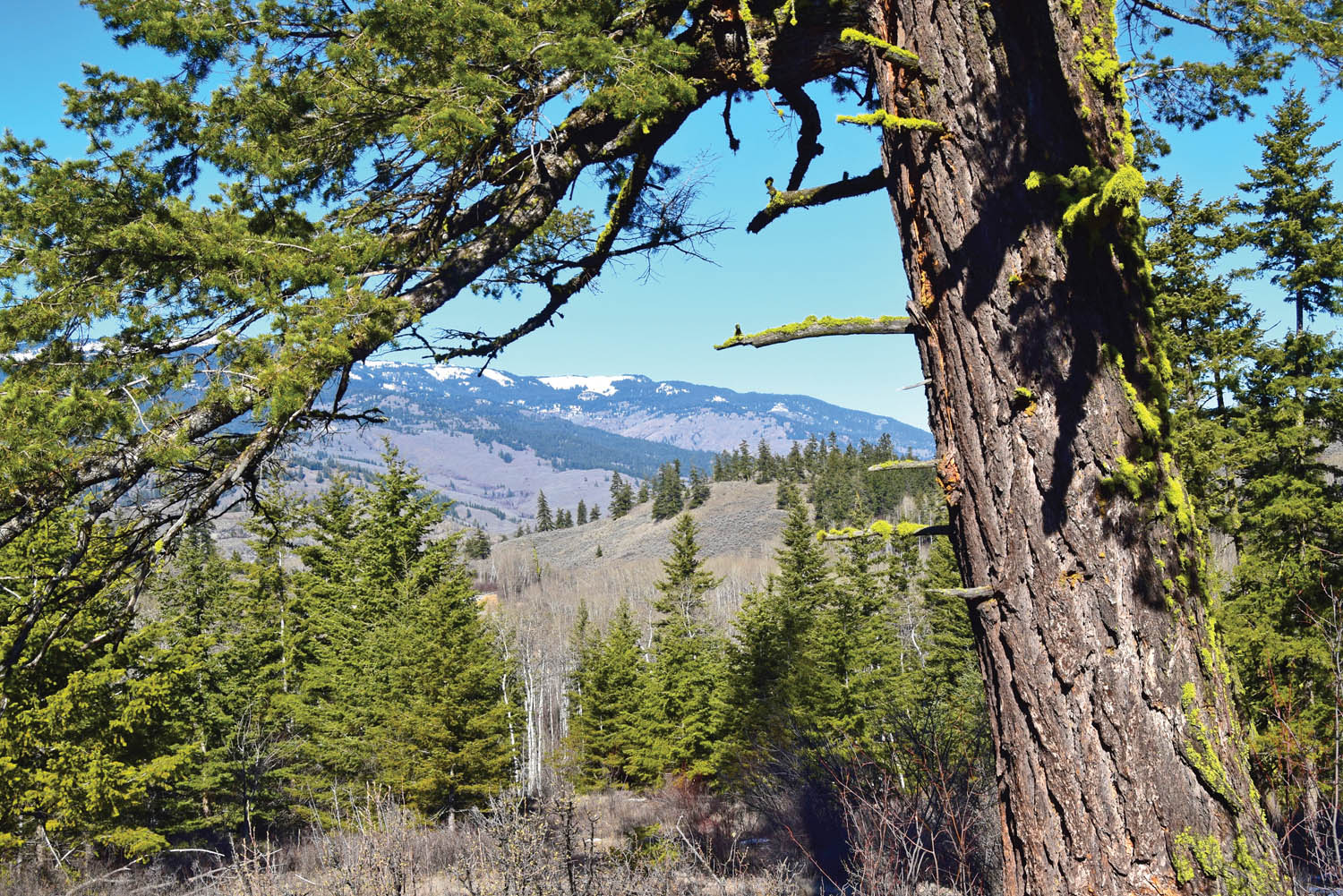
A view of the mountains from the Douglas fir forest on the Kit Carr property. (NCC photo)