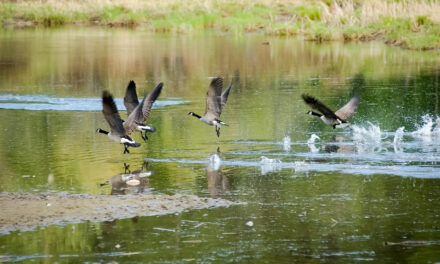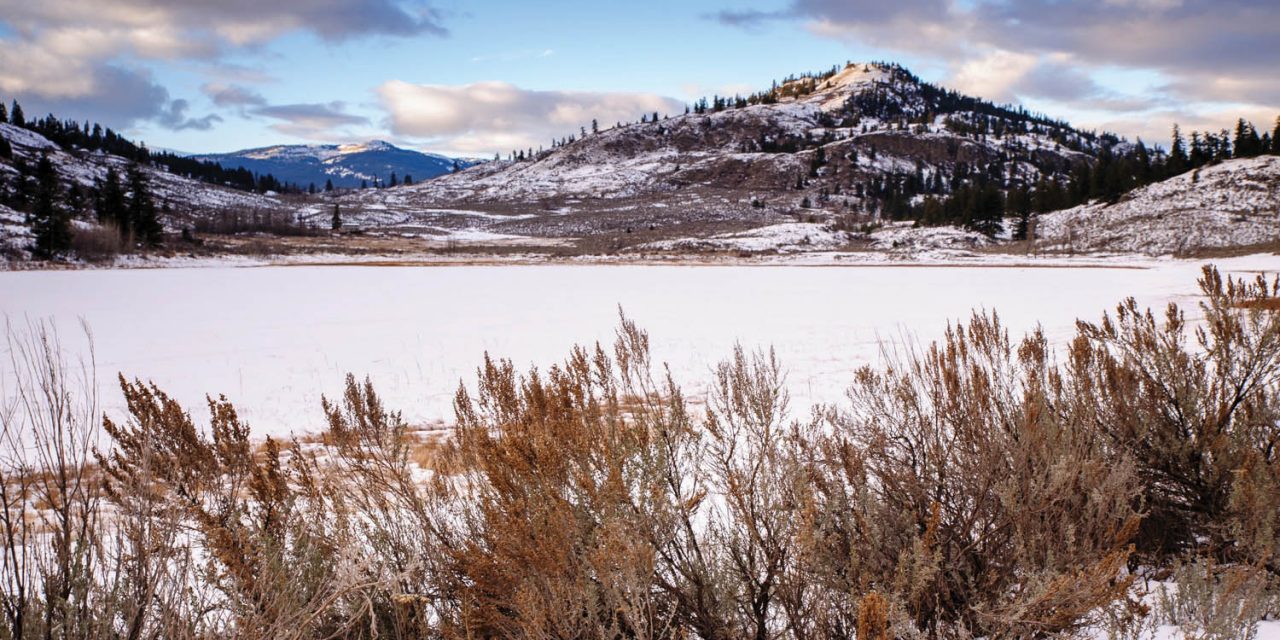
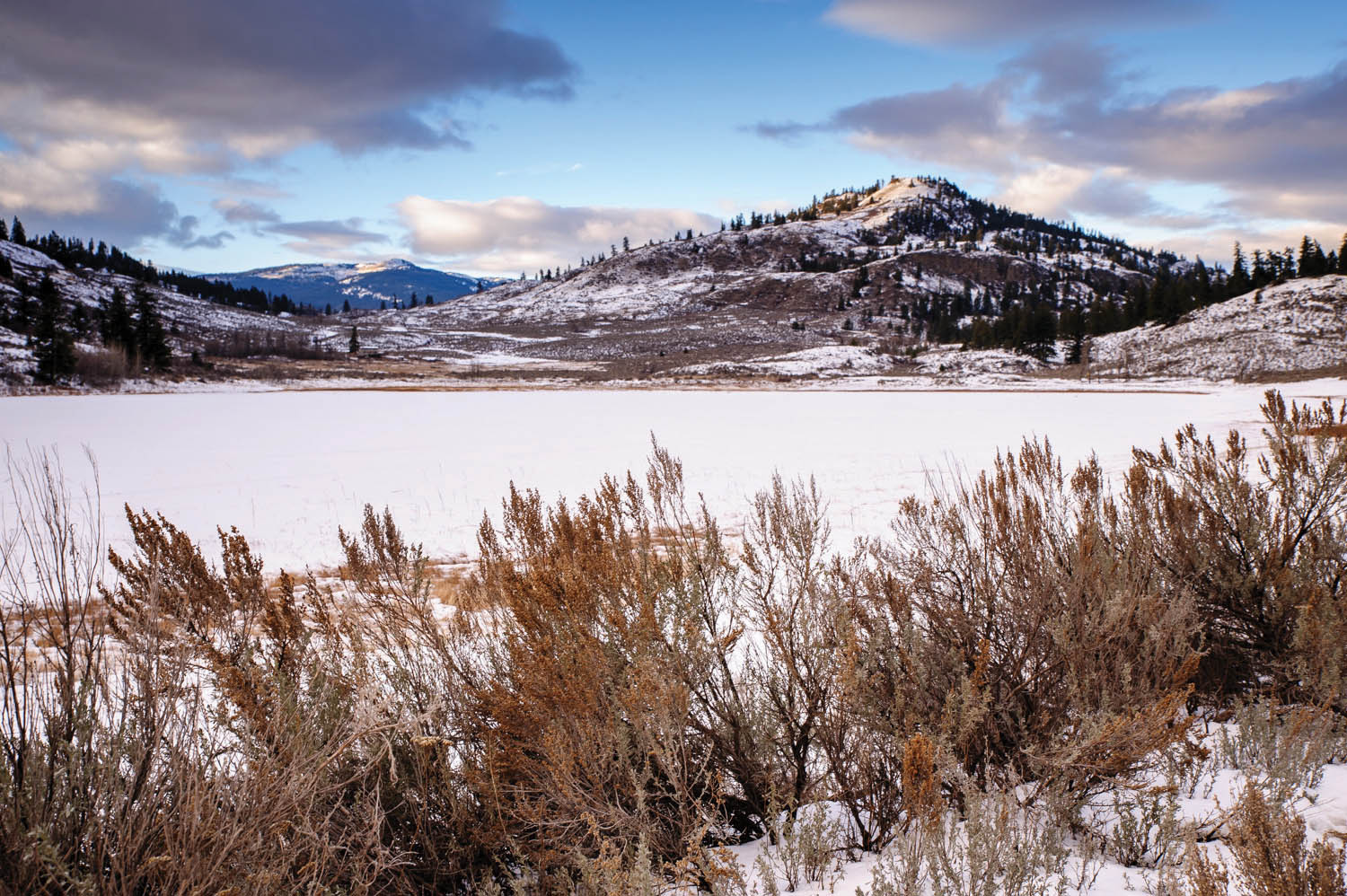
Parks Canada considers the sagebrush grasslands around Kilpoola lake as one of Canada’s unique regional landscapes. In warmer months, cattle graze in this area. (Richard McGuire photo)
A national park reserve in the South Okanagan and cattle grazing aren’t mutually exclusive, say park supporters who are reacting strongly to recent comments by MLA Linda Larson.
“I disagree with Linda’s approach in playing one industry against another,” said Holly Plante, president of the South Okanagan Chamber of Commerce. “The national park is not about one industry flourishing and the other suffering.”
Larson, the MLA for Boundary-Similkameen, recently stood by previous comments to municipal and business leaders that she would rather have one farmer than four tourists. She also opposes a national park if it affects the livelihoods or lifestyles of local people.
Meanwhile, an official with Parks Canada reaffirms that livestock grazing in a future South Okanagan national park could be permitted. Parks Canada is not currently engaging with stakeholders since the B.C. Liberal government abruptly ended talks on the park early in 2012.
“In the case of the South Okanagan, recognizing that a significant proportion of the area under consideration for a national park reserve is under grazing tenure, Parks Canada is committed to working with ranching families to support continued livestock grazing within existing tenures,” said Kevin McNamee, director, Protected Areas Establishment Branch, in an emailed response.
“Parks Canada would work with the ranching families to establish a management framework to allow them to continue their operation within the park,” McNamee continued.
Currently regulations under the National Parks of Canada Act do not permit people to keep livestock in national parks, however an exception allows people to obtain a grazing permit “to facilitate grazing for ecological purposes” in Grasslands National Park in Saskatchewan.
Regulations can be changed by the government without requiring an act of Parliament.
In the case of Grasslands, animal grazing was originally not permitted, but traditionally the area had been grazed by bison, and managers and scientists decided that some level of grazing on native prairies was key to its ecological integrity.
Bison are not native to the South Okanagan.
In the 2011 feasibility study, Parks Canada said it would reduce the intensity of grazing in the proposed park by purchasing one or more large ranches on a willing seller, willing buyer basis. It would then work with the province to reconfigure grazing and exclude it from some areas for ecological reasons.
National park supporter Doreen Olson, director of the South Okanagan Similkameen National Park Network, also believes Larson is missing the point by suggesting tourism and ranching are incompatible in a park.
“If she would read the feasibility study that was done by the province and the federal government, that study clearly outlines how the proposed mitigations would be,” said Olson. “There would be grazing within the park… I don’t think she’s read it. I don’t think she understands what the next step is actually.”
Plante, the chamber of commerce president, argues that ranching and tourism can be complementary.
“We see that this area is getting very well recognized for farm to table,” said Plante, pointing to the growth in culinary tourism.
“Ranching is part of that picture and a perfect example of how these industries work in concert to create better sustainability for our region,” she added. “Many tourists visit our region because they look up to our farming and organic practices… There is a win/win with the national park, but the only way to get there is through open communication, which really isn’t possible until the provincial government starts hearing the majority of the people who want them to re-engage in discussions with the federal government.”
Opponents of the park, however, are not convinced that grazing can coexist with a park and they distrust Parks Canada.
“I don’t know why anybody would believe that,” said Greg Norton, spokesman for the Grassland Park Review Coalition. “That is such a stretch to me. There’s been absolutely zero indication from Parks Canada on that front. None whatsoever. I’ve never seen it in writing. The pro-park corporate environmentalists are saying that because it sounds good and feels good. It has absolutely no bearing on my thinking because they have nothing to back it up. They’re not in government.”
The only thing a national park would accomplish would be to exclude everyone except a small segment of people, Norton said.
“I believe that communities working together are the answer rather than just having Parks Canada or Big Brother or whatever try to manage that area up there. If I’ve learned one thing about Parks Canada in the last 11 years, it’s that trying to get information out of them is almost impossible. They are not a community-based organization. They are a huge bureaucracy that works out of Ottawa completely detached from local issues and concerns and they’ve proven to me at least that they just won’t respond to the people.”
Every activity that goes on in the area now would be negatively affected by a park, Norton added. This includes bird watching and naturalists, he said.
“They will restrict everything. Obviously hunting and fishing and horseback riding and all those other activities would be restricted.”
Norton says the land is well protected under the existing Land and Resource Management Plan (LRMP), which already sets aside critical habitat areas, so national park status isn’t needed.
He also points out that cattle grazing is important for reducing the vegetation that acts as a fine fuel and can cause catastrophic wildfires.
Norton, an orchardist, is not one of the 11 ranchers with land or a grazing tenure in the proposed park area.
Doug Brown, the immediate past president of the Oliver Osoyoos Naturalist Club dismisses Norton’s suggestion that bird watching would be adversely affected as “ridiculous.”
His club is “100 per cent” in support of a park, he said, adding that national parks are meant to preserve flora and fauna and protect endangered species so their numbers would hopefully increase.
Osoyoos Mayor Stu Wells, who supports a park, isn’t satisfied that the land is adequately protected by the province. He also thinks that national park status would give the area a much higher profile for tourism.
“British Columbia Parks allow mining, they allow logging. Anything can go on in those parks,” said Wells, who adds that Parks Canada chose the location because it is one of the 39 Canadian regional landscapes it wants to represent in its parks system and is unique in Canada.
There would be jobs created for park services as well as numerous spinoff jobs and it would attract visitors throughout the year, Wells added.
“We know how hard the tourism business is here, and we keep working at the shoulder season,” he said. “This would really enhance that and would help to bring foreign travellers here.”
RICHARD McGUIRE
Osoyoos Times