
Many Osoyoos residents are seeing a decline in their property values on their 2013 assessment notices, but that doesn’t mean they’ll be paying lower taxes.
Notices were mailed in recent days to more than 67,000 property owners throughout the South Okanagan region, and in most communities property valuations are slightly lower.
BC Assessment says an average single-family house in Osoyoos is assessed at $371,000 on the 2013 roll, which is based on market valuation as of July 1, 2012. This compares to $399,000 for the same house the previous year.
Property owners have until the end of January to dispute their assessments if they are unable to resolve issues after speaking to a BC Assessment appraiser. Although a property’s assessment is used to determine the municipal taxes a homeowner must pay, a lower assessment doesn’t mean a drop in taxes – assuming that property values decrease more or less consistently throughout the community.
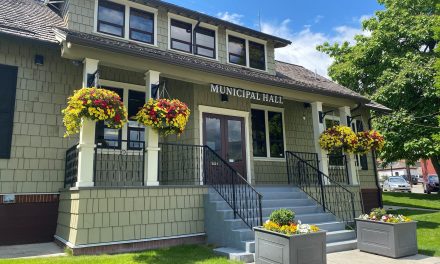
“If the assessments have actually gone down, the mill rate’s going to go up to offset that,” explains Jim Zakall, Town of Osoyoos director of financial services, noting that the town does its calculations based on the total amount of taxes levied throughout the community.
The town only takes in additional total property tax dollars if there is an increase in assessment based on new construction, he says. This, however, has not been happening in recent years due to little construction activity.
Tracy Wall, deputy assessor with BC Assessment Okanagan Region, says the lower valuations are a reflection of real estate markets.
“We base it on information with regards to the sale activity in a community over the last year, and particularly around July 1, which is our valuation date,” said Wall. “The sales have indicated that the values are down this year compared to last year.”
A second key date is October 31, when the “state and condition” of properties is taken into account, reflecting any major changes to properties, she said.
Wall says most property owners, more than 98 per cent, accept their property assessment without going to a formal, independent review.
Those who are unable to resolve issues after speaking to a BC Assessment appraiser need to submit a notice of complaint (appeal) in writing by January 31. This allows for an independent review by a Property Assessment Review Panel.
If, after a hearing by the panel they are still not satisfied, there is a second level of appeal, the Property Assessment Appeal Board.
Assuming they’ve gone through the first level of appeal, property owners have until April 30 to apply to the appeal board.
“We try to encourage people first of all to contact us before it even gets to that point, so if there is an error, we have the ability to correct it,” Wall said.
Wall notes that commercial property values may behave differently from residential because the types of commercial property are diverse.
Values change at different rates depending on whether it’s a commercial building, an industrial building or an apartment building, for example, she said.
Zakall says the town tends to receive more questions from concerned residents when average assessments go up.
Then, some residents call in fear that their taxes will be going up and they can’t afford to pay.
He explains to them that assessments are based on market values and the town still takes in the same amount in total tax dollars regardless of how fluctuating market values may affect assessments each year.
Wall encourages property owners to visit the BC Assessment website at www.bcassessment.ca if they need further information. She also encourages owners to compare their assessments with those of their neighbours and any information on property sales activity. Ultimately, she says, property owners just want to make sure they are being treated fairly and if they have the information, they’ll understand it better.



Search
Ad Space – Square S1
Newsletter
Ad Space – Square S2
Contests
Ad Space – Square S3
Real Estate
Pocket Guide
