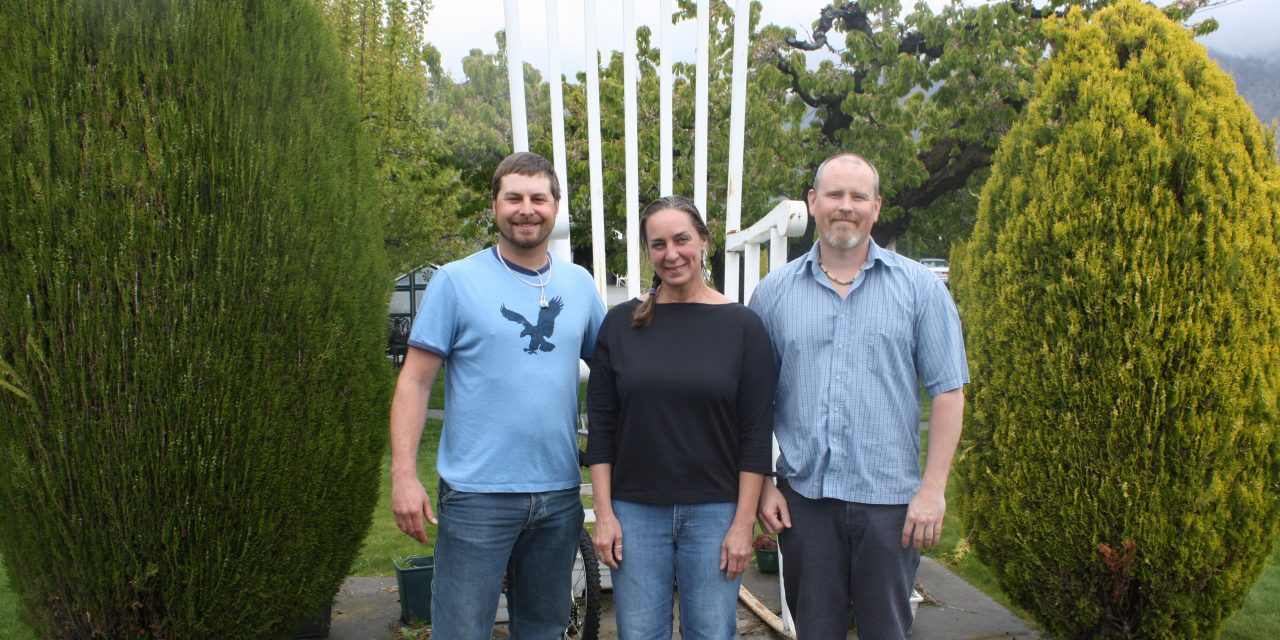
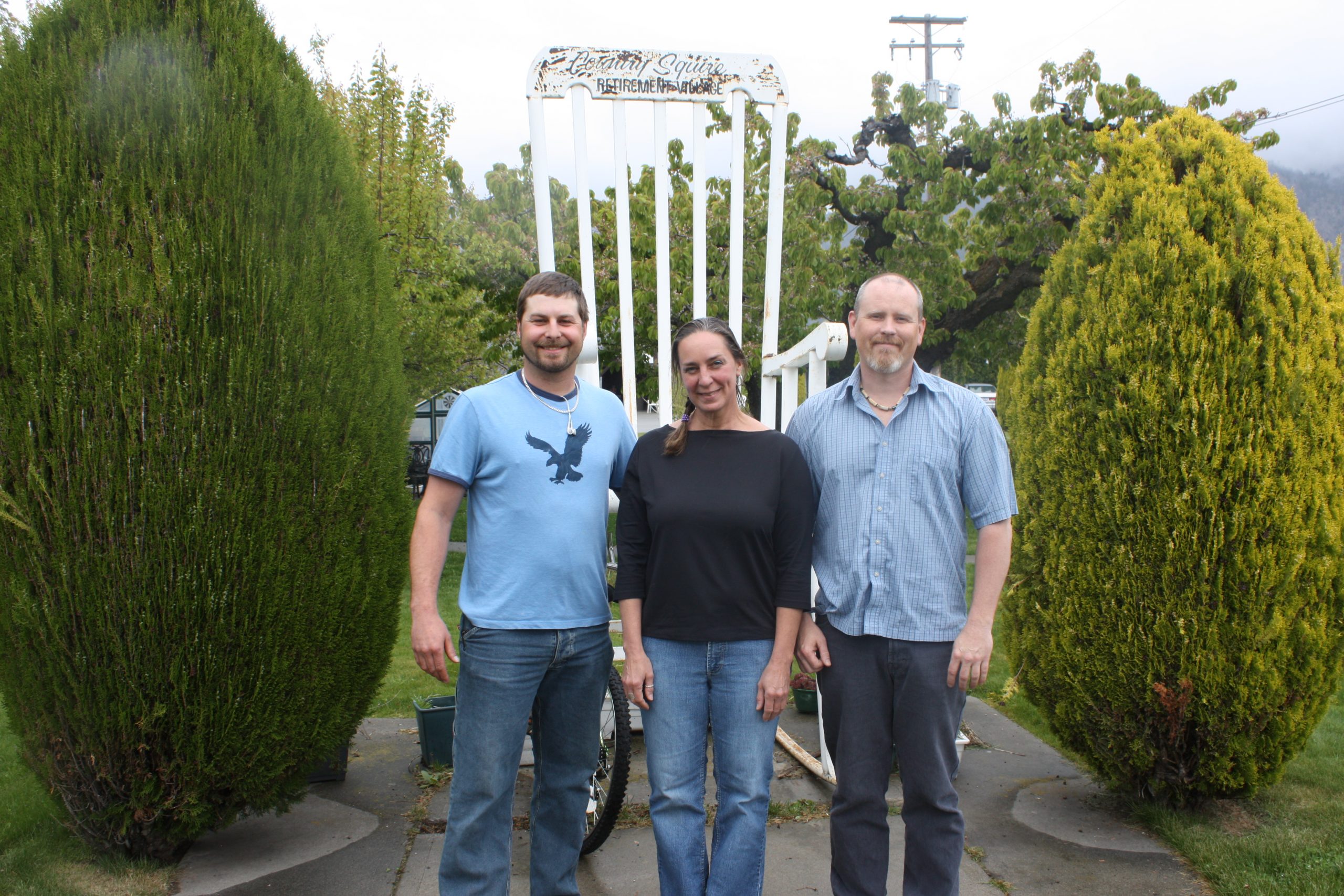
Country Squire Villa owner Scott Nichol, left, rehabilitation co-ordinator Natalie Carr and Acting Director Sean Rathwell are all proud of the great work being done at the facility. Photo by Keith Lacey
No one chooses to suffer from mental illness.
But for those who do, it’s life altering to realize a place like Country Squire Villa has been allowed to not only exist, but grow and prosper in a very supportive community like Osoyoos, says acting director Sean Rathwell.
It’s hard to believe the majority of the clients Country Squire staff help each and every day would have been “warehoused” in a provincial institution not so many years ago and forced to live a life without much meaning, said Rathwell.
The Canadian Mental Health Association is promoting Mental Health Week as an annual national event during the first week in May to encourage people from all walks of life to learn, talk, reflect and engage with others on all issues relating to mental health.
By offering quality care to patients suffering from chronic and persistent mental health issues, Country Squire not only provides shelter and food, but programs and services delivered by staff who care about them and help many to independent lives in the community, said Rathwell.
There are currently 30 clients living and receiving services at the villa.
“Interior Health has made it clear they consider us the model for the entire South Okanagan for tertiary care and that’s something we’re very proud of,” said Rathwell, who leads a staff of 30 at Country Squire, which was established as a care facility back in the early 1970s and transitioned into a home for those suffering from chronic and persistent mental health issues over the past 20 years.
“Nothing we have accomplished here could have been done without the endless and tremendous support of the mitment and dedication of our staff. The fact people are kind and accepting of our clients in this community is probably the biggest reason we’ve been able to accomplish what we have.”
Situated on a quiet, gorgeous 10-acre site on the outskirts of town among numerous orchards and with beautiful Osoyoos Lake and mountains as a backdrop, Country Squire Villa was started by John Nicholl and his family back in 1971.
Family friend Sophie Gallis was the owner of the property for many years and had started offering small-scale respite care to people suffering from serious arthritis.
The Nicholl family grew the business from there and John’s son Scott Nicholl remains the owner of the property and private care facility to this day.
“We started expanding and before we knew it, we had 28 rooms, all offering private care,” he said.
After his father passed away in 1982, officials from Interior Health approached his family and asked if they would consider using some of the rooms to house patients with mental health problems, said Nichol.
Since the early 2000s, it has become a home strictly for those with chronic and persistent mental health issues, with patients being referred from physicians and staff in the mental health system.
The fact the population of the Riverview Psychiatric Hospital in Port Coquitlam has dwindled from 5,500 patients to less than half that number is very encouraging because institutionalizing people because they had mental health issues has been an abject failure, said Rathwell.
“The fact is we used to throw these people in these huge institutions and basically let them rot there,” he said. “Thankfully so much has changed.”
Riverview remains open because there are many people who suffer from serious mental illness and could not function in places like Country Squire, he said.
However, most mental health patients can live in the community because of advances in medication and improved treatment and services, he said.
Country Squire will only accept clients who doctors refer as having chronic and persistent mental health issues, but have no history of violent behaviour. They can’t be suicidal or have acting substance abuse problems, he said.
By being surrounded by others going through the same issues and receiving quality treatment, the results are often phenomenal, said Natalie Carr, rehabilitation co-ordinator at Country Squire.
Country Squire staff consists of psychiatric nurses, registered care attendants, cleaning staff, administration and management who are all dedicated to the collective well-being and care of clients, she said.
“The whole point of this place is to do everything we can to normalize their reality process,” she said. “Besides providing the right medication, we want to be there to provide support so they can enjoy a decent quality of life and have meaning in their lives.
“Most of our clients are long-term, but they love it here and feel at home. For those who make a lot of progress, we work with them to give them all the skills they need to feel safe and confident enough to live on their own, be it here on site with housing units we have for them, or in town.”
In the last two years, three clients have made the big leap to living on their own, which provides a great deal of satisfaction to staff, management and fellow clients, said Carr.
Carr reiterated that community support is crucial.;
“The amount of support this community has given us is simply incredible,” she said. “When our clients walk into town and see people saying hello to them and not judging them, it makes a world of difference.”
Working with a team of dedicated professionals makes coming to work something to look forward to, said Rathwell.
“The people here go above and beyond anything you have ever seen,” he said. “They come in here on their days off to take their clients to hockey games or the rodeo.
“I live in Kelowna, but I would rather make the 140-kilometre drive to come to work and be part of something that matters than work a couple of blocks away on something that doesn’t make a difference. I come to work knowing I’m not going to have an unhappy moment from the time I arrive. The staff are amazing and I’m just really proud of what we accomplish here every day.”
Mental Health Week is about promoting good work like that being done at Country Squire, but also removing the stigma of mental illness, said Rathwell.
“The statistics clearly show a large percentage of us will either suffer from a mental illness or be affected by it during our lifetime,” he said. “The reality is it’s very common in our society and people don’t have to be ashamed.
“The mentally ill are some of the most marginalized people in our society, but thanks to advances in treatment and education, that stigma is starting to be lifted slowly, but surely.”
One common perception held by far too many is mentally ill people are inherently violent, which couldn’t be further from the truth, he said.
“The level of violence in this community is far less than what occurs among the general population,” he said.
Treating clients with dignity and respect is ultimately at the core of Country Squire’s success and why it has become a model other organizations try to emulate, he said.
“There’s no hidden agenda here,” he said. “We’re all here to provide support and help our clients and they know it and it’s reflected by just how well everyone gets along here. When you put 30 people in an enclosed area and ask them to get along, it’s usually a recipe for disaster, but that’s just not the case around here.”