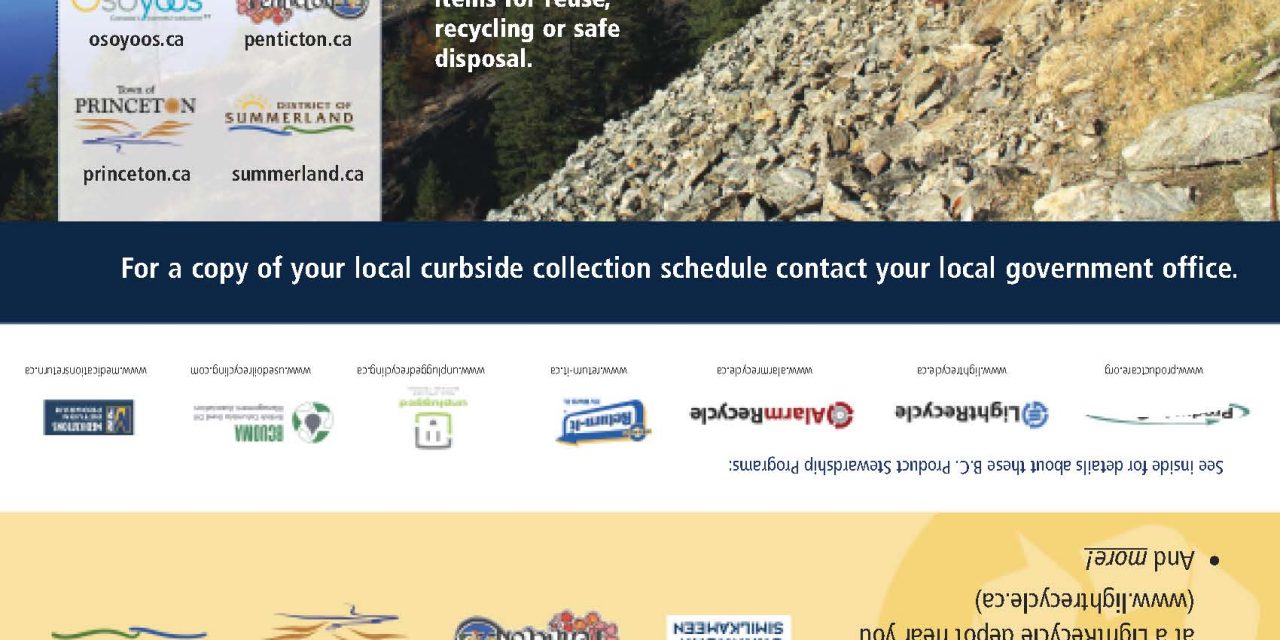
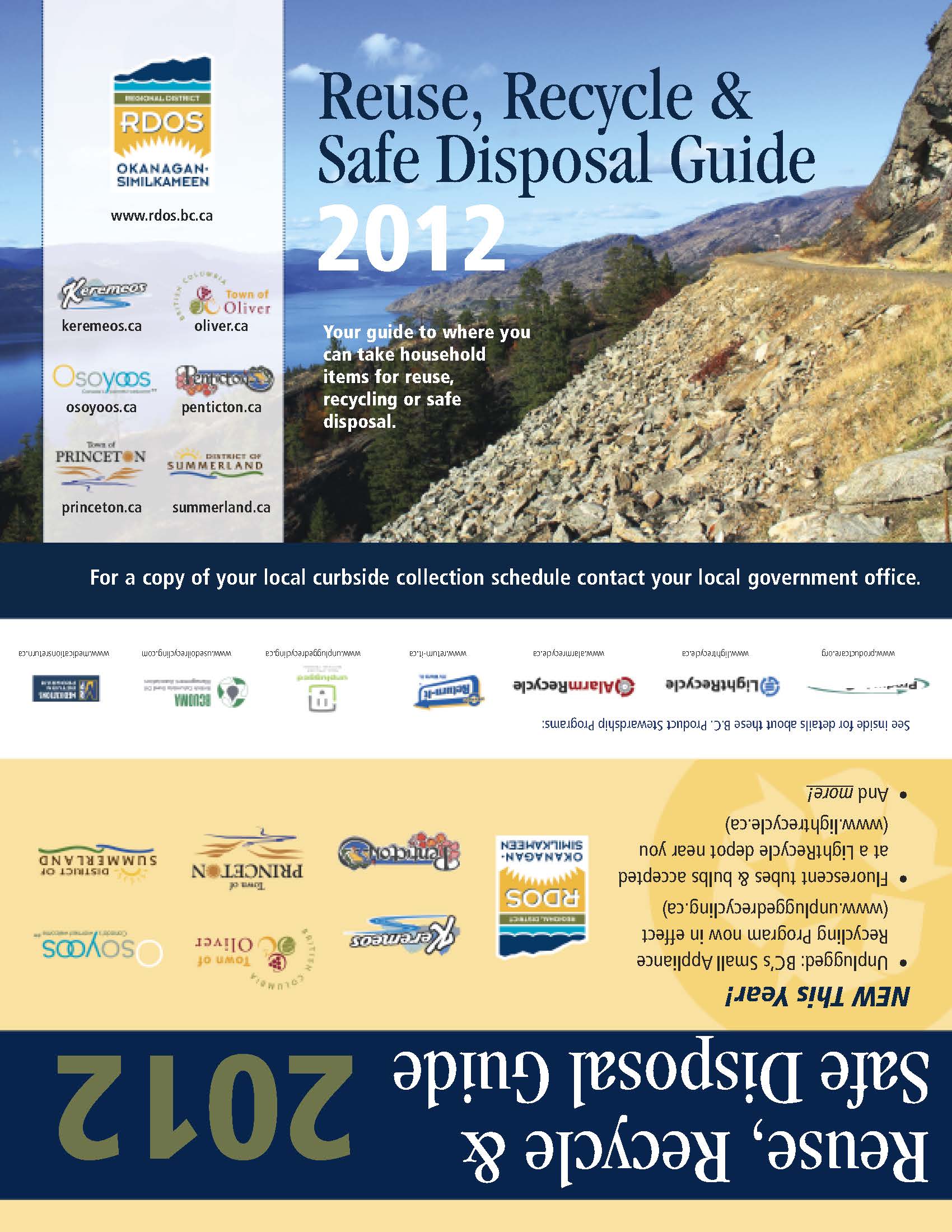
This is the front cover of the 2012 Reuse, Recycle and Safe Disposal Guide being distributed to 40,000 homes across the Regional District of Okanagan-Similkameen over the next few days. The new guide will provide a detailed list of what household items can be recycled and where they can be dropped off for recycling in the various communities spread across the RDOS area, including here in Osoyoos. Photo Supplied
The amount and range of household items that can be efficiently recycled is amazing, but unknown by many homeowners, says Cameron Baughen.
That’s a big reason why the Regional District of Okanagan-Similkameen (RDOS) has produced and published its 2012 Reuse, Recycle and Safe Disposal Guide, which will be distributed to 40,000 homes throughout the Okanagan Valley by Canada Post sometime this week.
“We started putting this together last fall and we just completed it … we’re very pleased with how it turned out,” said Baughen, solid waste management co-ordinator for the RDOS.
While most citizens know exactly where to bring their used bottles and newspapers and are willing participants in recycling initiatives in their respective communities, the majority of citizens don’t have a full grasp of the many items they use on a regular basis that can be recycled, he said.
“Most people know where their bottle depot is in town, but a lot of people don’t know where they can bring things like car batteries or even more obscure items like mercury switches they might use in their home,” he said. “We did a survey and it showed 95 per cent of people recycle bottles, but when it comes to things like getting rid of hazardous waste like gasoline or oil or paint, that number drops to less than 50 per cent.
“This guide is all about informing the public about all the items they can recycle and reuse and where they can be dropped off in the different communities in the regional district. The simple goal of the guide is to know what things you can recycle and where you can take them.”
In Osoyoos, numerous businesses are on board as active participants in the town’s recycling efforts, said Baughen.
For example, The Source will accept various batteries used to power various electronic equipment, while car batteries can be brought to Pud’s Auto Wrecking on Meadowlark in Osoyoos or the town’s landfill site and fluorescent lightbulbs can be brought to the Home Building Centre on Main Street.
While more than 40,000 copies have been ordered for distribution across the regional district, copies will also be made available in the near future at the town hall in Osoyoos as well as the Sonora Centre.
Because there are so many recycling initiatives being undertaken in Osoyoos and in towns across the regional district, the plan is to update this guide annually for at least the next two years, said Baughen.
The guide looks good and RDOS staff are happy with the published product, said Baughen. The RDOS has produced an annual calendar for several years promoting reusing and recycling household goods and that calendar will still be published, but the guide is much more informative and helpful to the average citizen, he said.
The town, RDOS and various environmental stewardship associations across the Okanagan helped pay for the costs to produce and publish the guide, he said.
The reality is the majority of Canadians are now extremely conscious about recycling efforts and want to do their small part to help the environment, said Baughen.
“Reusing and recycling our household goods is a big, big initiative, but people are also now interested in safe disposal as well and the guide addresses this,” he said. “People are using things that are potentially dangerous or explosive and they want to know how to get rid of this stuff safely.”
For more information about the guide, you can visit the RDOS website or call 1-800-667-4321.