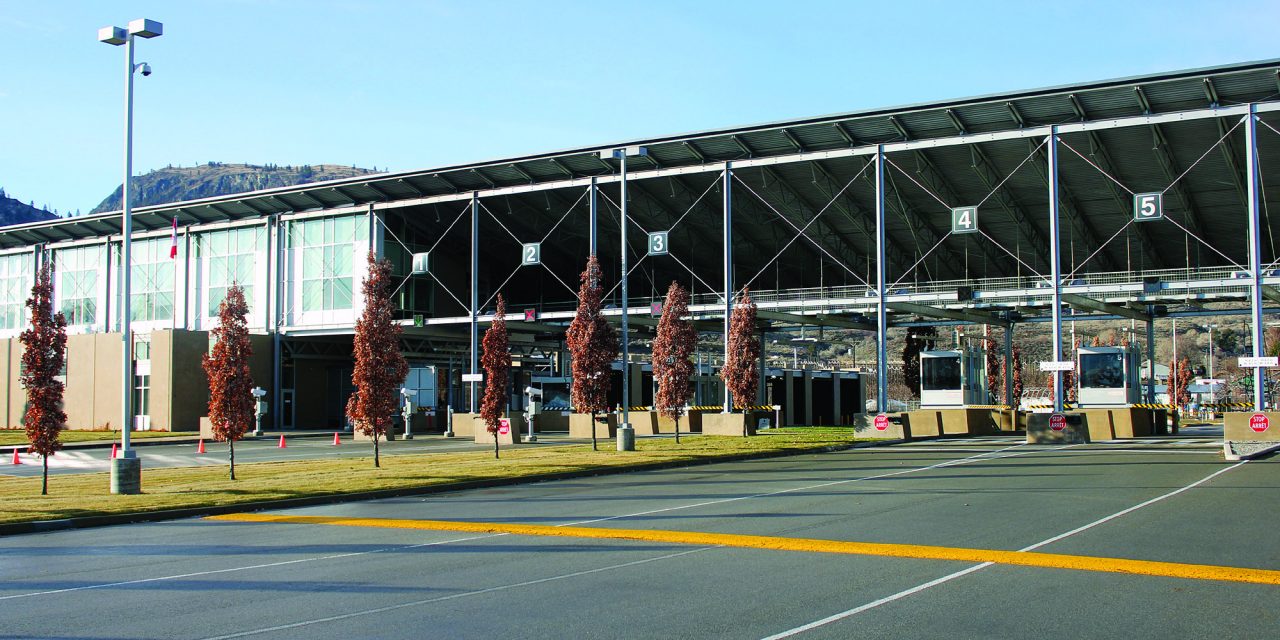
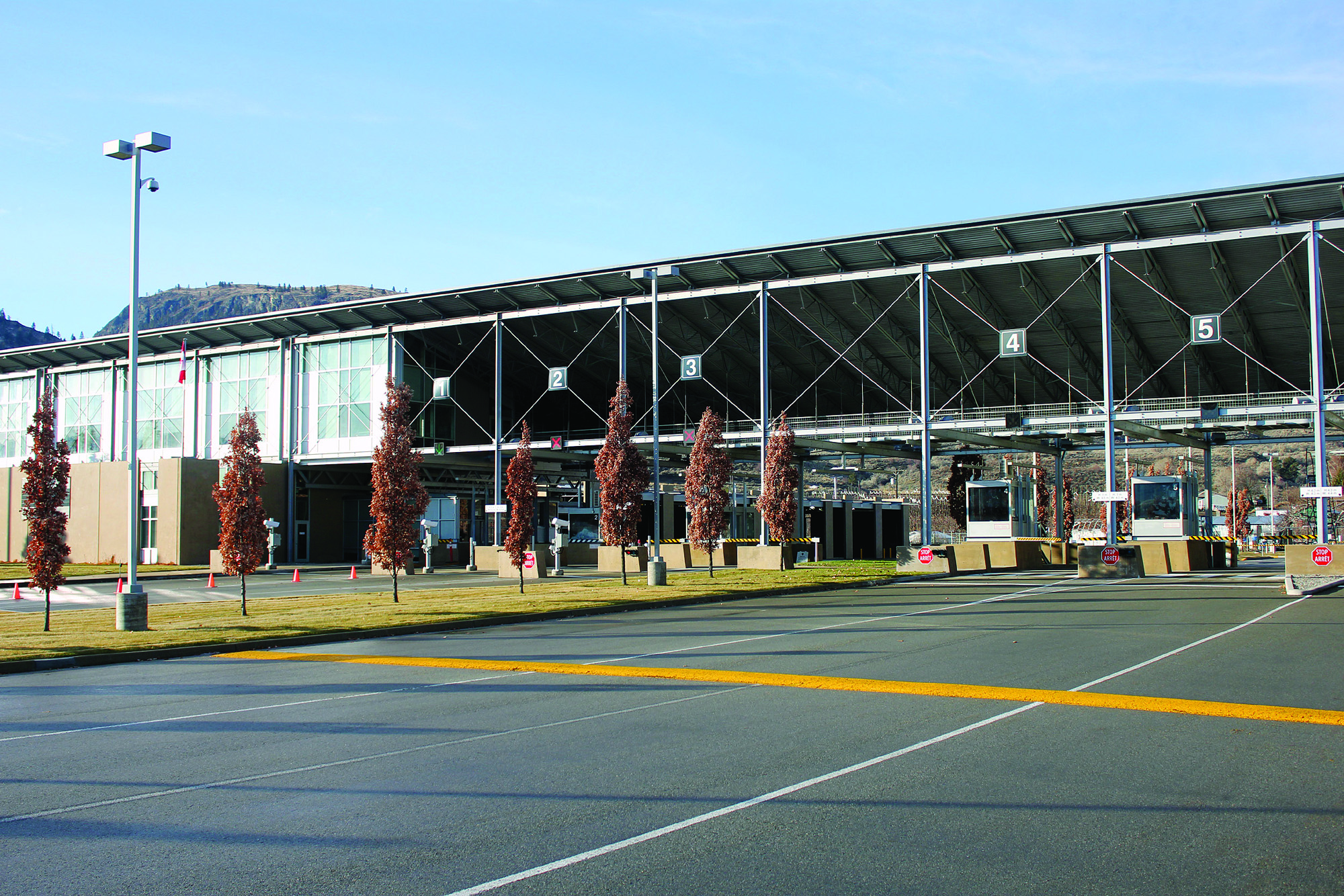
The port at the Canada and U.S. border in Osoyoos sits quietly on Thursday, December 29. Two ports in British Columbia, Midway and Chopaka, are being considered for closure according to a leaked report by the bi-national Small Port Working Group. Photo by Mathew White
Negotiations of possible border closures between Canada and the United States has been shoved into the spotlight recently after a report by the bi-national Small Port Working Group titled Initial Results and Path Forward was leaked several weeks ago.
According to the report, the CBSA (Canada Border Services Agency) and the CBP (U.S. Customs and Border Protection) are looking at four different options for 52 ports across the country.
Those options include sharing facilities, mirroring working hours, using a remote-technology solution or closing the facility altogether.
It is important to mention, however, the leaked report was only a draft, and according to Natalie Glister, communications officer with the CBSA, no final decisions have been made.
Of the 52 facilities listed in the report, a total of nine (three in Manitoba, two in British Columbia and one in Alberta, Quebec, Saskatchewan and New Brunswick) are being considered for closure. In B.C., those two borders are located in Midway and Chopaka.
Alex Atamanenko, NDP Member of Parliament for the southern interior of British Columbia, said the effect of these closures could potentially be very big for the small communities where the border crossings are located.
“First of all, the jobs,” said Atamanenko. “Good, full-time, well-paying jobs are lost and obviously small businesses and the economy suffers. There’s [also] the inconvenience that tourists won’t have a chance to cross, so they bypass communities.”
Reports of a possible border closure has a number of residents in Midway, located 70 kilometres southeast of Osoyoos, deeply concerned.
Randy Kappes, mayor of Midway, said closing down the border would be catastrophic for the small village.
“We’ve put a lot of work in turning around our economic situation,” said Kappes. “And the border, although it does not get some of the high volume other areas do, has made a big difference as far as our economic situation in the past, and now that things are starting to start up again, I would expect it to do so again in the future.”
By “starting up again”, Kappes is referring to the Boundary Sawmill, which reopened its doors in October after closing down roughly four years ago.
While he’s not exactly sure to what capacity the border will be used by the mill, he said complete closure of the facility definitely won’t help.
“My biggest concern is that we let them know right away that this is not a good idea, we don’t support it and as they start discussing this, we make sure they’re aware of that.”
Besides the obvious economic factor, there is also a safety concern regarding outposts such as Nelway, which are being considered for remote-technology solutions – essentially unmanned stations where travellers would have to speak with guards through a camera.
“The fact that they turn away people with illegal arms and they catch smugglers, how are they going to assure security if they don’t have any border guards there?” asked Atamanenko. “It doesn’t make any sense.”
Shorty after reading the report, Atamanenko contacted the Minister of Public Safety and was informed no action is being considered at this point in time. He was also told any future decisions on the matter will be made at the ministerial level.
Despite this, Atamanenko is still encouraging residents to contact the minister of public safety with any concerns they may have and speak out on how vital it is to keep these ports open.
The only other border in British Columbia listed in the report was in Waneta, which is not expected to see any changes.
The border in Osoyoos was not mentioned at all in the document.