By Lexi McFarlane, Times Chronicle
The Town of Osoyoos is entering Stage 2 water restrictions early, getting ahead of summer conditions and water levels that aren’t looking optimal for residents.
The proposed motion to enter Stage 2 water restrictions as of May 1, 2026 was discussed at the April 14 Regular Council Meeting, and involved Director of Corporate Services Marg Coulson, along with Director of Operational Services Tyler Madsen.
It comes as Osoyoos Lake deals with historic-low water levels, and as this winter’s snowpack around Osoyoos sits at just 58 per cent of its usual volume.
Osoyoos staff are seeking to achieve multiple goals by entering these restrictions early. Primarily, the objective is to ensure there is enough water available for all residents, and to spread out the demand for watering needs, reducing peak-season pressure.
Other benefits, though, of getting an early start on water restrictions are that the risk of more significant restrictions later on in the season would be mitigated, and that emergency services will be ensured of a proper water supply for their needs.
The restrictions would be applied through three different zones: Zone 1, covering all of East Osoyoos, Zone 2, covering the main portion of town including Downtown and Main Street, and Zone 3, which would be anything south of 62 Avenue.
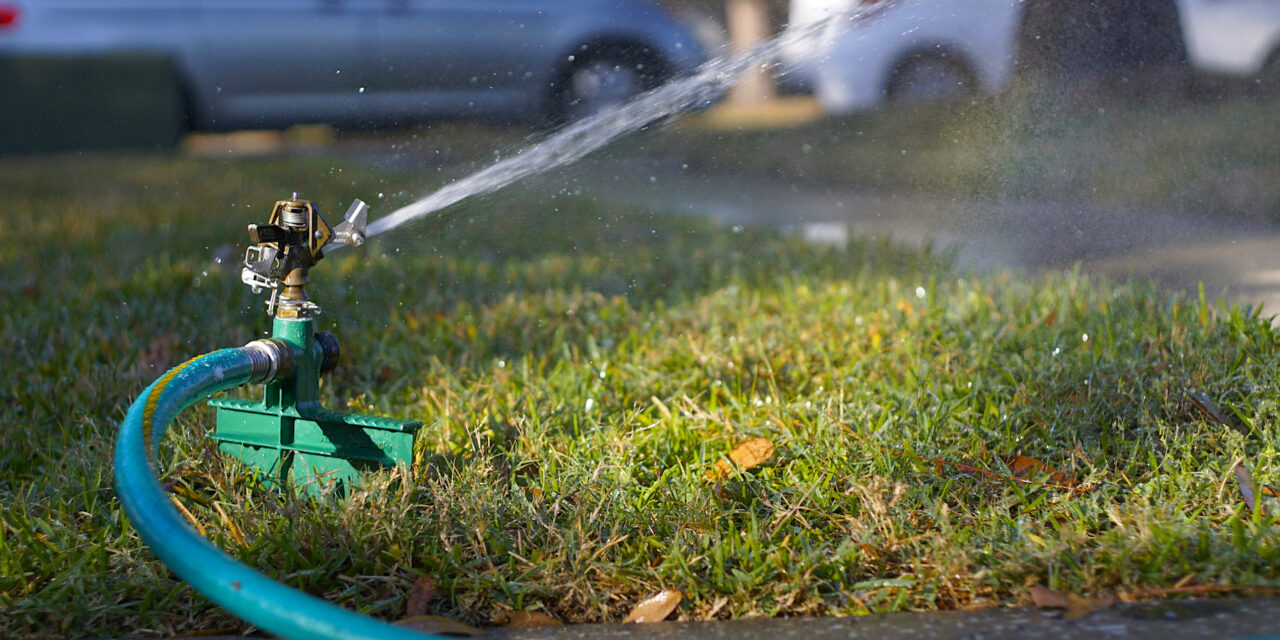
Designated watering days under Stage 2 restrictions are Monday and Thursday for Zone 1, Tuesday and Friday for Zone 2, and Wednesday and Sunday for Zone 3. Automatic sprinklers are permitted between midnight and 4 a.m., while manual sprinklers are permitted between 6 a.m. and 10 a.m. , as well as 7 p.m. to midnight.
Mayor Sue McKortoff acknowledged the challenges lying ahead as residents have to continue navigating water restrictions.
“Many people up and down the valley are experiencing the droughts, and the problems with hot summers and lower water levels, despite the fact that, thanks to the International Osoyoos Lake Board of Control, the lake levels have gone up,” McKortoff said. “We’re hoping that helps a little bit, because it could go down just as easily.”
Councillor Johnny Cheong sought confirmation that the usual process for “flushing out” the water pipes and fire hydrants in town remains necessary.
“This always comes up every year in terms of restrictions, and unidirectional flushing when we flush out the pipes; the question that comes (out is) ‘why am I restricting water when operations staff is flushing all this water out?’ ” Cheong said. “Just to get ahead of it, it would be important if we could re-highlight the reason why we do it, why it is important even if it is water that does get flushed out.”
Madsen affirmed the necessity of “flushing out” the pipes.
“It does two things, primarily,” Madsen explained. “One, it moves the sediment that’s in the (water) lines, out of the lines. And the second is in order to test our fire hydrants; we need to do flow testing to make sure it’s available for emergency services.”
Water Councillor Bob Appleby wanted more clarification on the Osoyoos Lake water levels, and which direction they’re trending in.
“Usually, we hold back water for them (International Osoyoos Lake Board of Control), for the late fall drought,” Appleby said. “I’m just wondering if they’re anticipating us going through a drought a month earlier.”
“We were down as low as 909 feet above sea level,” McKortoff explained. “That’s when things started to happen- the rule curve says you cannot go below 909.”
McKortoff did further note that, through communication between the Penticton and Zozal dams, as well as collaboration with the International Joint Commission, IOLBC members, and the Okanagan Basin Water Board, they were able to determine a sensible path forward to preserve water levels. McKortoff also noted that the Similkameen River’s water levels have risen, which helps give a little bit of relief.
Council voted unanimously to put the Stage 2 water restrictions in effect as of May 1, 2026.