By Roy Wood, Special to the Times Chronicle
The thousands of foreign-trained doctors living but not practising in Canada represent at least part of the solution to the country’s critical shortage of physicians, according to a pair of Conservative members of Parliament.
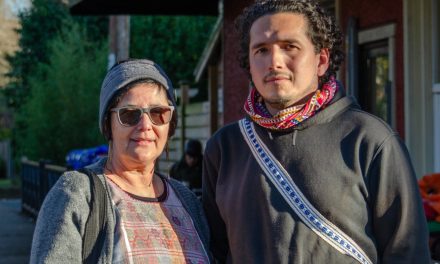
Local MP Helena Konanz and Conservative health critic Dan Mazier popped up in Oliver last week during a fact-finding tour.
Konanz, member of Parliament for Similkameen-South Okanagan-West Kootenay, was joined by Manitoba MP Mazier for an interview with the Times Chronicle outside the South Okanagan General Hospital (SOGH), which Mazier called “ground zero” in the doctor shortage crisis.
The emergency department there has gone through 30 temporary closures over the past year due to a lack of available physicians.
In the interview, Mazier said: “We knew there was a crisis right across Canada, especially in this area, with the shortage of doctors. … So, we decided to come out here and just tour around and … and just talk to the community and hear what else is going on.”
Oliver Mayor Martin Johansen and Councillor Terry Schafer joined the conversation at a picnic table near the parking lot.
In a later interview, Johansen called the encounter “a little odd.”
“I can’t take politicians into the hospital. Doctors aren’t going to speak to politicians. And the same with Interior Health. And I told them that,” he said.
“So, it just ended up with us being outside and bringing some light to some of the challenges that are going on.”
Mazier, who is deputy chair of the House of Commons Standing Committee on Health, said there are 13,000 foreign-trained physicians in the country “who are not working in the profession they were trained in.”
Providing those doctors “a path for them to (get into the system), to start practising again, into these hospitals that are getting shut down or are short of labour. That would be the number one thing we could address,” he said.
Mazier cited several examples of physicians with outstanding international credentials who are in Canada, but unable to practise, including a surgeon from Egypt with 10 years’ experience. “She moved to Canada, and there was no path forward for her. … she needed a process that she could go write a test to prove her proficiency.”
He mentioned an internationally-trained physician who had overseen Doctors Without Borders in several countries. “He could not get a licence in Manitoba. … And he was a practising doctor, so he’s running an ambulance service now in Manitoba.”
Konanz, who is a member of the Commons health committee, pointed out a curious contradiction between the points-based immigration process and medical licensing. Potential immigrants are given extra points if they are doctors, but after they immigrate, they often discover the roadblocks to actually practising.
“There is a definite disconnect,” she said, “and that’s exactly what we’re studying right now in our health study.”
The study to which she referred is the “Impact of Immigration Policy on Healthcare and Barriers to Integrating Internationally Trained Professionals.”
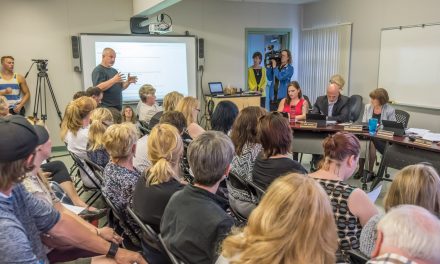
Johansen appeared early this month as a witness before the committee, detailing the challenges faced by rural hospitals struggling to stay open in the face of doctor shortages.
The mayor is well-versed in the subject area, being chair of the regional hospital district and an active member of several healthcare-related organizations. He is also a driving force behind efforts to provide housing for healthcare professionals in the area.
Johansen told the Times Chronicle he believes the crux of the problem is a lack of resources to get foreign-trained doctors through the system and into the medical workforce.
“You have to have people to guide them through the process and somebody to work with them, to connect them,” he said. “Without such help, people struggle and fall through the cracks and end up doing other jobs.”
“I’ve had meetings with a couple of doctors living here. They actually got training here. Went to the US and were working there and came back,” said Johansen.
“And now they’re stuck in this limbo world where they’re trying to find a position, get matched to a position, get assessed for the position. … And I’m going, gosh, I wish I had some contact numbers to give you. I wish there was a roadmap of how to do this.”
Adding to the frustration of those trying to recruit doctors are the variations among Canadian provinces and territories around what it takes to qualify to practise.
Johansen said there needs to be a baseline qualification so that a doctor can practise in any province. “Let’s level the playing field in all the provinces so we’re not competing against each other,” he said.
He was not optimistic about the chances. “When I was in Ottawa, it didn’t sound that the government of the day (is) interested in crossing that bridge,” he said. “(They) seemed to be holding off on making a commitment, and I know that was a frustration for a lot of people speaking to the committee.”
Mazier said that in the recent federal election campaign, the Conservatives addressed the issue of doctor mobility within Canada with something called the Red Seal Program.
He said the idea is modelled on the Red Seal Program, which applies to trades across the country.
“So, you can be a trade anywhere in Canada, right? You can be a carpenter, you can be a welder,” he said. “It’s provincial jurisdiction, but the provinces have decided to recognize those licences right across Canada, right? … That is the same type of model we want for the health care professionals.”