By Don Urquhart, Times Cronicle
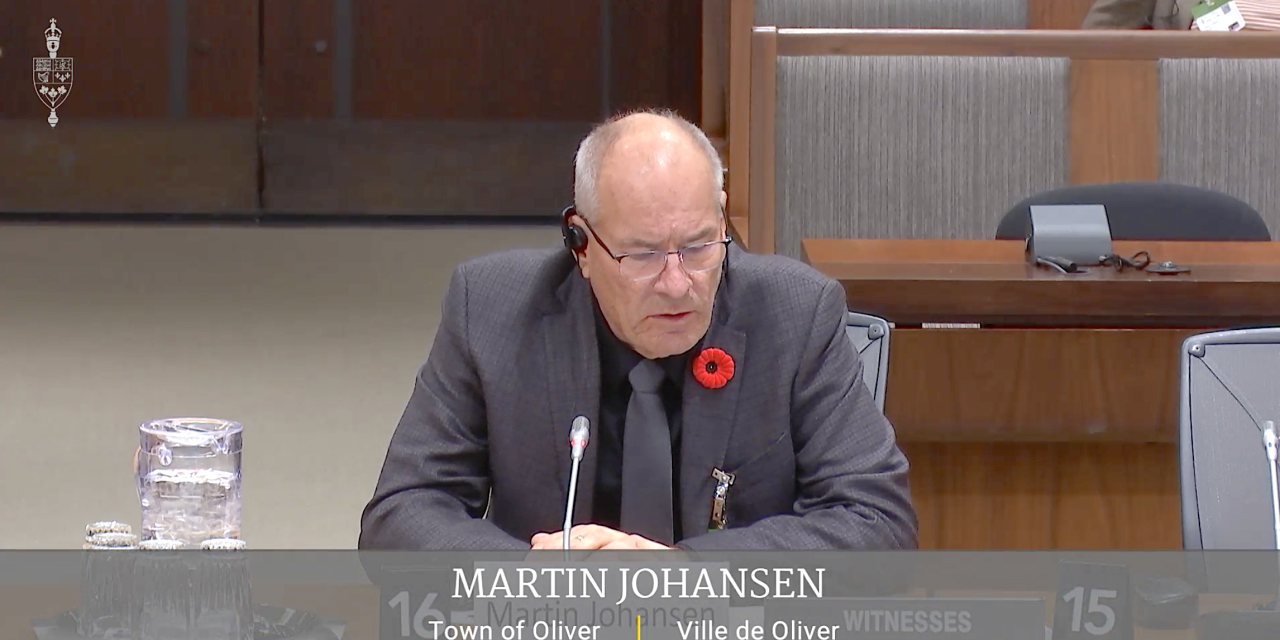
Testifying in Ottawa this morning (Nov. 4) before a House of Commons’ Standing Committee on Health, Oliver Mayor Martin Johansen told committee members that while the nation’s healthcare system is under considerable strain, rural communities face some of the biggest challenges.
Johansen was speaking after being invited to provide testimony as a witness for the Standing Committee’s study of the “Impact of Immigration Policy on Healthcare and Barriers to Integrating Internationally Trained Professionals”.
Noting that the South Okanagan General Hospital (SOGH) emergency department (ED) has had 30 closures in the last 12 months Johansen highlighted to the committee that “ED closures in rural communities are unfortunately becoming the norm.”
He noted that when an ED closure in Delta earlier in October this year “created a huge uproar calling for immediate action from the provincial government, however a few hundred rural community ED closures throughout the year barely make the news,” he said.
Rural communities across the South Okanagan – including Princeton, Osoyoos, Keremeos and Oliver – face mounting difficulties recruiting and retaining family physicians. This is resulting in an aging population with their increasing complexity of medical concerns becoming sicker and reaching more advanced stages of disease.
“Despite strong local collaboration, long-term primary care is strained by gaps in training, locum support and community infrastructure – like housing and childcare needed to attract and retain providers,” Johansen said.
Recruiting and retaining doctors is further challenged by the workload associated with rural practice, he noted. In small towns, one doctor may cover emergency, maternity, long-term care and clinic patients with limited backup.
To manage the excessive workload, lack of work-life balance and mental health challenges associated with burnout, doctors are reducing their level of services such as giving up their hospital privileges or leaving for more urban communities, he told the committee.
Johansen acknowledged there is no silver bullet to fix the problem, but there are opportunities to address the shortfall. These include tapping residents, international medical graduates, Canadians studying abroad and internationally educated healthcare professionals living in Canada that are not working in their profession.
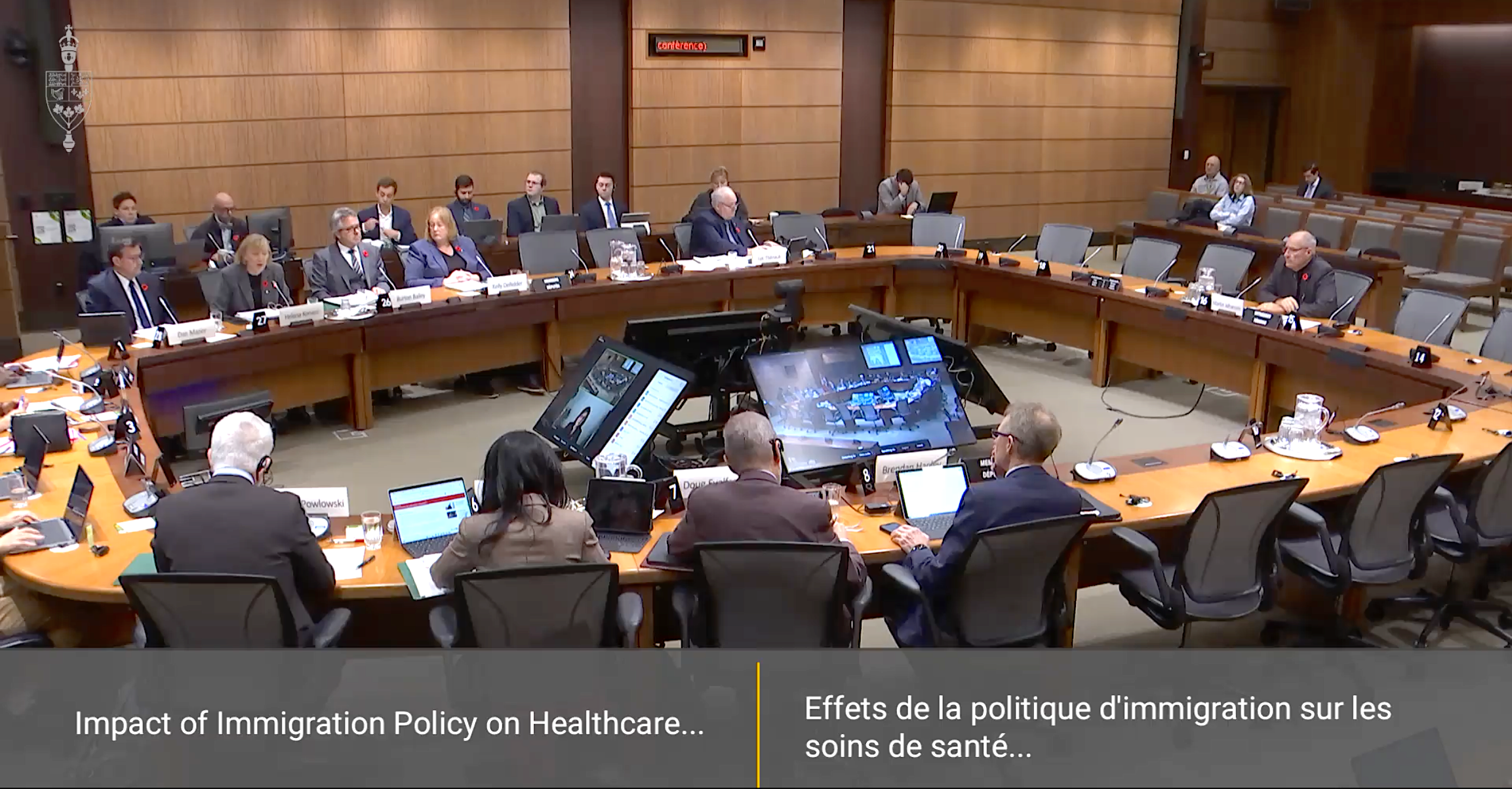
The House of Commons’ Standing Committee on Health.
“These professionals want to practice in Canada and are ready and willing to come to rural communities where they are desperately needed. Increasing the resources available to evaluate candidates in a timely manner, top up training programs and streamlining the credentialing process should be priorities,” he urged the federal politicians.
“In addition, I think it’s critical that part of any solution needs to make sure these professionals land in the communities with the highest need.”
Following Johansen’s presentation committee member Helena Konanz, Member of Parliament for Similkameen—South Okanagan—West Kootenay asked him why these closures were happening.
Johansen said it was simply down to lack of physicians.
“We’ve had enough nurses through our travel nurse program to be able to support the hospital, but lack of physicians is where it comes from.”
He estimated that 40 per cent of the resources to keep the hospital open come from outside of the town of Oliver.
“The real root cause of the problem is that we just do not have enough physicians in our community that are able to support the hospital as part of their practice in the Oliver area. So doctors have to come from outside of our community to support the hospital.”
Konanz also asked if Johansen felt the region is losing doctors at a rate above the replacement level. “I would think so,” he said. “We’ve been warned about this before, of the retirements that are coming.”
He added that one of the challenges is that many of the doctors who have been providing service for many years have larger patient rolls.
This means when they retire the replacement is not one-to-one, it’s two or three to one because no incoming physician wants to take on such a large slate of patients, “just because of the work life balance that new health care workers are looking for.”
Next in line was Doug Eyolfson, Member of Parliament for Winnipeg West who asked Johansen how the provincial government was responding to the closures.
Johansen noted there is a rural mayor’s group that is working with the province’s Minister of Health, Josie Osborne at solutions in different communities.
“One of the things that you’ll find with rural communities is that one solution that works in one community doesn’t necessarily work in another community, which adds some challenges to it.”
Some communities are considerably more remote than Oliver is, and that makes attracting physicians difficult, he said. “We have challenges in our community. We don’t necessarily have all the amenities that people are looking for in those rural communities, so they want to go to Penticton,” for example.
He noted that the contract payment model for physicians that come to SOGH, which makes the pay more equitable to come Oliver, has helped the situation.
Eyolfson, who is himself a physician, highlighted the problem of each province requiring separate licensing. “Would a pan-Canadian licensing system, or some system where you know my credentials would, even if on a sessional basis, be recognized in any other province to practice? Would that help communities such as yours?”
“Absolutely,” Johansen affirmed. “The bigger pool that we’re able to draw from and attract physicians from, would definitely help the problems that we’re having.
“One of the things that we’re doing in Oliver as well as we’re building some housing dedicated for healthcare workers, so that when physicians are able to come, or nurses are able to come, they’ll have a place to stay.
“We’re trying to make it easier for people to come in and support our community. And one of the things for sure is the credentialing process, and being able to just walk into the community and support the hospital would be amazing.”
Johansen is Chair of the Okanagan Similkameen Regional Hospital District, Vice-Chair of the SOS Healthcare Society, board member of the SOS PCN Steering Committee and the primary driver in getting the housing for healthcare professionals off the ground in Oliver.
The creation of the Standing Committee study was based on the fact that 6.5 million Canadians do not have access to a family doctor; Canada is short 23,000 family doctors and 60,000 registered nurses; and over 80,000 internationally educated healthcare professionals in Canada are not working in their profession.