By Don Urquhart, Times Chronicle
Zoning and community plan amendments before Osoyoos council that would green light a 19 unit townhouse development on two adjacent Cottonwood Drive properties have been paused until a “shadow study” is conducted.
In an unusually participatory public hearing a number of residents in the vicinity of the adjacent lots of 6819 and 6821 Cottonwood Drive voiced their concerns over the proposal.
Everything from noise to vehicle congestion, loss of views, destruction of community character, infrastructure strains, environmental concerns, fire safety to shadows was brought up in submitted letters and in person at the Nov. 12 regular council meeting.
The developer is looking to undertake a three story, 19 unit townhouse development which would span across the two properties.
The two properties would need to be consolidated in order to develop it as planned, noted Osoyoos Planner, Shannon Duong. Eighteen of the units are three bedroom and one is a two bedroom with all units ranging in size from 125.4 sqm. (1,350 sqft.) to 162.6 sqm. (1,750 sqft.).
Currently however the two properties have differing Official Community Plan (OCP) and zoning designations.
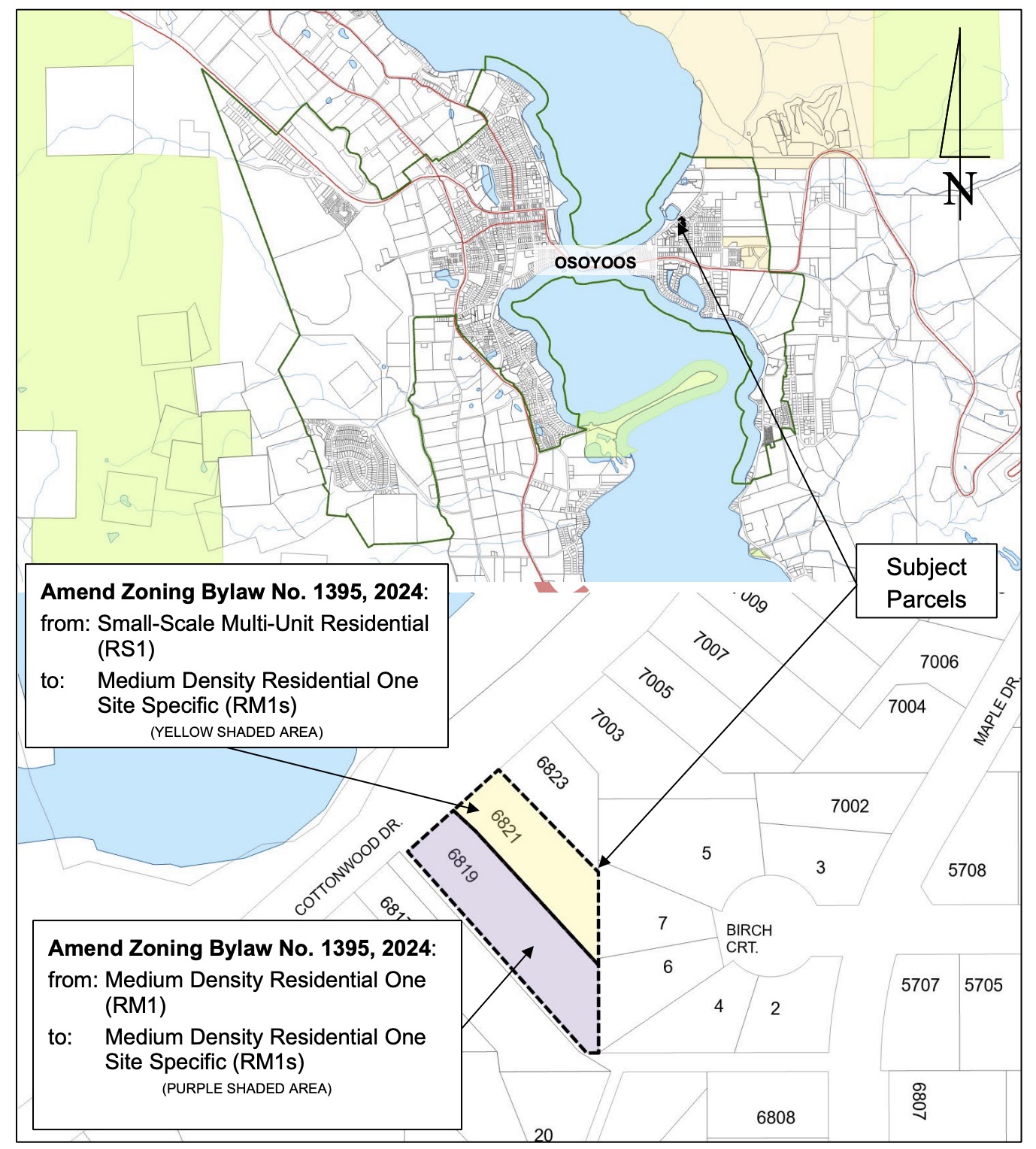
Currently, the two properties – 6821 and 6823 Cottonwood Drive – have differing Official Community Plan (OCP) and zoning designations.
Town of Osoyoos graphic
The property at 6819 Cottonwood Drive is designated for medium density residential purposes, which would include things like townhouses and apartments, whereas the property at 6821 Cottonwood Drive is designated and zoned for low density residential purposes, so single detached dwellings as well as duplexes, according to Duong.
Aside from these uses that are permitted in the differing zones, the maximum density is a significant differentiating factor between the two properties.
Low Density Residential (RS1) zoning permits only a maximum of two dwelling units on that parcel, and that would either be in the form of a duplex or a single detached dwelling with a secondary suite or a single detached dwelling with an accessory dwelling. Whereas in the Medium Density Residential (RM1) zone, up to 75 dwelling units per hectare are permitted.
Consolidated the two properties would have a cumulative parcel size of 2,452 sqm. And calculating the maximum density on these two lots together would allow for a maximum of 18.38 dwelling units, with the developer asking for a site specific amendment to round up to 19 units, Duong noted.
If adopted, the proposed amendments would result in both of the properties being designated as medium density residential under the OCP bylaw with 19 dwelling units.
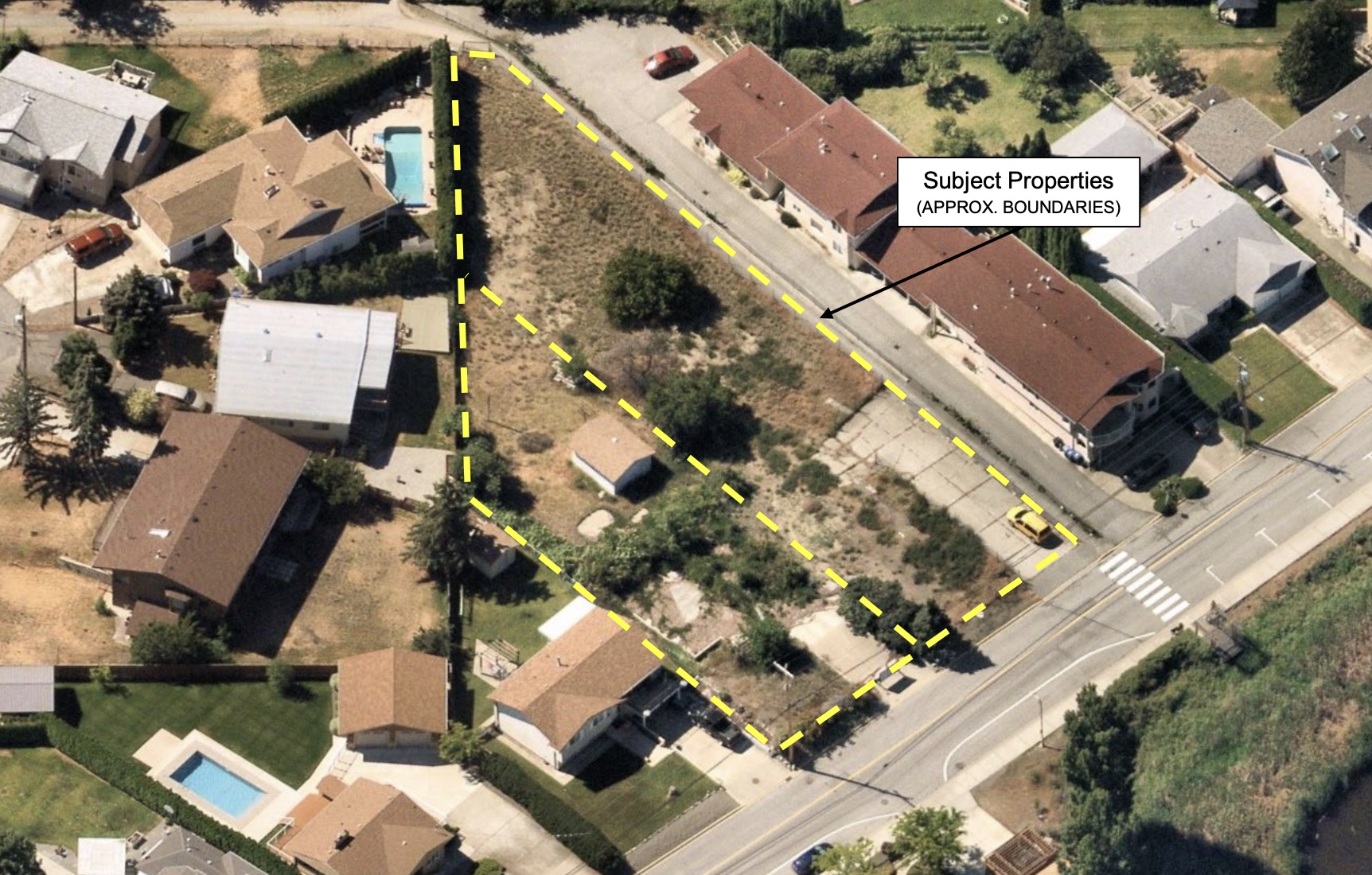
Google Map image showing two adjacent properties on Cottonwood Drive.
Presenting on behalf of the applicant, Manika Grover, an Architect with Vancouver-based ParaMorph Architecture Inc. said they are “quite excited about the contemporary design proposed in the area as the site is right across from the well maintained, accessible Cottonwood Park, and it also provides an opportunity to have housing at such a serene, convenient location.”
Grover also noted that every unit has access to private yards, balconies and rooftop decks and each unit has two car parking spots with the complex having a total of four visitor parking spaces.
Residents resist
Moving from low to medium density will only exacerbate existing congestion and parking issues on Cottonwood Drive from spring to fall and create more noise issues, according to Kristina Najman in her letter to council.
Najman says she is in agreement with the need for additional multi-residential homes but “this is not the area that is best for the interests of all involved,” adding that two existing residential complexes in the same area – Casa Del Lago and Solé Vita – both have “major sound and noise issues” but are self-contained and “away from the residential neighbourhood”.
She went on to say: “What you are proposing is adding a large multi-residential complex right in the middle of a quiet single-family neighborhood. Not across the street. The noise echoes and carries through the residential pathways and streets already. This will be completely disruptive to the families and seniors who live here.”
“Most residents” purchased homes in the area because it was zoned low density and to change the zoning will “completely change the neighbourhood,” she added. And because of location Najman feels the developer will sell the units at a premium, making them unaffordable for full-time retirees.
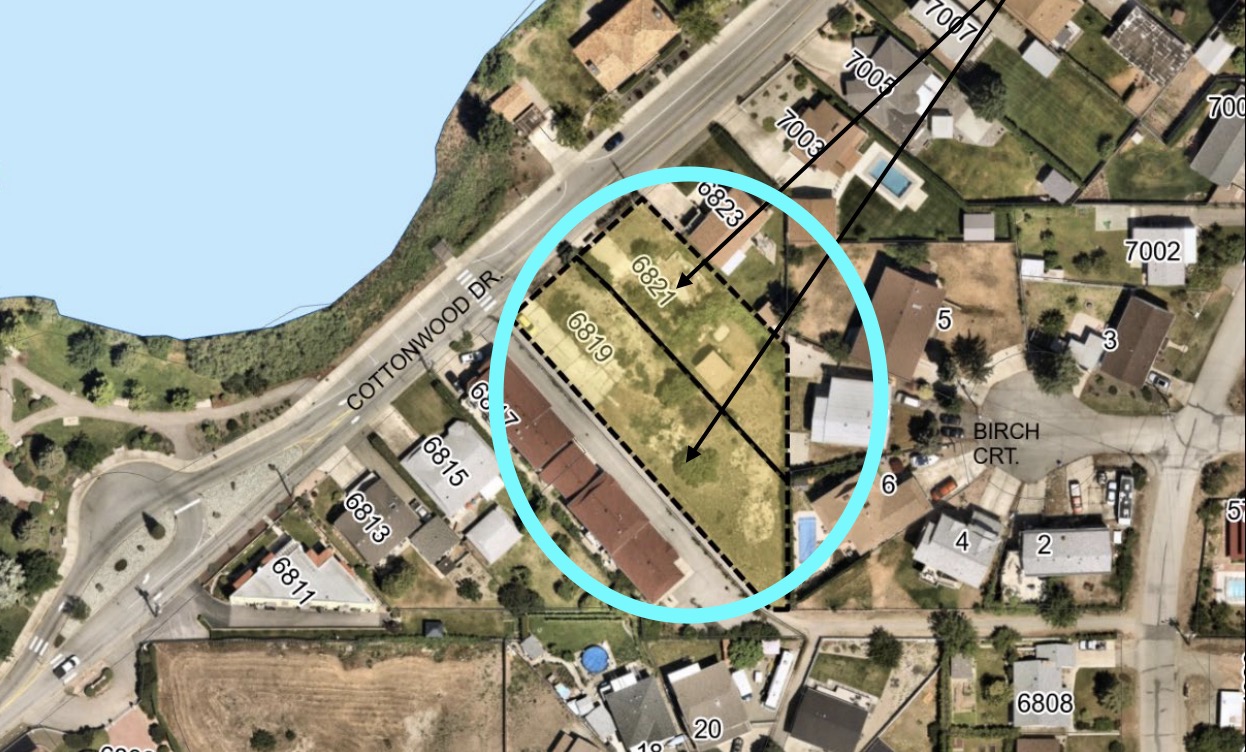
The two subject properties indicated by blue circle.
Town of Osoyoos image
Similarly for another area resident Wallace Murray, the proposed rezoning prioritizes density and efficient land use but “negates the significant potential impacts” on the existing community.
Among his concerns is the fact the structures will impact the existing view. “Specifically, the surrounding homes of the proposed development were built with height restrictions to preserve lake and other community views. This proposal, with its 40ft plus roofline, will violate those established view corridors,” he wrote.
Murray also highlighted the impact of shadows and called for a shadow study to be undertaken. Increased traffic and congestion were also raised as potential issues leading to noise pollution and safety issues, particularly during the peak summer tourist season.
The potential strain on infrastructure, particularly sewer and water, loss of community character, fire safety concerns and lack of environmental impact assessment were additionally raised.
Murray also took issue with what he said was limited public input opportunities (a public information meeting was held earlier this spring) and a lack of equity in terms of approving increased height allowances when they were previously restricted.
“In terms of zoning changes, if this is the way that things are going, you know, in terms of neighbouring properties and all that what’s the plan . . . what’s the plan for growth in the neighbourhood? I think, more careful analysis, things like that, I’m suggesting should be done before such a major, major development is going to impact a neighbourhood so substantially.”
Yet another resident cited the limited parking in the summer and said the four visitor parking spots would be insufficient. He also claimed that the set back from the street has been reduced, although it was pointed out by Mayor Sue McKortoff that the development follows all zoning and OCP requirements other than those seeking to be amended. He also mistakenly believed that the ground floor would be commercial, which is not the case.
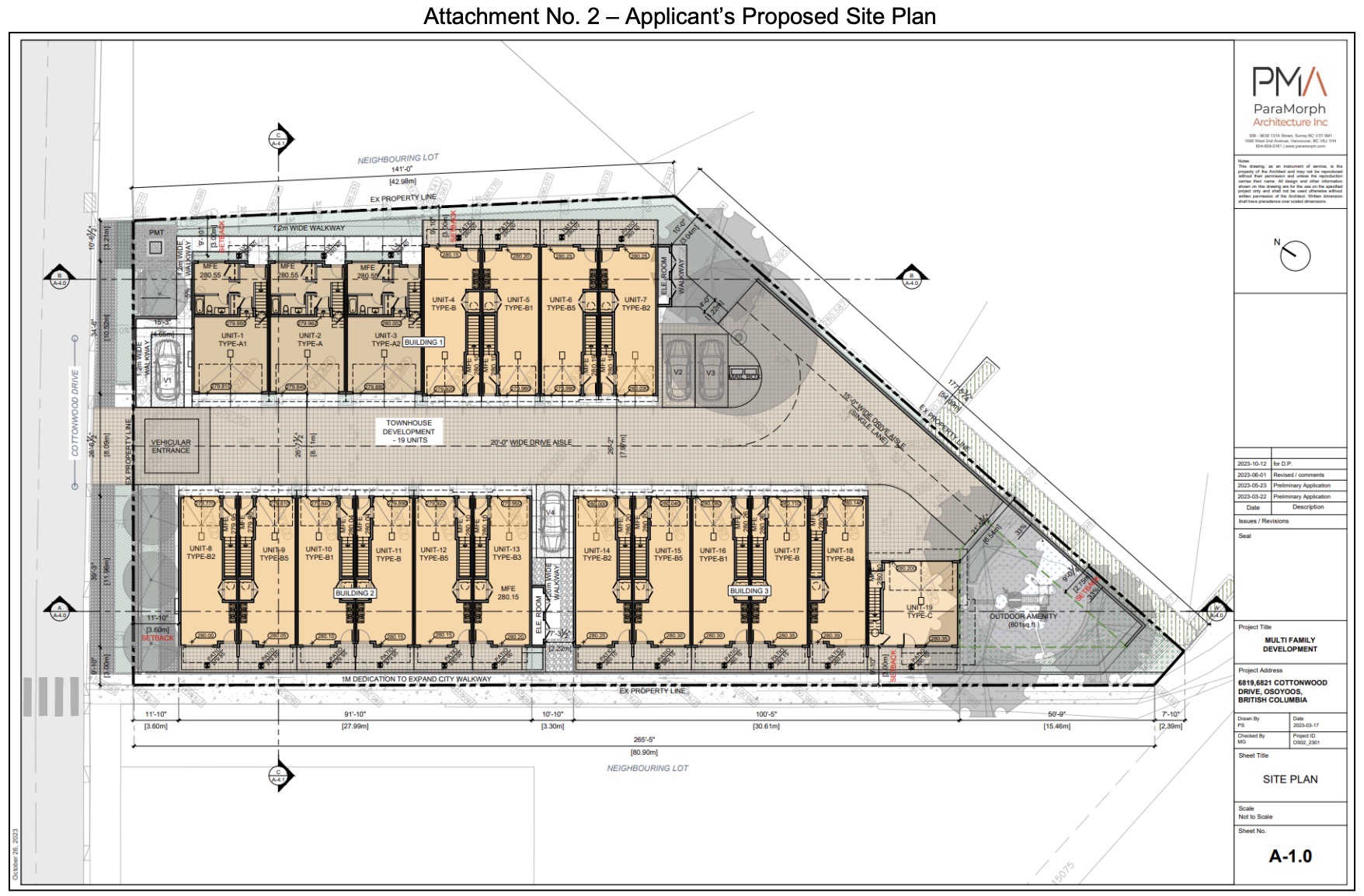
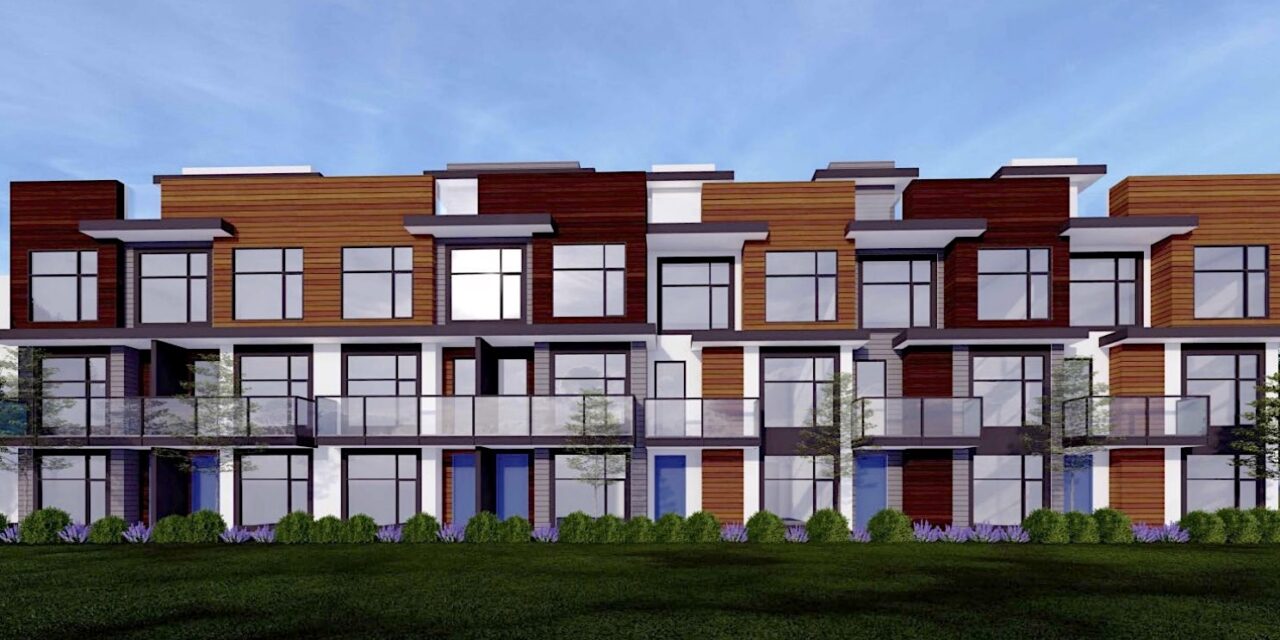
Technical drawings of proposed 19 unit townhouse.
Town of Osoyoos image
For Colin Brierley, three things in particular perturb him about the development, including that the modern design “does not fit in with any of the neighbourhood”. The fact it’s three stories high with a roof top deck is highly problematic for him.
“We all know that the majority of the owners will be out of town owners . . . Think about it, three stories in a residential neighborhood which is single dwelling, and all of a sudden we’re going to have a rooftop deck for all the people to come in and party all summer long,” he predicted.
The struggling water and sewer system was also a concern for Brierley who suggested development in Osoyoos be halted until these issues are fixed.
Brierley also noted that directly across from the proposed development is a marsh and pond that contains otters, bull rushes and other natural habitat that he feels will be threatened by the development, echoing Murray’s calls for an environmental impact study.
Cindy and Barry Aitken, also area residents noted that with parks at either end of Cottonwood there many adults and children on bikes and scooters using the roadways in between. “There’s people walking dogs, there’s many people jogging using the parks,” Cindy Aitken said, adding it was necessary already to install signs reminding drivers to slow down and watch for children.
The Aitkens also expressed concern over what they believed was to be a 3.3 metre (11 foot) set back from the street, given that most of the homes along Cottonwood are set back further. “So now this development is going to be very close to the street which doesn’t give very nice community character,” she said.
“Also noise, that’s a concern. The pub can get very noisy at night. Now you’re adding people and cars,” she said.
Barry Aitken added that he agreed with previous comments about “limited public input,” saying “I think we need to get more opinions. We need growth analysis. How does this impact our community? It’s all about the community and safety and the whole character of our community. Do we want this?”
Support for the project
Not everyone is opposed to the development however, with Osoyoos resident Amrita Guram noting that the project “aligns with the community’s growth objectives and provides a valuable opportunity for increasing housing options within Osoyoos.”
She noted that demand for “well-planned, affordable housing,” has become increasingly pressing and this development will go some way in meeting the demand and promoting “sustainable growth” in Osoyoos.
“The design and scale of the development also appear to be consistent with the existing community character, supporting a harmonious integration into the surrounding neighbourhood,” she added.
And she also noted the economic benefits that it will bring, from job creation during construction to increased support for local businesses when these units are fully completed.
Developer clarifies
Clarifying some of the misconceptions around the project, Grover noted that the minimum set back from Cottonwood Drive is 7.5 metres (24 feet), the height of the townhouses is not 40 or 50 feet as suggested by some of the feedback but rather they are three stories or 10 metres (32 feet) in height. She also noted that the proposal is in alignment with the OCP and bylaws.
Grover also expressed willingness to undertake a shadow study. On fire safety concerns given the Osoyoos Fire Rescue does not as yet have a ladder truck, Grover said all units will be equipped with sprinklers and strobe alarms. No one present was able to confirm whether this is a requirement or an “extra’ in the townhouse design.
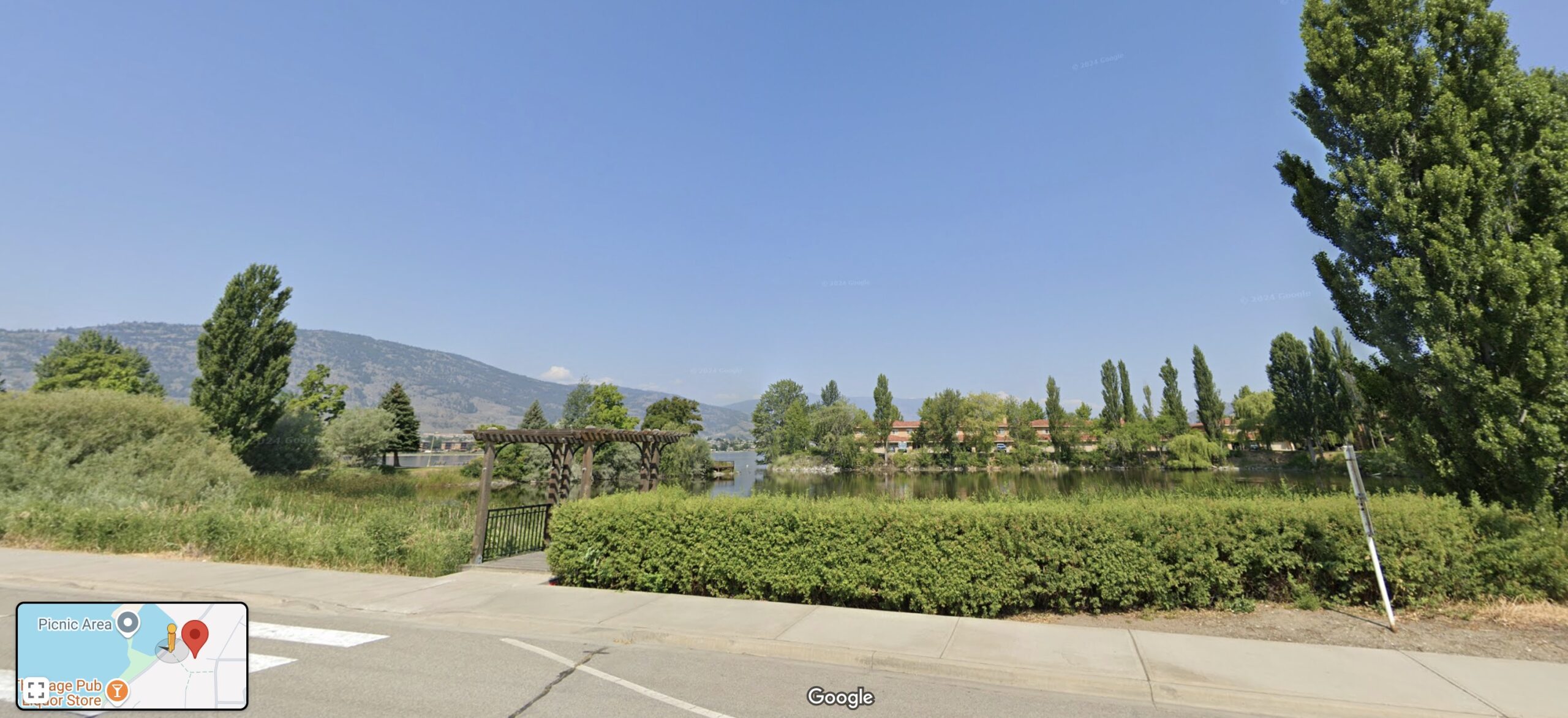
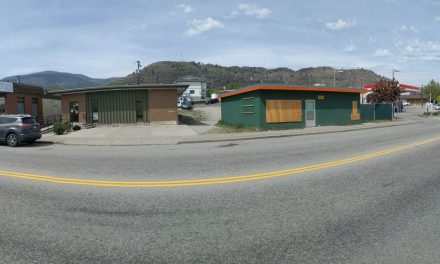
Marsh and pond across Cottonwood Drive from the proposed townhouse development.
Google Street View image
The developer of the property also chimed in to say, “Our focus is really to complement the Cottonwood neighborhood. It is more of an upscale area. It’s a mix of multi-family projects already there.” He added that along Cottonwood Drive, there’s other multi-family developments such as Casa Del Lago and Solé Vita, as well as another 65 or 70 condos and townhouses that have been approved at the end of Cottonwood Drive by the cul-de-sac.
“So again, as far as traffic and congestion, everything we can look at in our proposed 19 units that’s quite a bit smaller than the existing multi-family projects that are on this strip already. We respect everyone’s opinion 100 per cent and we have really put a lot of effort into making sure that we’re not obstructing views as much as possible, even for the gentleman whose house is in the back of our property.”
“At the end of the day we respect what you’re saying, it’s important to make sure that we hear what you’re saying and we take that into account. We’ve really thoroughly and fully analyzed this as best as we can.
“We’ve looked at multiple different designs, to make sure that we have the least amount of obstruction, of views for you guys, we made sure there’s a lane and the buildings more to the front of the property instead of the back, so it’s not intruding, and you have more sunlight and views by doing that.”
He also noted that a geotech survey was undertaken which tested soil, water table as well as assessing the impact on the marsh and pond across the road, and in their report supported the development.
Council deferred third reading on the amendments until a shadow study can be completed.