By Don Urquhart, Times Chronicle
One of the biggest challenges facing the Okanagan going forward is the issue of how communities and economic sectors will share the scarce resource of water during drought conditions, according to the Okanagan Basin Water Board (OBWB).
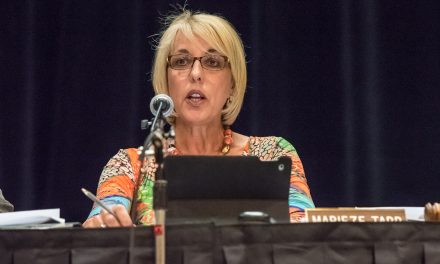
Speaking recently at the OBWB’s Annual Meeting in Kelowna, Anna Warwick Sears, Executive Director of the OBWB highlighted the issue saying “There are communities and sectors that depend on it. How are agreements reached to share it?” she asked.
“The increasing number of extreme weather events means we need to change our practices,” said Sears.
She went on to cite examples, including how to determine bridge heights and pipe sizes to withstand large water volumes during spring freshet, as well as planning for low-water seasons in the summer when demand is highest.
“These issues are best addressed on a watershed scale and in collaboration with partners.”
Guest speaker for the event – Zane Marshall, Director of Water Resources for the Southern Nevada Water Authority (SNWA) – delivered the keynote address, sharing lessons from the Colorado River Basin, which is known as the world’s most controlled and litigated river system.
The Okanagan and Colorado Basins have much in common, Marshall explained during his presentation, noting a growing population, strong tourism sector, and water scarcity issues made worse with climate change, including shorter winters with less precipitation.
“Our water supply is changing and so we have had to change,” he said, adding that after 25 years of dwindling water supplies “we’re not calling it drought anymore. We’re calling it long-term aridification.”
In response, the SNWA has introduced programs to reduce consumption including updating infrastructure and drilling a water intake lower to draw water if the Lake Mead reservoir drops further. The water authority is also injecting water into an aquifer to bank supply.
“Water management in water-scarce places is a wicked problem that requires collaboration to solve them,” Marshall added.
“No one entity and no one solution can solve it typically. Working together is important. And, if you think you need to take action, you probably should have started yesterday. Act now to put things in place because policy takes time, action takes time, and funding takes time.”
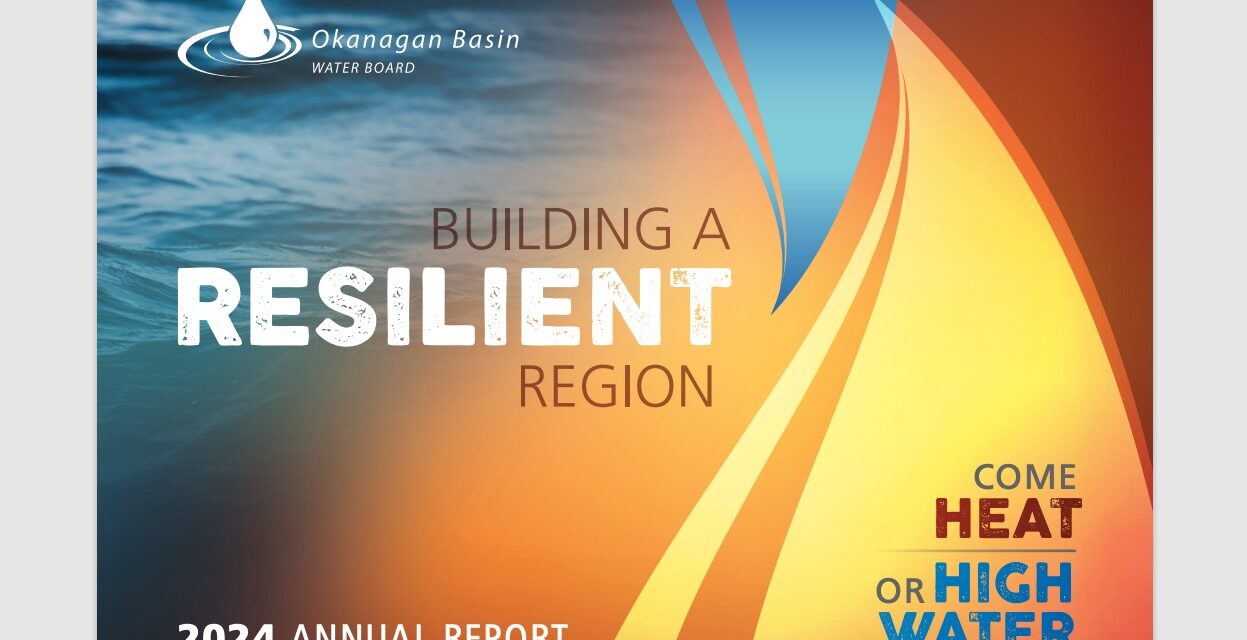
The annual meeting also featured presentations and discussions around this year’s theme of “Building a Resilient Region – Come Heat or High Water.”
The theme acknowledges the extreme weather events experienced in the Okanagan in recent years – historic flooding, historic temperatures, drought, and fires.
The OBWB noted the important connection these events have to water, and the board’s efforts to work with local governments and utilities, fishery departments, agriculture, residents, and others, to understand the issues, prepare and build resiliency.
“When I look back on this past year, but also over the last several years, climate change is the prevailing issue we’ve been working on, especially after the 2003 Okanagan Mountain Park fire,” explains Water Board Executive Director Anna Warwick Sears.
Among the projects undertaken by the OBWB include working with partners to determine the water needs of fish and to maintain healthy ecosystems, a valley-wide campaign to help residents conserve water, the development of tools to help farmers protect their crops against drought, and the OBWB’s new Climate Indicators Dashboard.
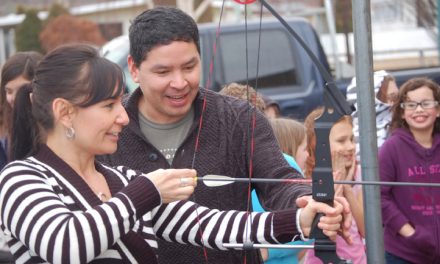
The event also saw the annual awarding of the “Make Water Work Community Champion” part of the annual outdoor water conservation campaign delivered by the OBWB’s Okanagan WaterWise outreach and education program, in partnership with local governments and utilities throughout the valley. The campaign runs May to October, when water demands are highest, and includes the collection of pledges.
Since 2014, the OBWB has been awarding the Make Water Work Community Champion title to the community with the most pledges collected per capita. This year’s winner was Oliver which regained the title it won back in 2014.
Oliver Mayor Martin Johansen, responded to the win saying: “On behalf of the Town of Oliver, I would like to extend our heartfelt gratitude on winning the Make Water Work championship title. Our small town came together, rallied the most votes per capita and proudly brings home the victory!
“Understanding that we live in one of Canada’s most water-stressed regions, it’s vital that we conserve water for the future of our community and subsequent generations. Thank you to the Okanagan Basin Water Board and its Okanagan WaterWise program for organizing this event each year. We’re already looking forward to next year’s campaign,” he added.
Although the Make Water Work community champion title has been announced, the campaign will continue into October. Thanks to cooler temperatures and some precipitation, the Province lowered the Okanagan region to Level 2 drought last week.
But the OBWB cautioned that the South Okanagan’s Shingle, Shuttleworth and Inkaneep creeks were left at Level 3 (where adverse impacts to socio-economic and ecosystem values are possible), and Vaseux remains at the highest level of 5 (where adverse impacts are almost certain).
Residents are asked to continue to follow their local water restrictions. Restrictions for Okanagan utilities, as well as tips to conserve, can be found at MakeWaterWork.ca. While on the website, residents can pledge until Sept. 29 to be entered to win a $500 gift card to help WaterWise their yard.
A copy of the OBWB’s 2024 annual report, Building a Resilient Region: Come Heat or High Water, is available on their website at obwb.ca/overview/annual-reports/.