By Don Urquhart, Times Chronicle
The Osoyoos Indian Band (OIB) and pulp and paper mill Mercer Celgar (Celgar) are collaborating to rethink conventional practices around what has traditionally been considered uneconomical wood fibre.
This wood fibre typically wouldn’t make its way to sawmills and was not economically feasible for non-sawlog products. These logs have a lower value and generally are only used to create pulp for various products, including paper, tissue, and food packaging.
The project participants say the primary goal is to promote “diversification and innovation within the supply chain” to recover and utilize greater amounts of wood fibre that was typically wasted.
The collaboration is enabled by funding from the Forest Enhancement Society of BC (FESBC), part of which is being used to incentivize tenure holders, excluding BC Timber Sales, and contractors to consider forest stands that were historically deemed economically unviable to harvest.
The project is helping recover as much of this residual fibre as possible from the OIB’s traditional territory. Dan Macmaster, Forest Manager at the OIB, highlighted the significance of sustainable resource use for the OIB pointing to the fact that higher fibre utilization has both environmental and economic benefits.
“Proper forest management results in less burning of debris piles, cleaner air and waterways, and financial benefits from processing pulp volume that would normally be left behind.
“Managing the larger landscape for wildfire risk reduction, climate change adaptations, and mitigating insect infestations is critical to the OIB,” said Macmaster. “This FESBC project has provided the means to meet numerous management objectives on our traditional lands.”
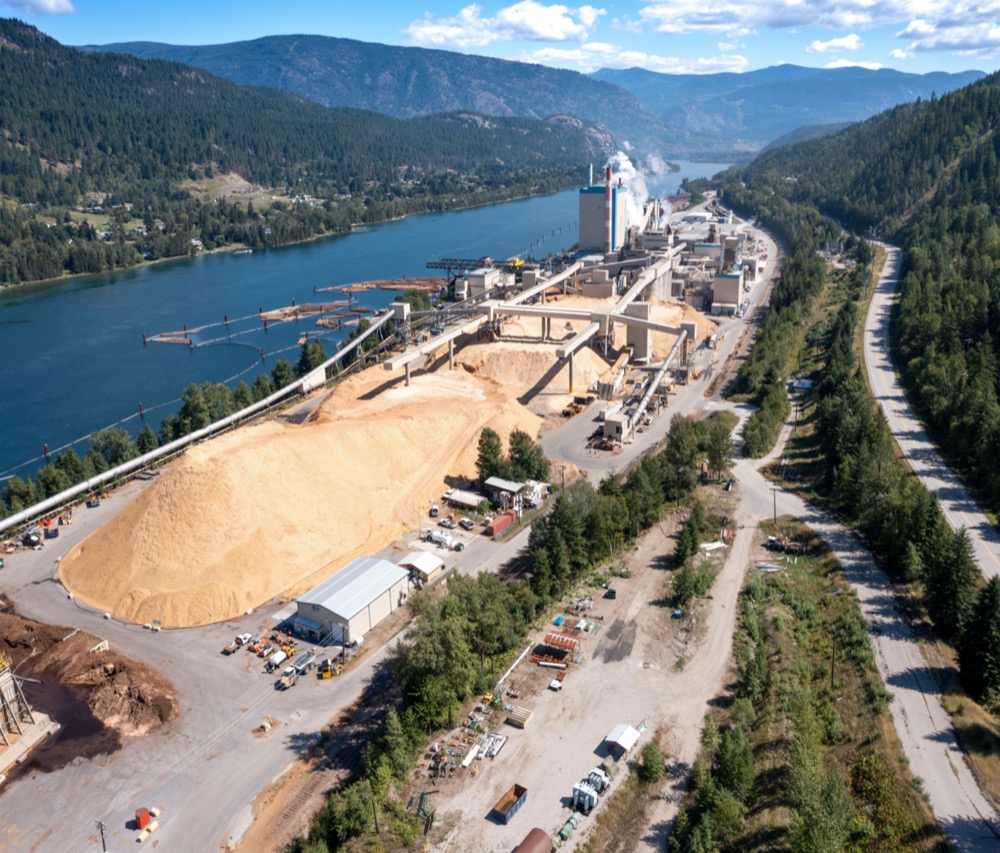
Some of the fibre captured through this project will produce wood chips, and the material not suitable as chips will be used in a product called “hog fuel”, which will be used to generate electricity. Pictured above: Mercer Celgar’s pulp and paper mill in Castlegar. Mercer Celgar photo
The project is currently 65 per cent complete with approximately 128,000 m3 of the uneconomical wood fibre aimed to be hauled to Celgar’s mill by March 31, 2024.
Chris Longmore, Manager, Fibre Procurement, with Celgar said that once the project has concluded the mill will continue to maximize the recovery and utilization of uneconomical fibre through “collaboration with land tenure holders and their logging workforce in the southern interior.”
The project will not only “normalize” the higher utilization of residual fibre, but will help reduce emissions from slash pile burning, and the partners say it will help strengthen reconciliation efforts through collaboration.
Some of the fibre captured through this project will produce wood chips, and the material not suitable as chips will be used in a product called “hog fuel”, which will be used to generate electricity.
A portion of the residual fibre will be chipped in Midway and then sent to the Mercer pulp mill in Castlegar.
This also includes wildfire-impacted timber with over 26,000 cubic metres of burnt logging residue recovered and shipped to the Mercer Celgar facility in Castlegar rather than into a waste pile, to date.
The project partners expect that volume to grow in 2024 as efforts continue to focus on utilizing fibre from burnt stands.
Initiatives like this help ensure the long-term health and sustainability of BC’s forestry sector according to Bruce Ralston, Minister of Forests.
“By making paper and wood chips from trees that previously would have gone to waste or acted as wildfire fuel, the Osoyoos Indian Band and Mercer Celgar are helping get more value out of every tree harvested while also making our forests more resilient to the impacts of climate change,” he said.
The partners point to the fact that while mills have “long been adept at utilizing various types of residual fibres to create different products,” this project takes things a step further.
Celgar and the OIB have been developing a cost model to help address the difference in cost between harvesting and selling pulp logs.
According to Longmore FESBC funding has gone towards utilization and rehabilitation from at least seven wildfire-impacted areas spread across the Arrow, Boundary, Okanagan, Kootenay, Revelstoke, and Golden timber supply areas.
“The financial support from FESBC has played a crucial role in bringing together project partners, particularly First Nations, to embark on this transformative journey,” said Longmore.
“This funding highlights the importance of collective efforts in redefining forest management practices and sets the stage for a more sustainable future,” he added.
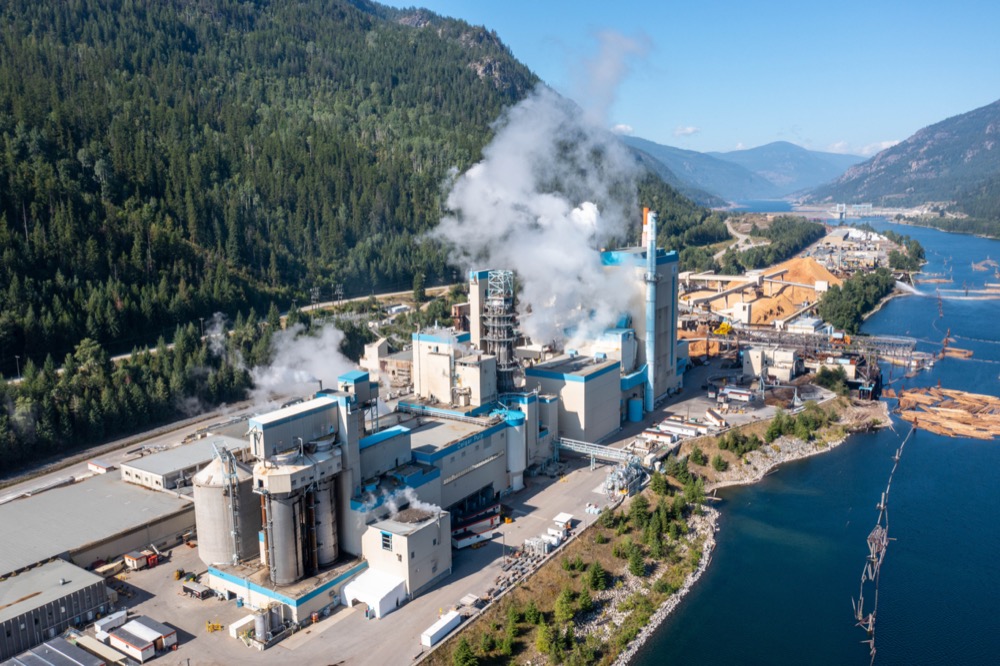
The higher levels of fibre utilization will also help mitigate the impacts of climate change by reducing emissions from slash burning, while also providing economic windfalls for communities, the partners say. Mercer Celgar photo
The higher levels of fibre utilization will also help mitigate the impacts of climate change by reducing emissions from slash burning, while also providing economic windfalls for communities, the partners say.
“This program not only provides opportunities for the logging community that is supplying the logs to the Celgar pulp mill, logs that would be burned, but the program is meaningfully reducing carbon emissions associated with the changed behaviour,” said FESBC Operations Manager Brian Watson.
Revelstoke for instance has seen a direct benefit, with $230,000 coming into the community as payment for the use of the Revelstoke Community Forest Corporation log yard for this project.
“Many other communities in the southern interior are also indirectly receiving an infusion into their economy from this project through the logging community and the businesses that service them,” Watson added.