By Don Urquhart, Times Chronicle
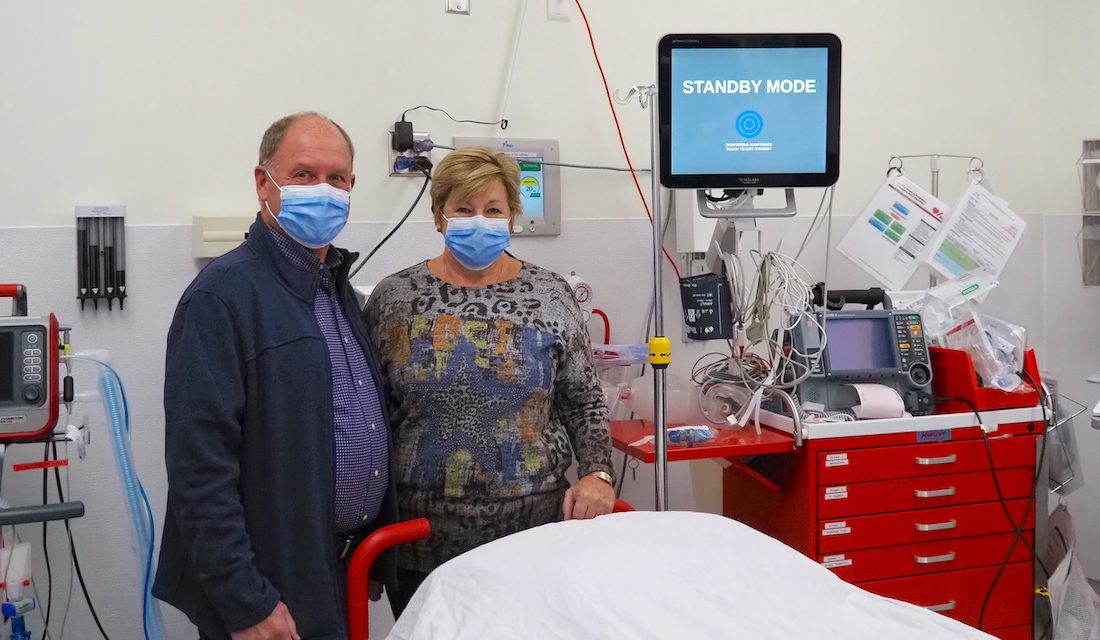
After five decades the trauma room at South Okanagan General Hospital (SOGH) has received its first fresh coat of paint – and much more – since it was built in 1972 thanks to benefactors from Osoyoos.
The $100,000 pledged by Herb and Pat Wycherley in December 2019 has now come to fruition with the official opening of SOGH’s renovated trauma room on Feb. 13.
The room is one of two emergency rooms in the department that dates back to when the hospital was built in 1972. “It hadn’t had a renovation, or upgrade, or even paint or anything since 1972,” said Teresa Fortune, manager of clinical services at SOGH.
“The overhead surgical light was original, we could not even get bulbs for it anymore, and the space was small and cluttered, and it made it really difficult to manage a trauma properly and get the stuff needed in there,” she said.
And while the old light generated substantial heat and was adjusted while standing over the patient, the new LED light generates no heat and is easily controlled by a wall-mounted panel. From a medical perspective it’s also a far more effective light, Fortune emphasized.
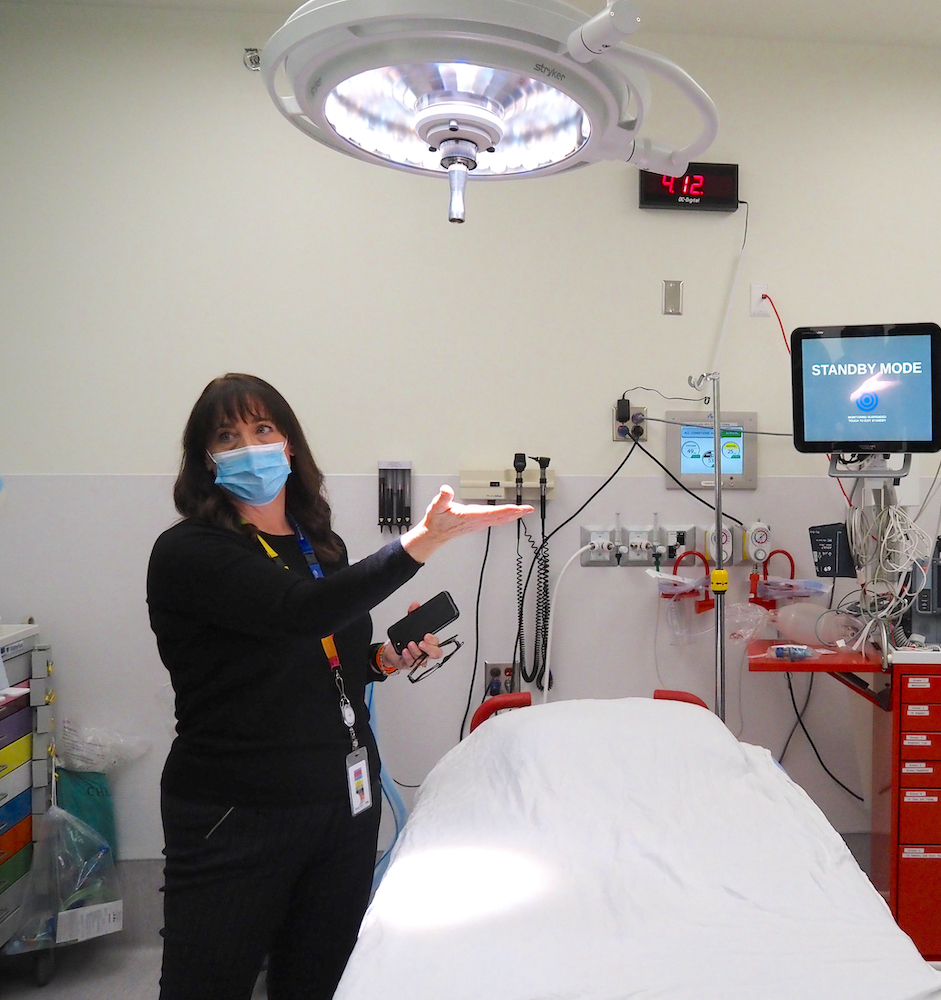
Teresa Fortune, manager of clinical services at SOGH demonstrates the new LED overhead surgical light. Don Urquhart photo
The renovation included expanding the room to add a supply room by pushing out a wall to absorb an alcove in the adjacent hallway. This freed up space in the constrained trauma room.
This is crucial when considering that during a trauma situation there are generally two physicians, three nurses and sometimes also the ambulance crew and possibly an air medical crew alongside all of the equipment like ventilators, defibrillators, and crash carts.
Prior to the supply room being added, large shelves of supplies also competed for space and that created a situation where there was “not even enough room for people to manage the patient effectively, efficiently and safely.”
“The other thing we did was to take the oxygen and gases that used to hang from the ceiling and we put them into the head wall,” as is common practice in modern healthcare settings. Prior to this medical staff would bang into the hanging apparatus as they were treating the patient. “It just made it that much more functional,” Fortune said.
Another key part of the renovation was the replacement of the trauma room’s wooden door “which didn’t even close properly,” with a new sliding glass door. “If someone comes in and they’re COVID positive and we need to intubate them then we can actually close the room off so it’s up to infection control standards,” she said.
Fortune agreed these renovations were long overdue and added, “there’s a lot more overdue,” in the hospital.
The importance of the trauma room cannot be understated, handling as it does emergencies of all sorts from paediatric trauma such as children needing stitches, to skiing accidents and in the summer countless boating accidents.
“I started here in 1995 and at that point we used to see maybe 12 patients a day in the emergency department and we didn’t even have a dedicated position 24/7,” Fortune said.
“Now we’re seeing between 50 and 60 people a day with two physicians in the day and one at night.” And while there has been a steady increase in traffic, there has not been the concomitant increase in bed space, “so our staff are very good at using every spare bit of room in the department for something functional,” she chuckled.
And with a bit of funding left over the hospital was able to do a small renovation on the casting room next door to add oxygen and gases which previously had not been piped in. “To be able to have oxygen and gases in every room in the department is really huge,” Fortune said.
The hospital is also awaiting delivery of a wall-mounted computer which will establish SOGH as the first fully electronic trauma room in Canada. The computer will enable nurses to be charting during the trauma treatment, and enabling physicians to look up lab reports or patient history for instance.
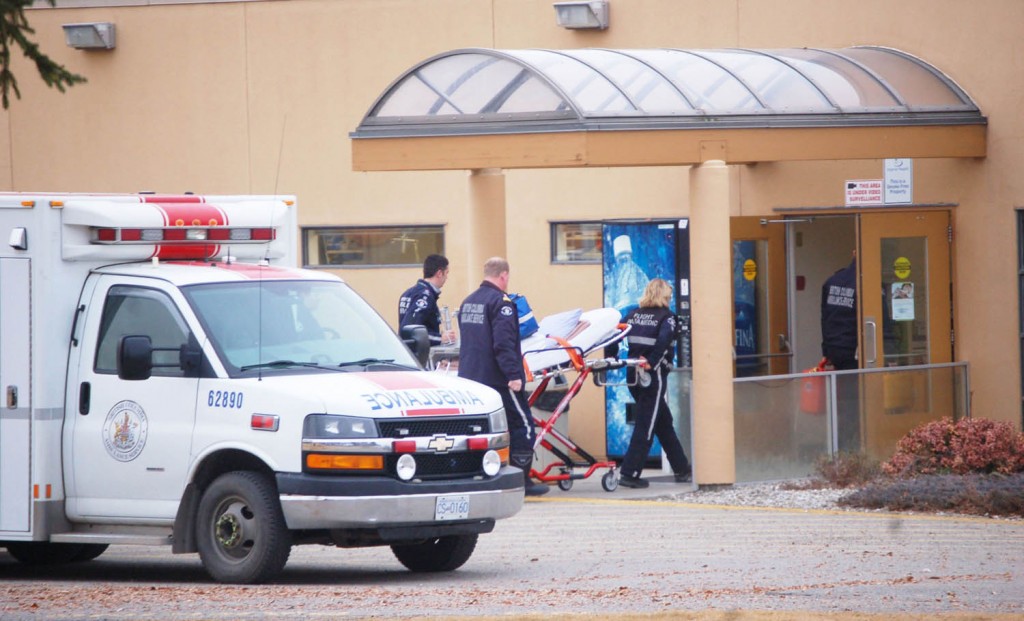
An ambulance arrives at the emergency department of SOGH in Oliver. File photo
With demonstrably no appetite for a discussion around the state of healthcare funding and the very real crisis in the healthcare system across the province, Sally Ginter, chief executive officer of the South Okanagan Similkameen Medical Foundation was keen on keeping the messaging on philanthropy.
“I think we want to celebrate the fact that individuals are choosing to invest in healthcare in their communities. The story here is that the Wycherleys understand that investing in their community is really important, they want to bring the best that they can, they saw a need in the trauma room.”
She added that the “need is only growing, so they got ahead of that curve and gave us what we needed in order to create the best possible space.”
Ginter noted that the charitable foundation is over 40 years old and its raison d’etre is “to give people an opportunity to better their own community and healthcare, and do it in a meaningful way.”
For the Wycherleys: “We wanted to keep our donations in our community and living in Osoyoos this is our hospital. Our children and our grandchildren now live in the area and this is their hospital, so this hospital means a lot to us,” Pat said.
“To be able to make the donation here is really important and to just improve what we have.”
The Wycherleys have a long connection to the hospital through Pat’s mother, Bea Becker, and also her father who was the area coroner in the day. Becker served for 10 years on the former SOGH hospital board, including seven years as its chair, prior to Interior Health taking over administration of hospitals across the Southern Interior in the 1990s.
When Becker died in December 2019 the Wycherleys and their two children almost immediately pledged to donate $100,000 in her memory to the Foundation for improvements at SOGH.