
Times Chronicle Staff
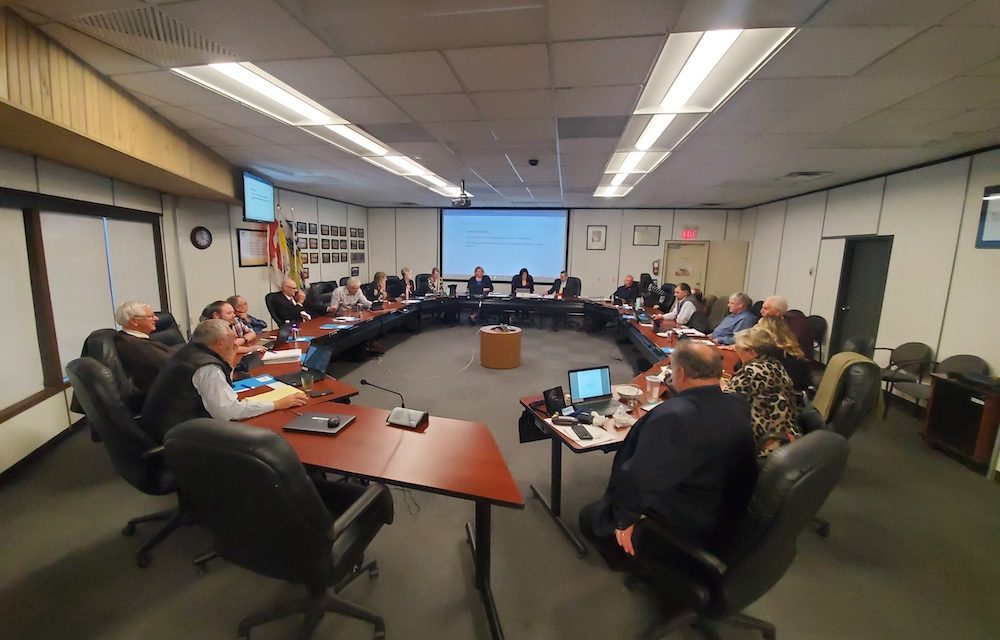
The following are news briefs from the Jan. 19 meeting of the regional district.
‘Desperate’ for housing
The regional district will soon amend its zoning bylaw to allow the retention of a mobile home in rural Oliver.
The accessory dwelling on agricultural land less than 4.0 hectares will be used as accommodation on Island Road where a single detached dwelling and a shop already exist.
A public hearing saw no members of the public speak for or against the idea.
Planner Shannon Duong said there is a need for more affordable housing units in the region. She also stated this zoning amendment is not seen to result in any privacy issues or negative impact to the neighbourhood. She added the mobile home will be placed on a non-permanent foundation as to not preclude the use of agriculturally viable lands.
Area C director Rick Knodel said the application fits with the region’s “desperate” housing needs.
Auto shop to be formalized
Mike’s Auto in Oliver will be the subject of an Agricultural Land Commission (ALC) discussion on formalizing its non-farm use.
The application is to formally permit the long-time use within the Agricultural Land Reserve.
The applicant states the auto repair business has been conducted on that property for more than 40 years without negative impacts on agriculture.
The property is zoned for agriculture which does not permit auto body repair shops.
Planning technician Colin Martin said the likelihood of the land reverting back to agriculture use in future is remote due to its small size and highway frontage location.
Area C director Rick Knodel recommended the board send this to the ALC for its decision. He noted that Mike’s Auto has been on this property longer than he can remember.
Board approves temporary permit
Directors voted to approve a temporary use permit (TUP) for eight animals on a Willowbrook property.
The original application by a Johnson Crescent homeowner was previously denied over concerns about the effect it would have on the neighbourhood and water quality.
Regulations only permit two animals on small properties like this one, but the TUP would allow the owner to keep eight livestock there for three years. The so-called animal sanctuary includes six horses, one goat, and one miniature donkey.
The owner, Diane Hunter, told regional district staff that the animals are geriatric, and she didn’t know she was over the limit when she purchased the property.
Prior to voting in favour of the TUP, Area C director Rick Knodel added two conditions: a written plan for the operation, and the identification of animals. This is to ensure that the sanctuary doesn’t “miraculously change.” In other words, the intention is to avoid the substitution or replacement of animals on the property.



They need to wipe the slate clean and get rid of everyone in the RDOS!
Just a bunch of people trying to make it as difficult as possible to move into the 21st century!
Even when they know it’s wrong they stand by their ruling, unless you know someone on the inside!
Looks very corrupt to me!