Times Chronicle Staff
Whenever Aadyn Francoeur is stressed, his dog Stuart lays right on top of him like a hot water bottle.
The autism sufferer from Kelowna finds true happiness whenever his dog guide is nearby.
“He really always just makes me happy all the time I see him,” Francoeur said in promoting the annual Pet Valu Walk for Dog Guides in Oliver on May 29.
Francoeur and his family were first introduced to the guide dog world about 10 years ago. They travelled to Lions Foundation of Canada Dog Guides in Ontario where they were matched with York, an autism assistance dog guide.
Francoeur’s mom Geraldine said her sons’ confidence improved immediately.
But life took a challenging turn for the family when York developed fast-moving cancer and passed away. Geraldine said her son started slipping into his old ways.
But in June 2021 Lions Foundation called to say that a new autism assistance dog guide was available.
“He (Stuart) helps calm me down when I’m stressed,” Francoeur said. “Every time I’m stressed he just lays like right on me and it really cures my stress immediately. One day I was really sick and he never left my side and that just made me feel better.”
The Lions Foundation provides guide dogs to Canadians who need them at no charge. But each dog costs about $35,000 to breed, raise, train and place. As a result, the charity relies on donations.
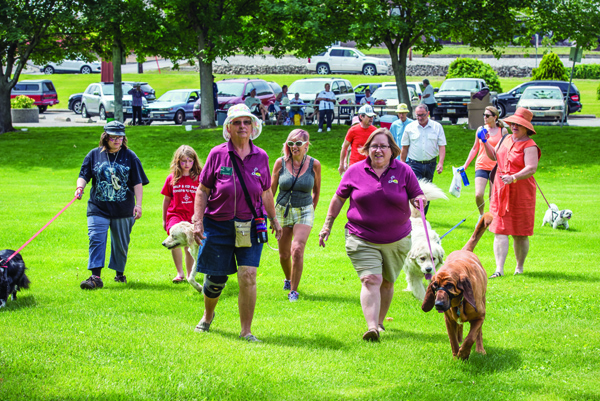
People are invited to the fundraising event in Oliver at Lion’s Park on Sunday, May 29 starting at 1 p.m.
All proceeds go to training seven different types of dog guides that play a crucial role in the lives of Canadians with disabilities.
The following types of dogs are trained:
Autism assistance dog guides assist children aged 3-12. These dogs provide safety, companionship and unconditional love to children. They offer a calming relief in high anxiety situations and reduce stress commonly experienced in public places.
Seizure response dog guides assist Canadians with epilepsy by barking for help or activating an alert system in event of a seizure.
Hearing dog guides assist individuals who are 10 years of age or older and who are deaf or hard of hearing to detect sounds they are unable to hear on their own.
Service dog guides help their handlers retrieve objects, open and close appliances, and open and close doors.
Diabetic alert dog guides assist people aged 10 or older who are insulin dependent with hypoglycemic unawareness. They are trained to detect sudden drops in their handler’s blood sugar through scent and alert them so they can ingest something sweet. They can go get help within the home or activate an alert system if needed.
Facility support dogs are for use by professional agencies with individuals in traumatic situations. These dogs are trained to provide comfort to victims or witnesses of a crime or sudden tragedy.
They can provide support to persons providing difficult disclosure to police for crimes such as child abuse, sexual assault, etc.