Tracy Sim, Times-Chronicle
On Feb. 17, regional directors discussed and approved a number of resolutions that were forwarded to the spring convention of the Southern Interior Local Government Association (SILGA), aimed at improving the lives of residents.
One resolution seeks to have speed mitigation occur at the regional level as it pertains to traffic calming measures such as speed bumps.
Another resolution seeks to enhance rural transportation access to the whole region with a ride-sharing program to be introduced through the B.C. Passenger Transportation Board. The resolution states that ride-sharing is a convenient, safe, and responsive service which benefits residents and the tourism industry while it fosters economic growth.
A third resolution seeks a long-term program to study why doctors and specialists are not seeking to practise in the region. It specifically talks about how rural communities in B.C. are underserved by qualified medical professionals in several disciplines and seeks to establish a program to identify the root cause of these shortages. The goal is to remove those obstacles and barriers so that rural communities are better served.
Yet another resolution suggests a policy change between the province and B.C. Emergency Health Services relating to how ground ambulances are dispatched. The BCEHS recently instituted a policy without consultation that enables them to leave some patients with other first responders with less medical training if BCEHS providers needed to attend other, more serious calls.
The motion says this policy may jeopardize patients, asking that the province require BCEHS to report regularly to local governments prior to this policy change that may impact the lives and safety of residents.
A fifth resolution asks for the Union of BC Municipalities to urge the provincial government to work with local governments to review the road classification system to consider reprioritizing the order in which roads are cleared or maintained.
The resolution is being put forward because there is an increased concern about the state of public roads in rural communities during and after major weather events. The motion makes a request to the Ministry of Transportation and Infrastructure to increase its funding for the maintenance of secondary roads to ensure safe and accessible transportation options for rural communities.
Another resolution is a partnership with the City of Penticton involving a provincial car program. Car programs pair a mental health nurse with a police officer to respond to a mental health crisis, providing emotional and mental health assessments, crisis intervention and referrals to appropriate services. Mental health calls to the RCMP have increased steadily in recent years.
Car 40 programs support those suffering with mental health issues, keeping them out of the criminal justice system. These programs reduce patrol response and unnecessary hospital admissions, and they have been successful across the province since 1978.
A partnership with the Village of Keremeos makes up another resolution. The village is seeking a flood mitigation service, with the resolution stating that extreme weather has affected many areas in the province this past year.
The village’s concerns are that orphan dykes in B.C. no longer protect many communities in the area. The resolution calls for the UBCM to ask the province for a flood mitigation service in consultation with local governments, including Indigenous partners.
A resolution by Okanagan Regional Library speaks about how libraries in B.C. are financed by local governments, and how funding has remained static for the past 10 years. The resolution points out the benefits that libraries provide, such as access to vital resources, Internet service, digital tools and computers. It concludes with RDOS urging the province to provide long-term sustainable funding for libraries in B.C.
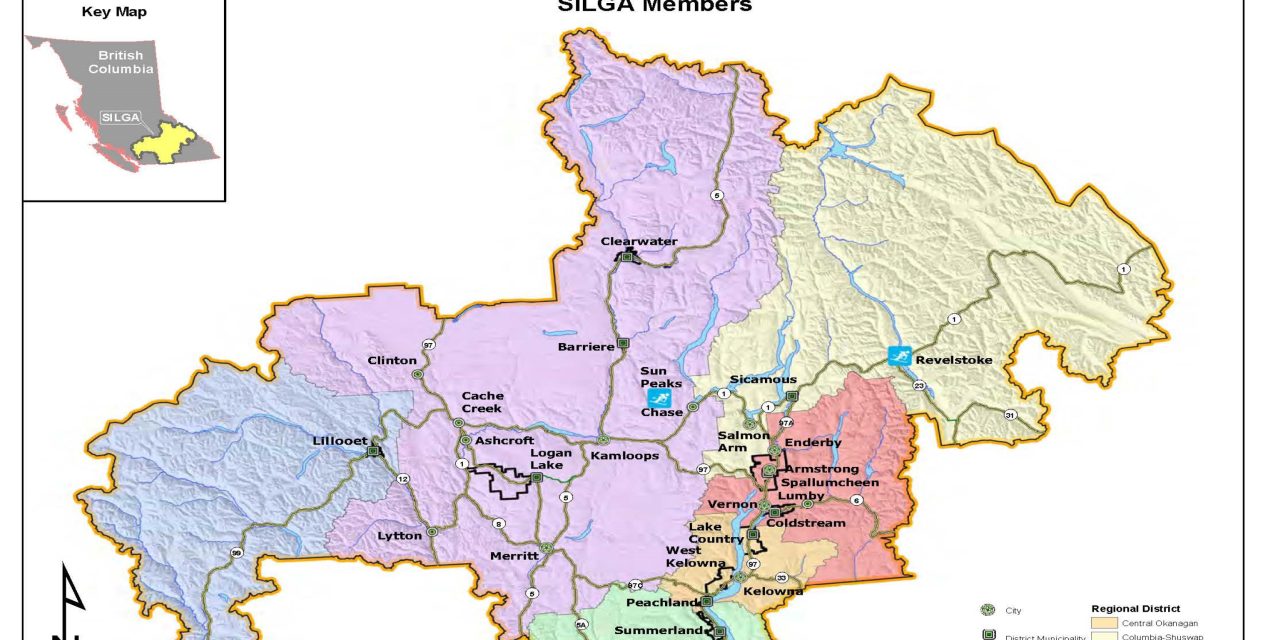
The SILGA meeting takes place in Salmon Arm in April.
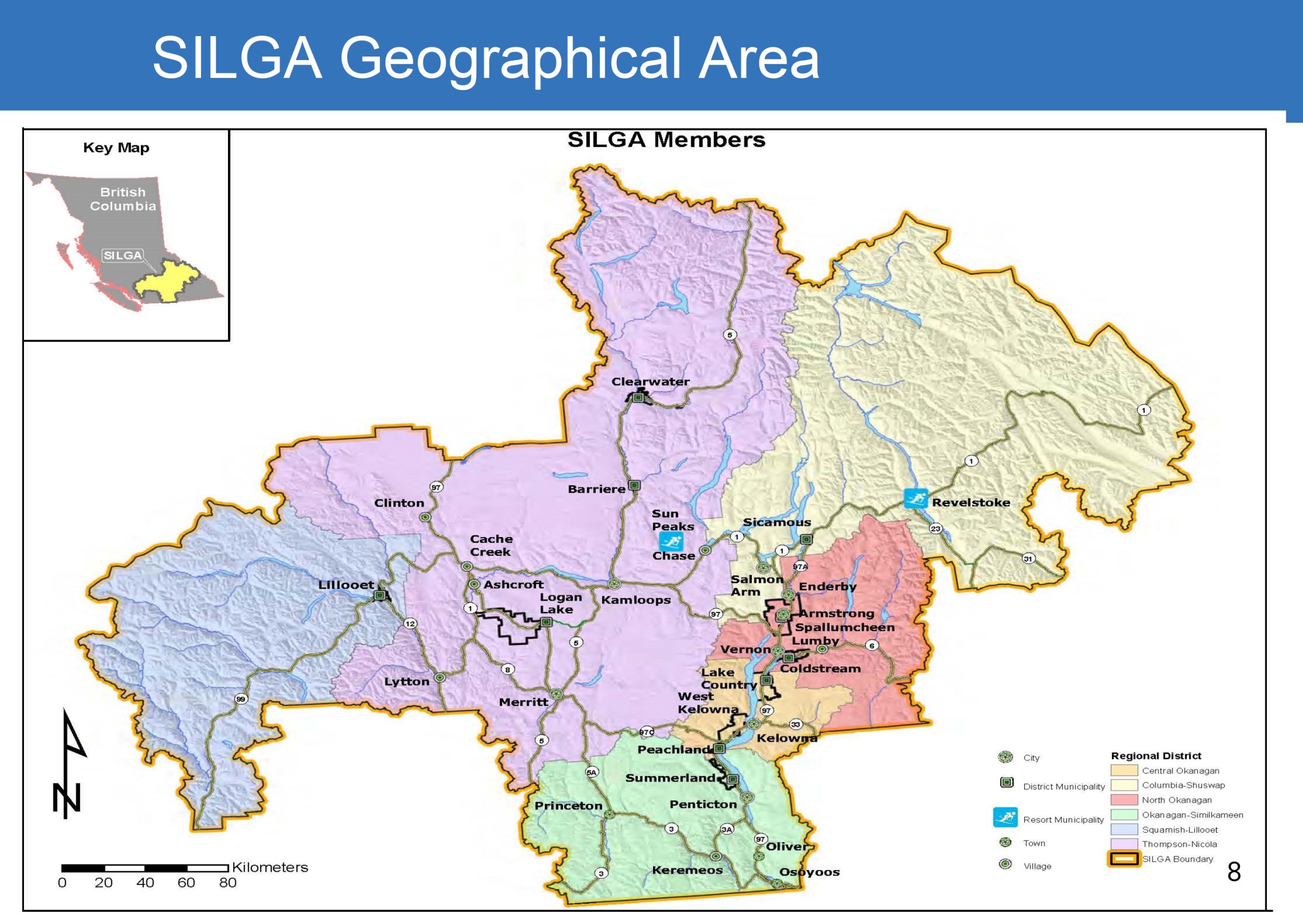
Southern Interior Local Government Association (SILGA) regional map. Contributed image