Back in the late 80’s, renowned Canadian artist Jack Campbell was commissioned to do a mural on what used to be an old packing house in Osoyoos. The mural was completed in 1989 with the help of some local artists. It holds a timeless charm which encapsulates the spirit of this town. Painted in pastels are people playing on the beach, farms, giant fruits and vegetables, all with the backdrop of sunshine and the lake.
Kara Burton remembers walking by the building back in those days when they were painting it, much like the murals being painted in town in the last few months.
Once the packing house stopped operating, it stood as an old building for some time, before it was demolished in order to build the Watermark Beach Resort in its place. By some stroke of luck, Campbell has painted his mural on plywood panels. And so, before the building was knocked down, these panels were taken down one by one and ended up in the museum.
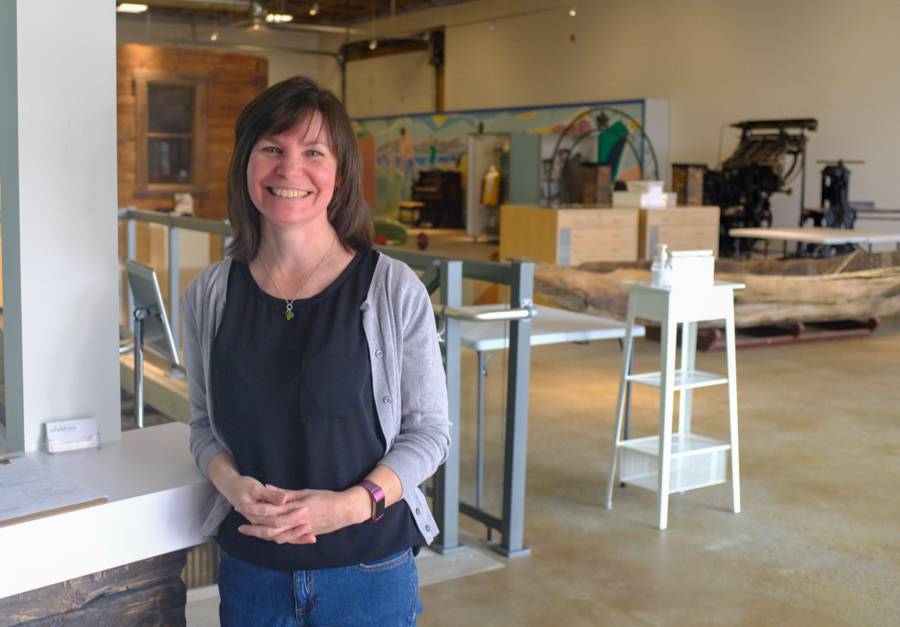
In the new museum, Campbell’s mural is a focal point. It cups alongside the back of the exhibits, giving a retro and modern look to the space. It has views of agriculture, recreation, the people, and the landscape, which perfectly highlights the stories that the museum is trying to tell.
“Even when we were installing it, the number of panels just fit perfectly to where we needed it to be…as if it was created for this building,” said Burton, executive director of the museum.
The mural, like a number of other historical artifacts, have been refreshed within the new museum building—bringing a sense of newness to the old stories dormant in these objects.
“It’s a fresh space, it’s a fresh start. It’s literally the same old stuff but it’s as if the whole collection has been given a new life,” said Burton. “We can display it differently, we can feature it differently, It’s more focused; Even the color scheme is fresher. The old building, it was dark, and it just weighed you down sometimes, whereas this, It’s light, it’s welcoming.”
The openness is definitely a notable feature at the new museum, even from the outside. Big glass windows which welcome passerbys in, along with the high ceilings and open concept that naturally guides visitors through the space.
Though most locals think the museum’s move started recently, the preparation goes back to 2011. The old building, which used to be the old curling rink, has been pretty rundown for quite some time with a number of issues. It made more sense to find a new building altogether rather than try fixing all the problems.
In 2010, the search for a new building began. A team went around and identified local buildings that would be suitable for a museum, when they found the new museum building which used to be the Home Hardware Building Centre. At the time, it was still operated as that and unavailable. However, the following year, the building went up for sale.
In June 2011, the Town of Osoyoos worked with the RDOS to purchase this building, and passed a referendum vote to buy it. The museum, however, did not get possession of the building until January 2020 due to a number of delays with Home Hardware building their new space by the industrial park.
Between 2011 and 2020, the museum did a lot of fundraising and planning and preparing for the move. Moving museums is, of course, much more complicated than moving houses. There are hundreds of historical, priceless artifacts that all need to be carefully documented. It’s not as simple as throwing everything in boxes and trying to find it later. The process is meticulous.
“Coming into this, we had no idea what we were getting ourselves into; there’s no manual out there of how to move a museum. You just sort of make it up as you go along,” said Burton, who joked that if she were to ever write a memoir, it would be entitled ‘How to Move a Museum’ as almost her entire career with the establishment has been rooted in this huge move.
Burton along with the museum’s collections manager Celeste Pio began numbering every single location in the museum. This meant each room had a number, and within that room, each set of shelves had a number, each display case had a number, then within that shelving unit, each individual shelf had a number and then on that shelf, each box, and then within that box each item. Setting up that process was a big step to get organized. This was also all recorded in a database so that there was a record of where exactly everything was.
“We felt that was important so that when we were ready to move those boxes, we could say, ‘okay, these units are gone, they’ve been moved to the new building,’” said Burton.
In January of last year when they finally took over the building, there were a lot of renovations to be done. Burton said they took everything right back to the concrete walls, putting in new electricals, new plumbing, adding new areas, and replacing things like the stairs which weren’t up to code.
The space now feels modern. The artifacts have room to breathe on their own, while still interacting with each other in ways that uplift the three central themes in the museum: land, people, and industry.
Burton also has some exciting ideas to keep people on their feet and refresh the exhibits every few months and circle through new themes to bring out the items people have not yet seen.
After this extensive process, the museum is finally able to have a ‘soft opening.’ They announced the doors will be open for visitors to come by and pay by donation on Thursdays and Fridays from 10 a.m. to 3 p.m.
“Many people have commented that small town museums typically are out of the way, an old building, and you kind of almost expect it to be dark and musty. We’re kind of trying to be more welcoming, be more of a community hub,” said Burton. “Once we’re finished, we will have the multi-purpose room downstairs, we will have the park outside, like there will be activity space, event space, and not just to come see the old stuff.”
Having been born and raised in Osoyoos herself, who now has a family of her own she’s raising in town, the history of Osoyoos is very closely tied to her own history. Though she fell into the job almost accidentally, her interest grew because as she said “it was my history. It was my childhood; these people that we were researching or that we were writing articles about were people that I knew. It didn’t feel untouchable.”
Settling in this new space, Burton hopes that more people will see the museum, its stories, and Osoyoos’ history as something tangible; something that they can interact with and see themselves as a part of rather than a dusty old relic.