By Don Urquhart, Times Chronicle
Following a request from the BC Wildfire Service, three Osoyoos Fire Rescue firefighters and the department’s Brush Truck have been deployed to the Kootenay Lake Fire Zone to help with the fire suppression efforts on the Argenta Creek wildfire.
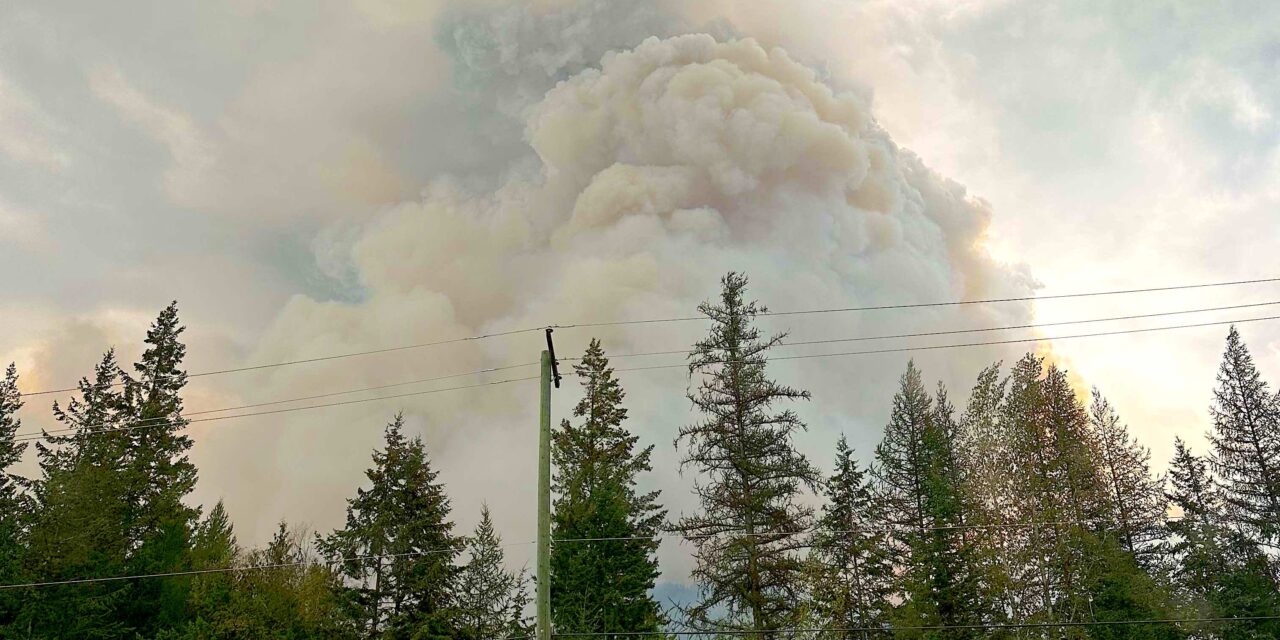
The wildfire on the opposite side of Kootenay Lake from Kaslo is estimated at nearly 15,000 hectares as of July 29 in part because it merged with five other wildfires. First discovered on July 18 it is now one of six “Wildfires of Note” in the province and is a result of the tens of thousands of lightening strikes that hit the central interior and Kootenay region particularly hard nearly ten days ago.
“We were contacted by BC Wildfire requesting our assistance for the Argenta Creek wildfire,” said Corey Kortmeyer, OFR Fire Chief. “It was a very quick deployment, which means that they call you and you have like, less than an hour to say yes or no,” he said.
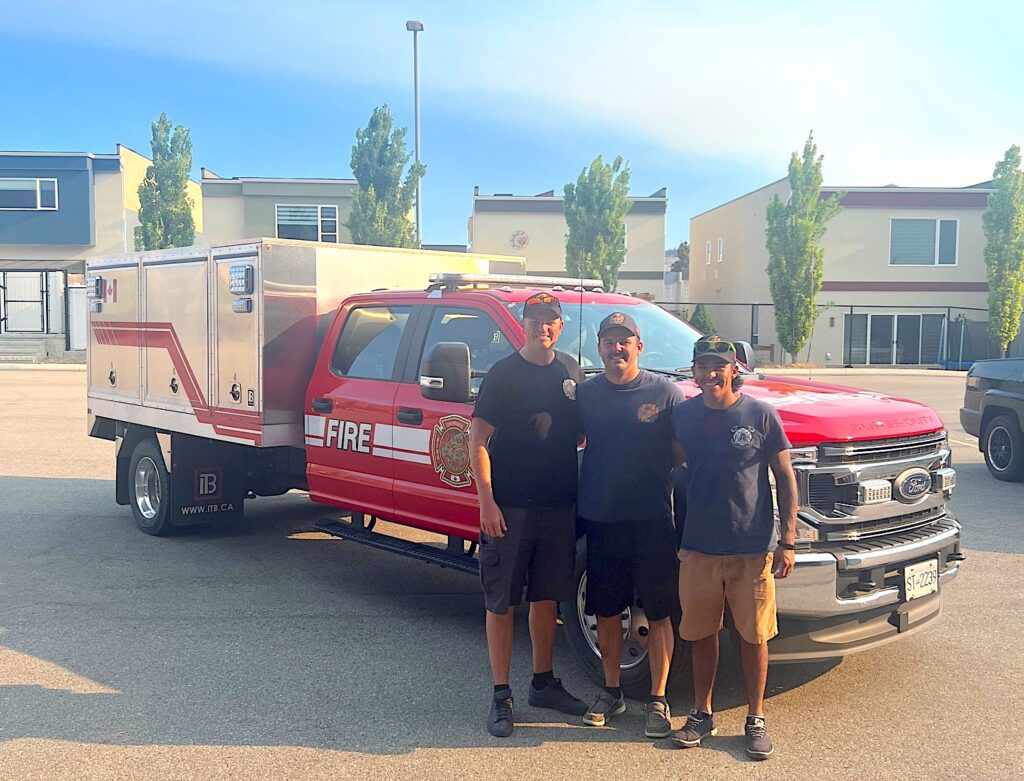
Osoyoos Fire Rescue firefighters dropped everything at a moment’s notice for the deployment to Kootenay Lake Fire Zone. OFR photo.
Part of the decision making is to make sure the fire protection area that falls under OFR’s jurisdiction is not being compromised. Kortmeyer says they must make sure that they have the human resources available, that they have enough critical infrastructure (fire equipment apparatus) and the right people to run those apparatus, before sending out any personnel and equipment on deployment.
“We then have to make sure that we can build a schedule for proper protection, for fire, life safety here in the town of Osoyoos. So we have to get all of the members who are remaining behind, and then those three individuals, plus our brush truck will then get passed out.”
“We did a little bit of legwork,” he said, adding his two Deputy Chief Officers – Rob Huttema and Ryan McCaskill – were key in getting all this information assembled, “so that we could actually send a crew out to an area that is in desperate need of help.”
When the Times Chronicle spoke to Kortmeyer last week he had just received an update with the crew saying it had been, “a challenging number of days”. He added, “they’re being tasked, and they’re doing the jobs that they’ve been trained to do.”
“It is very hard work to be doing during this temperature, and not only that, under the conditions themselves, with the smoke and fuel.”
The OFR firefighters are performing structural protection which involves clearing up personal property on decks and around houses to ensure that each of one of the properties is at less of a risk of being an ignition source from the wildfire to the structure itself.
The deployment will last for 14 days and after seven days they will be relieved by a second set of OFR firefighters on crew rotation.
Kortmeyer highlighted that these professional paid on call firefighters chose to drop everything and go in an hour’s notice. “You have people that are literally planning their vacations months in advance, and these folks are are dropping everything on a moment’s notice to help absolute strangers and I think that’s the absolute amazing side of the fire services.”
He reiterated the importance of making sure that “we’re doing the deployments in a very thoughtful way, because we don’t ever want to strip enough of our resources that we we lose the ability to protect our own. We have to have a very considerate, thoughtful process.”
The benefits, aside from the monetary aspect because the province pays for deployments which Kortmeyer said goes into the department reserves, is the valuable experience gained on the ground.
“That time on deployment and that experience, we get to bring it back to our community to deepen our own resolve and build our fire life safety programs here. We get to be a better risk manager. If you’ve been in those environments it allows you to have a better ‘head on a swivel,’ so to speak, it gives you a deeper appreciation of wildfire events.”