Dale Boyd
Osoyoos Times
British Columbia is seeing success flattening the curve in the fight against COVID-19, but the province is not yet ready to ease up restrictions according to the provincial health authority.
If hospitalization rates continue on their current track elective surgeries could be the first lifted restriction to return sometime in mid-May, Stephen Brown, Deputy Minister of Health, told media in a technical briefing Friday morning.
The province is now planning a balancing act between economic pressures and health and safety moving forward, officials said.
There are still a number of outbreaks province-wide including a federal correctional centre in Mission where one inmate died Thursday and an outbreak at a West Kelowna agricultural business involving temporary foreign workers now with 23 cases — as well as ongoing long term care facility outbreaks.
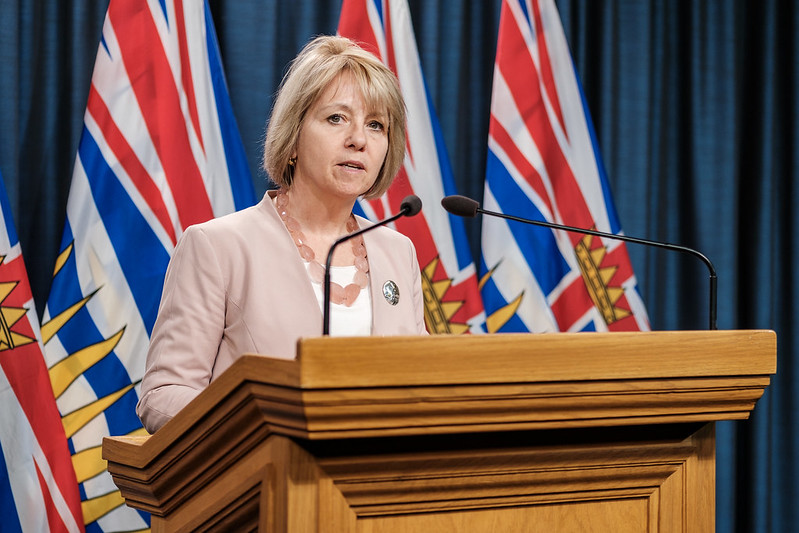
It is essential everyone continues to practice social distancing and current public health measures, Dr. Bonnie Henry, provincial health officer said.
The public health measures are working, said Brown, adding that was not a given two or three weeks ago.
The number of B.C.’s COVID-19 cases have plateaued and started to decline and the province’s COVID-19-related Intensive Care Unit (ICU) census curve has remained well below numbers seen in Hubei and Italy, according to the modelling data provided by the provincial health authority.
However, the use of Italian and Hubei epidemics as reference points for B.C. is now less important to modelling for provincial health authorities, and new models will be based on B.C. numbers going forward.
Deaths continue to be seen particularly amongs those who are elderly, the modelling data shows, with the most COVID-19 related deaths coming in the 80 to 89 and 90+ age categories.
BC’s actual case rate and actual ICU admission rate has been far below what earlier models showed based on other jurisdictions’ data and B.C. is experiencing a slowing in the rate of new diagnoses and stabilization of COVID-19 patients in hospital and ICU.
The slowdown is due to public health action, not herd immunity, or “community immunity,” Henry said — and what happens next will also be much the same.
Getting immunity from infection is not optimal Henry said, and will happen over a longer period of time.
Looking forward, travel is not going to be the same as it was pre-COVID-19 for some time, perhaps a year to 18 months Henry estimated, and restrictions on travel and distancing measures will continue until a vaccine is developed to protect everyone, she said.
The province plans to move forward minimizing the “unintended negative consequences” of COVID-19 public health measures and restrictions like postponing surgeries.
For more detailed modelling information from the province of B.C. click here.