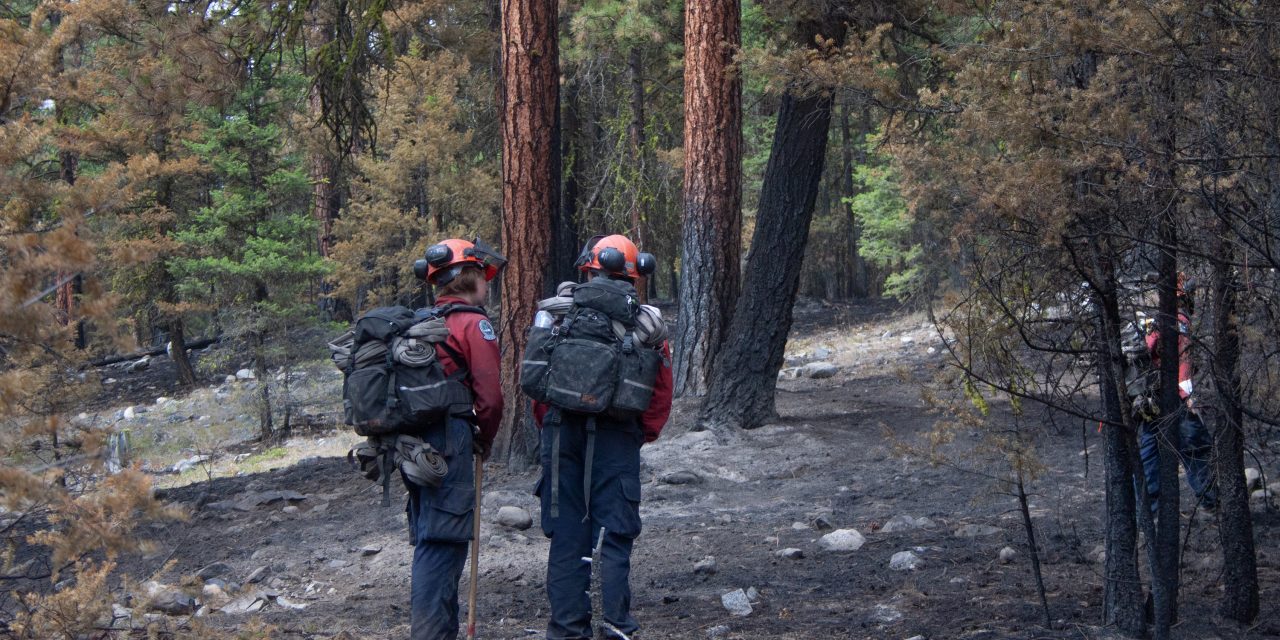
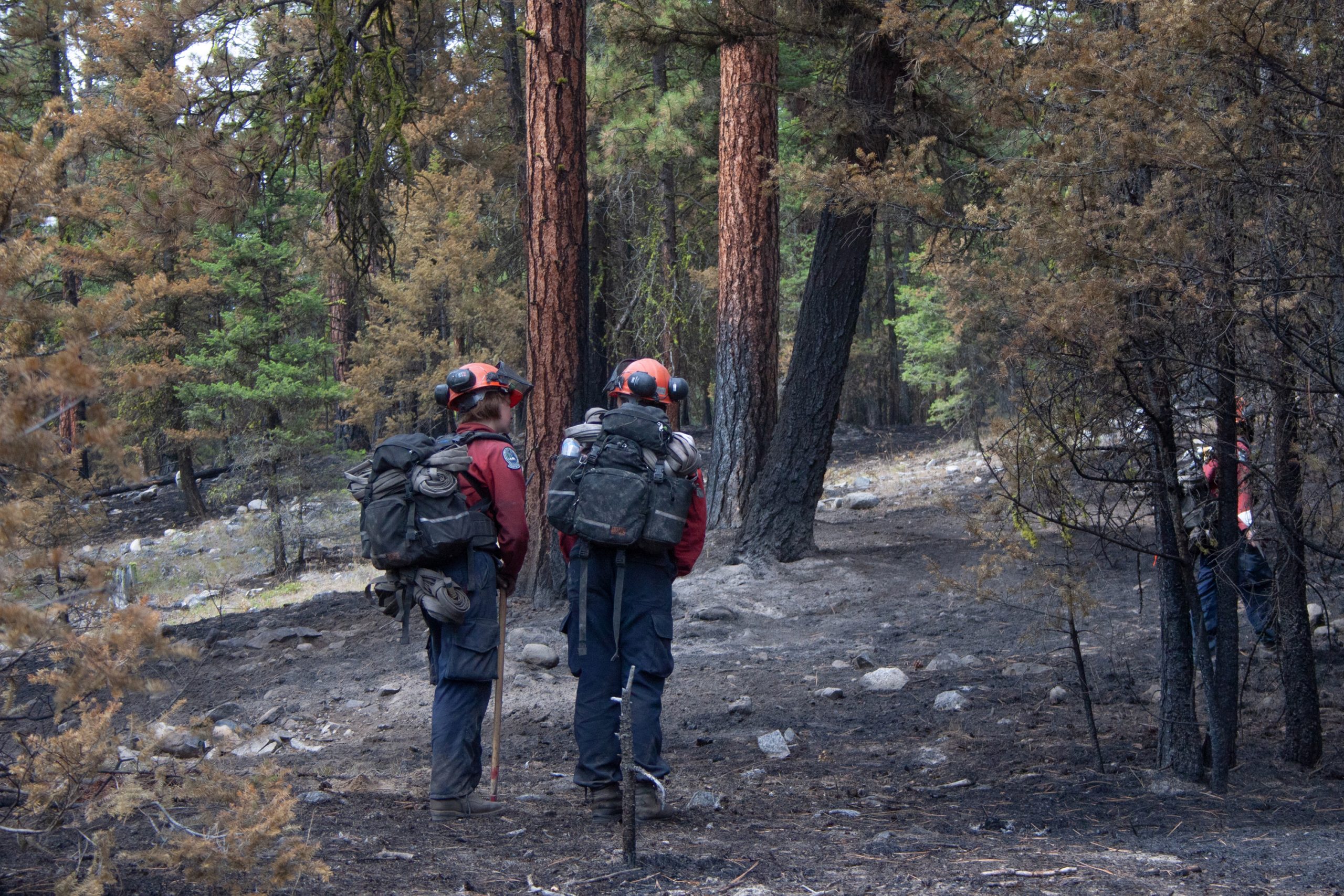
Local media toured the fire line at the Eagle Bluff wildfire outside of Oliver on Tuesday afternoon. Crews are still battling the out-of-control blaze. (Dale Boyd / Osoyoos Times)
By Lyonel Doherty
Aberdeen Publishing
Blood, sweat and tears.
That’s what BC Wildfire crews literally have to shed every time they battle the beast.
None of us can imagine what these men and women endure for days on end in suffocating heat. They build guards, put out hot spots, set up bladders, operate pumps, drag hoses and sleep when they can in hot tents. Oh, and eat when they can.
Some get injured on the fire ground while others have to contend with hornets, ants, rattlesnakes and singed eyebrows.
Why in the hell do they do it?
Because it’s in their blood, and quite frankly, they don’t like losing to fire. Plus, their passion is protecting lives and property, and they are willing to risk their own safety to do it. But understand that the risks they take are calculated and informed.
As with any wildfire suppression manoeuvres, there are people who question the tactics used by forestry crews. Case in point: One of our online readers, a former firefighting captain, said there is no need to back-burn a mountain.
“Think about it, two days ago it was 280 hectares, one back-burn brought it to 900 hectares. Last night’s backburn brought it to 1,500 hectares . . . all burned by the BCWS. Why?”
• Read more: Eagle Bluff fire now ‘held’ and not expected to grow
Another reader expressed his views on the “ineffective” firefighting efforts in the Eagle Bluff fire.
Of course, many of our readers dispute these opinions, saying BC Wildfire saved our bacon and prevented property losses in the Gallagher Lake and McKinney Creek area.
BC Wildfire says the hand-ignition burn they conducted south of Gallagher Lake last week was very successful. This was deemed necessary to reduce the amount of fuel between the fire ground and the community. One day, the flames and smoke on the edge of Senkulmen Business Park were quite unsettling. The next day there was nary a column of smoke to be seen in that area. Was that not a success?
The same backburn method was used in the McKinney Creek area, and residents were warned that these burns would significantly increase the size of the fire.
Whether you agree with these methods or not, the bottom line is no lives or structures were lost. No injuries, either. Isn’t that the end goal?
What still sticks in my craw is the cause of this fire. Was it lightning or human caused?
Whatever the case, outdoor burning and campfire regulations need to be overhauled. The province should ban all size campfires starting June 1 every summer. This ban should remain in effect until September or October.