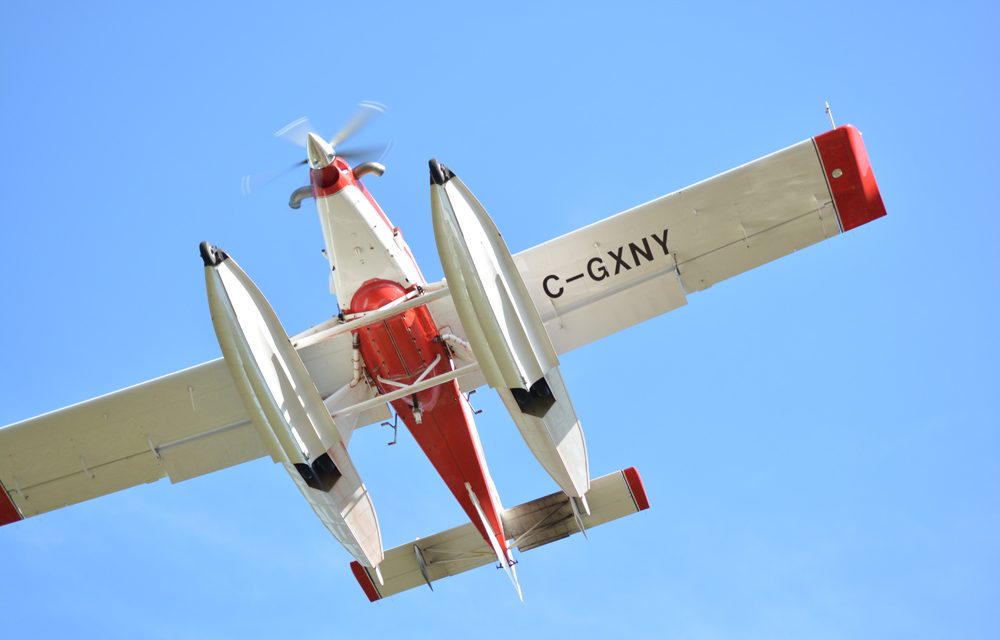

The provincial government is bringing out tough new rules to crack down on illegal drones. Photo by Lyonel Doherty
As the provincial government takes action to crack down on illegal drones, police are still looking for the operator of one in Oliver.
Sergeant Blaine Gervais of the Oliver RCMP said no new leads have come forward pertaining to a drone that grounded recent aircraft operations during the Testalinden Creek fire.
“Two people who own drones who were in the Oliver area (at the time the drone was spotted) have been spoken to and are not believed to have been involved,” Gervais said.
In the meantime, the provincial government is working to stop the dangerous use of drones near wildfires with tough new rules and a public awareness campaign to keep people safe.
“Our message is simple. If your drone is in the sky above an active wildfire, you are grounding firefighting aircraft, putting lives at risk and may cause the fire to spread,” said Mike Morris, parliamentary secretary to the Minister of Forests, Lands and Natural Resource Operations.
“This is completely unacceptable behaviour and there will be legal consequences for anyone who gets caught.”
Morris’s announcement was triggered by two incidents in August when firefighting aircraft were forced to immediately halt all operations on wildfires because someone was flying a drone (also known as an unmanned aerial vehicle) in the area.
Most notably, on August 16, eight helicopters and five fixed-wing aircraft that were supporting firefighting crews on the Testalinden Creek fire were grounded for over four hours while the fire continued to spread.
Current federal regulations explicitly prohibit the use of drones of any size near a wildfire. The current maximum fine for an infraction is $25,000, and violators could spend up to 18 months in jail.
However, legislative amendments will be introduced in spring 2016 to strengthen and clarify the provisions of the provincial Wildfire Act, and that may apply to the operation of drones.
“Drone operators need to understand that drone use near a wildfire is extremely hazardous and drone operators must be aware of the rules and the penalties for not following them,” said Minister of Forests, Lands and Natural Resource Operations Steve Thomson.
The federal government, through Transport Canada, regulates the use of all aircraft – including drones – and is proposing changes to the existing Canadian Aviation Regulations related to drones.
“Recent incidents involving illegal drone use in B.C. drives home the urgent need for tougher regulation, education and enforcement within the industry,” said Transportation and Infrastructure Minister Todd Stone.
The province’s submission to the federal government advocates for stronger federal regulations and addresses a number of key themes, including the safe operation of drones, personal privacy, registration of drones, certification of all drone operators and public awareness.
The BC government will direct a public awareness campaign at stores where drones are sold to ensure owners are aware of their responsibilities before they make the decision to purchase a drone.
All wildfires are considered to be “flight restricted,” according to the federal Canadian Aviation Regulations.
The restricted area is within a radius of five nautical miles around the fire and to an altitude of 3,000 feet (about 915 metres) above ground level.