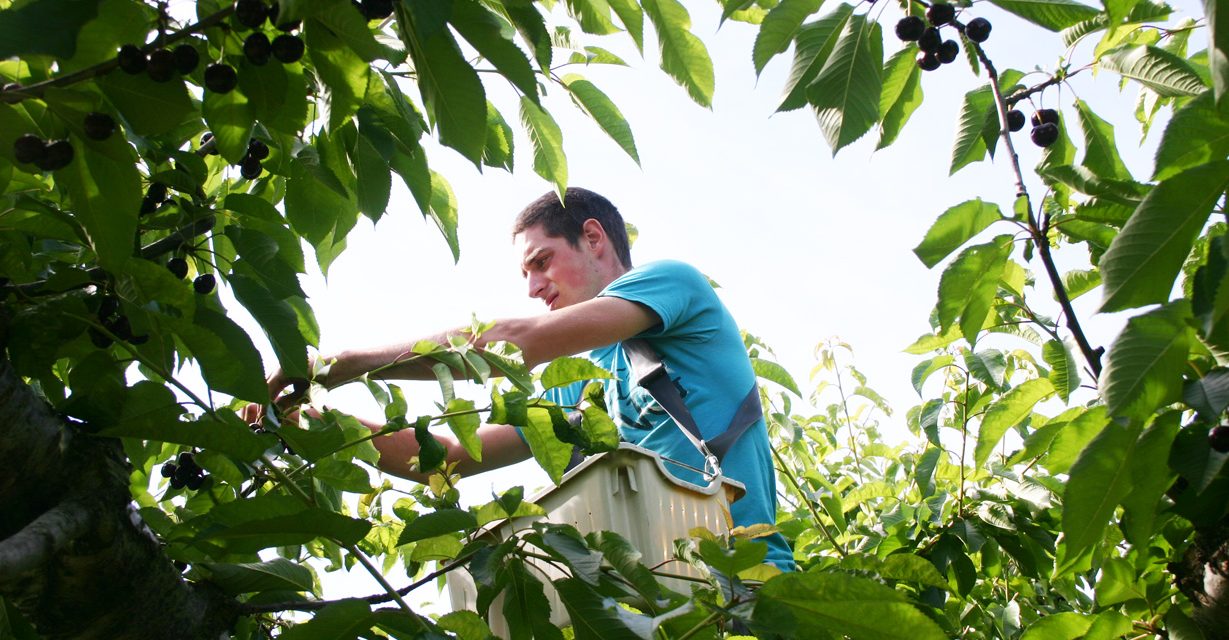
Oliver fruit growers have been keeping a keen eye on this year’s cherry crops after a freak spring spurred on unusually early cherry growth. While growers are predicting better-than-average yields, those yields are coming almost two full weeks ahead of schedule.
Greg Norton lets out a bemused chuckle when asked what he expects from this year’s cherry crop.
“I want to say strange at this moment,” the long-time Oliver fruit grower says—and after a pause. “It looks great actually.”
Norton prides himself on having a feel for his fruit, but admits that this year things have been so wonky he doesn’t know exactly what to expect. Stages of growth that usually take close to a week are happening almost overnight, and May temperatures have felt more like high summer than late spring.
“It’s a bit unnerving actually just to be at this place and not know exactly what to expect,” he admits. “I don’t even know when I’m going to pick yet.”
But while the strange season has left some farmers scratching their heads, the overall outlook for this year’s crop is positive.
“I think that we’re going to have a better-than-average year, we’re going to have better-than-average quality, barring severe changes in weather. And I think that with the export markets that are out there and available to people we’re going to do as well or better than last year,” says Fred Steele, the president of the BC Fruit Growers Association.
He explains that while there has been some scattered hail throughout the valley, growers haven’t yet had to deal with the steady rains that are typical in the region at this time of year.
Too much rain causes cherries to split, making them much less attractive to buyers. Dry skies mean the cherries that are on the trees are great quality, meaning they should be easy to unload.
Add to that the fact that the low Canadian dollar makes it easier for farmers to sell abroad and things look pretty good for cherry growers this year.
The one hangup, of course, is that they need to get that fruit off of their trees.
In Osoyoos harvesting has already begun, and Oliver is not far behind. Both Steele and Norton pointed out that such an early start could mean that seasonal workers won’t arrive in time to get the fruit off the trees.
Norton says he’s been in touch with his pickers already, but that growers who aren’t on the ball might be caught with fruit on their trees and no one to harvest it.
“Anybody that’s not really paying attention is going to get stung this year,” he says. “This is not a year to not be in real contact with your crop.”
Once the crop is harvested, however, the early start to the season might actually work in growers’ favour. With early, mid and late season varieties all in the orchards harvesting will happen non-stop for 4-6 weeks.
“We’re going to see cherries are going to be going all summer like this,” Steele says. “It’s going to be a summer of steady picking, one right after the other with the early start.”
As Nirmal Dhaliwal—another Oliver grower—points out, an early start can actually help growers sell soft fruits like cherries.
He says that in the summer time people generally want to buy fruits like cherries, and all the tourists in the area are a good market to sell to. He explains that most of those tourists have left by September, but with how the season is shaping up cherries will be finished by then.
Until then, however, growers will continue to keep their eyes to the skis and hope for Mother Nature to bless them with good weather. As Norton says, the success or failure of the season really boils down to one thing:
“It all comes down to when we get them in the box, and if we get them in the box.”
By Trevor Nichols

Cherry growers are hoping that Mother Nature cooperates with the early crop.