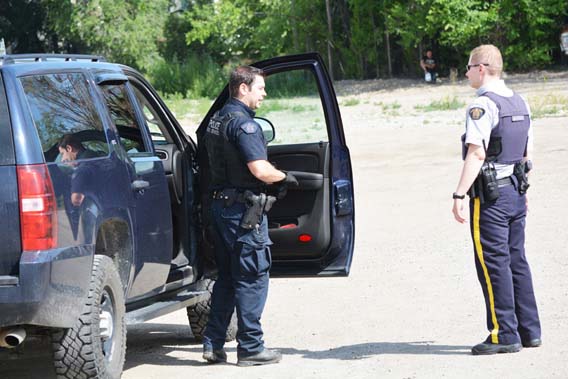

The RCMP were kept very busy in Oliver last year responding to various incidents, including break-ins.
Whether people are feeling more desperation out there, or it’s a sign of the times, breaking the law in Oliver is a popular pastime these days.
According to a crime statistics report from the Oliver RCMP, sexual offences, break-ins, vehicle thefts and shoplifting increased significantly in 2014 compared to the year before.
Last year there was a total of 18 sexual offences that police dealt with, compared to seven in 2013.
Assaults were also up 38 per cent, from 55 files in 2013 to 76 files last year.
There were 17 business break-ins in 2013, compared to 35 last year. Residential break-ins also increased, from 13 to 25 (92 per cent).
“Other” break-ins increased 186 per cent, from 14 in 2013 to 40 last year.
In 2013, there were 22 incidents of vehicle thefts, compared to 55 last year.
Thefts from vehicles stayed relatively the same (from 78 files in 2013 to 82 in 2014).
There were 18 incidents of shoplifting last year, compared to seven in 2013.
Weapons offences also went up, from five cases in 2013 to nine last year.
There were two robberies last year, but none in 2013.
According to the report, four incidents of arson were committed last year, but none the year before.
There were two 24-hour driving suspensions issued in Oliver last year, compared to one in 2013.
And now for the good news: Mischief is down 11 per cent, from 92 cases in 2013 to 82 last year.
Fraud is also down 31 per cent (from 26 files to 18).
Drug possession is down 22 per cent, from 45 cases in 2013 to 35 in 2014. Drug production is down 60 per cent (from five files to two). Drug trafficking stayed the same with three files last year.
Sergeant Ken Harrington from the Oliver RCMP could not be reached for comment before press time. However, he stated in the report that the detachment’s plan focuses on the following: contribute to safe roads, reduce the abuse of drugs, make police visible, contribute to safer youth, reduce overall crime (prolific offender management), and contribute to safer, healthier aboriginal communities.