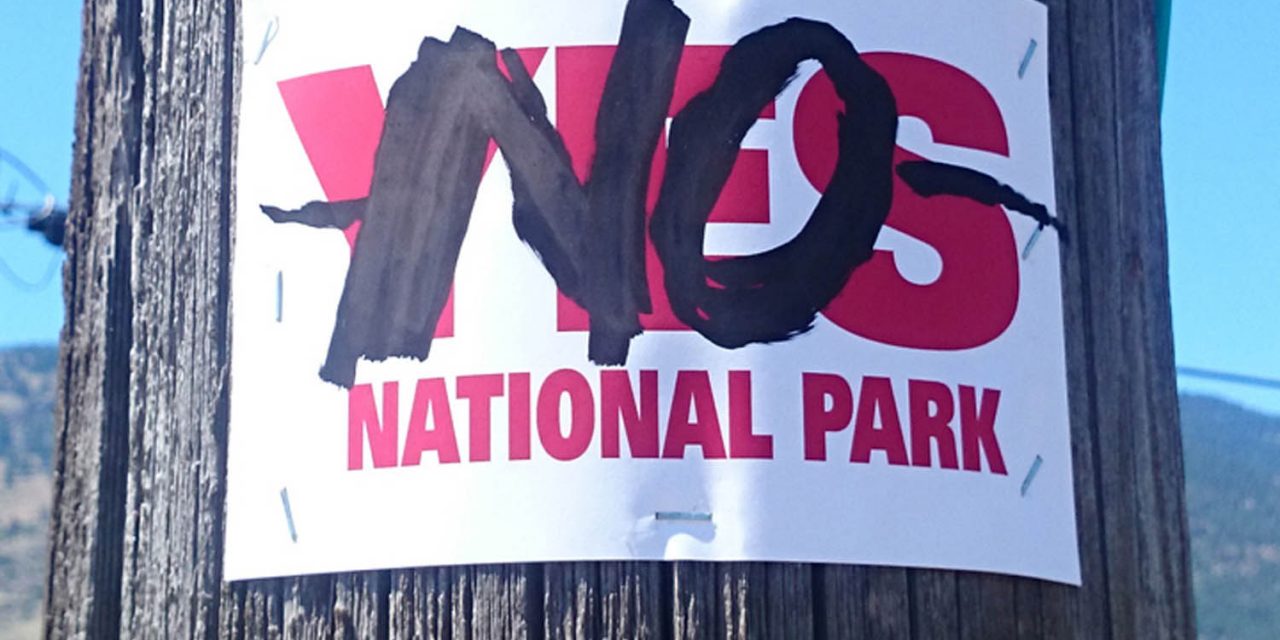
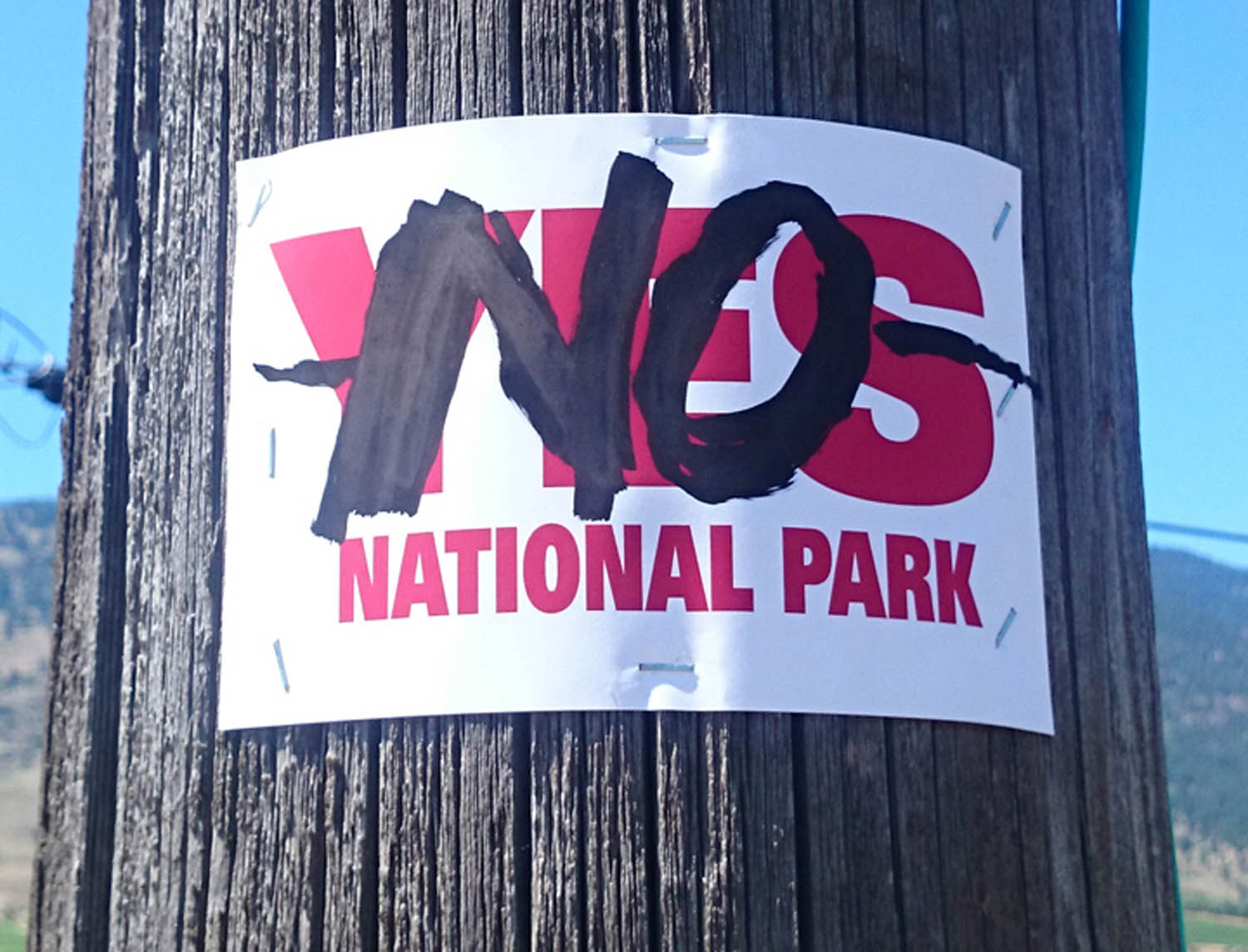
With Friday’s announcement by three levels of government that they are working jointly to create a national park reserve, the debate has moved beyond national park “yes” or “no.” Those with concerns would be best to state their bottom lines during talks rather than simply putting up signs or clicking on “angry” emoticons on Facebook. (Bob Parker photo)
The 15-year-old debate on creating a new national park reserve in the South Okanagan-Similkameen entered a new phase on Friday.
The question is no longer national park “yes” or “no.” It is now what shape and form a national park reserve will take.
All the governments involved in Friday’s announcement of a renewed push to achieve a park – federal, provincial and First Nations – were very clear that this is the direction they are going.
Catherine McKenna, the federal minister of environment and climate change, was clear that both she and Prime Minister Justin Trudeau are “absolutely committed to getting this done as soon as possible.”
George Heyman, the B.C. minister of environment and climate change strategy, also made the point that he has solid support from Premier John Horgan and the provincial cabinet.
And Chief Clarence Louie of the Osoyoos Indian Band underlined that he has the full backing of the Okanagan Nation Alliance by standing with Grand Chief Stewart Phillip as both expressed their full support, and as the chiefs of the Lower Similkameen and Penticton Indian Bands stood next to them.
While anything is possible in politics, the clear message was that each of these governments is fully committed to moving forward with a national park. They may compromise to achieve their goal, but they won’t back down.
Of course, everyone knows that there still is substantial opposition to any form of national park, though over the years that opposition has diminished, and scientific polls suggest it is a minority, albeit a substantial one.
In response to the news, some of those opponents have taken to social media to post “angry” emoticons or write “no national park,” or “not in my backyard,” as if such expressions of opposition on Facebook will stop the governments in their tracks.
One of the main problems with opponents of the park is that few of them bother to actually articulate what they are angry about.
There are exceptions. In the public consultation by the previous provincial government, some groups representing hunters, outfitters and others made rational submissions explaining why they oppose a park.
Whether you agree with them or not, groups like the BC Wildlife Federation have always been willing to make a coherent argument.
But the Grasslands Park Review Coalition – the “group” that media tend to turn to when they want to find an opposing voice for balance – didn’t even bother to make a submission when the province invited feedback.
This “group” doesn’t have its own website, perhaps because this would require them to give reasons for their opposition.
All too often, there’s been unsubstantiated misinformation. Claims that property will be expropriated. Residents will be denied fire protection. Fishing will be banned. Ranchers will be kicked off their land. Locals will be kept out of the park.
None of this, of course, is true.
Both ministers – McKenna and Heyman – were clear that there must be public engagement about how to move forward. And they will be there to listen.
They want to hear from ranchers, recreational users, the helicopter school and others who have concerns. And they want to accommodate any concerns that are reasonable.
A smarter approach for those with concerns about the park would be to decide what their bottom lines are and develop coherent arguments to achieve those goals. Develop a negotiation strategy instead of just clicking on “angry” emoticons or posting a “no national park” sign.
If your bottom line is you want to be able to mud bog in environmentally sensitive wetlands because you don’t like governments telling you what to do, you probably won’t get very far.
But if you want to ensure that there is access for recreational users to some of your favourite spots, then find a way to show how this can be done in an environmentally sustainable way – and speak up.
In the past, national parks have sometimes been imposed without sufficient attention to local needs. But that has changed in recent years, and Parks Canada knows that national parks can’t be one-size-fits-all. They need to adapt to the local community.
Chief Louie, who has been a fan of national parks since he worked at Kootenay National Park as a teenager, pointed out that many national parks in Canada and the U.S. have encountered opposition at first.
“But once they are there,” he said, “it doesn’t take very long for people to realize it was the best decision ever made.”