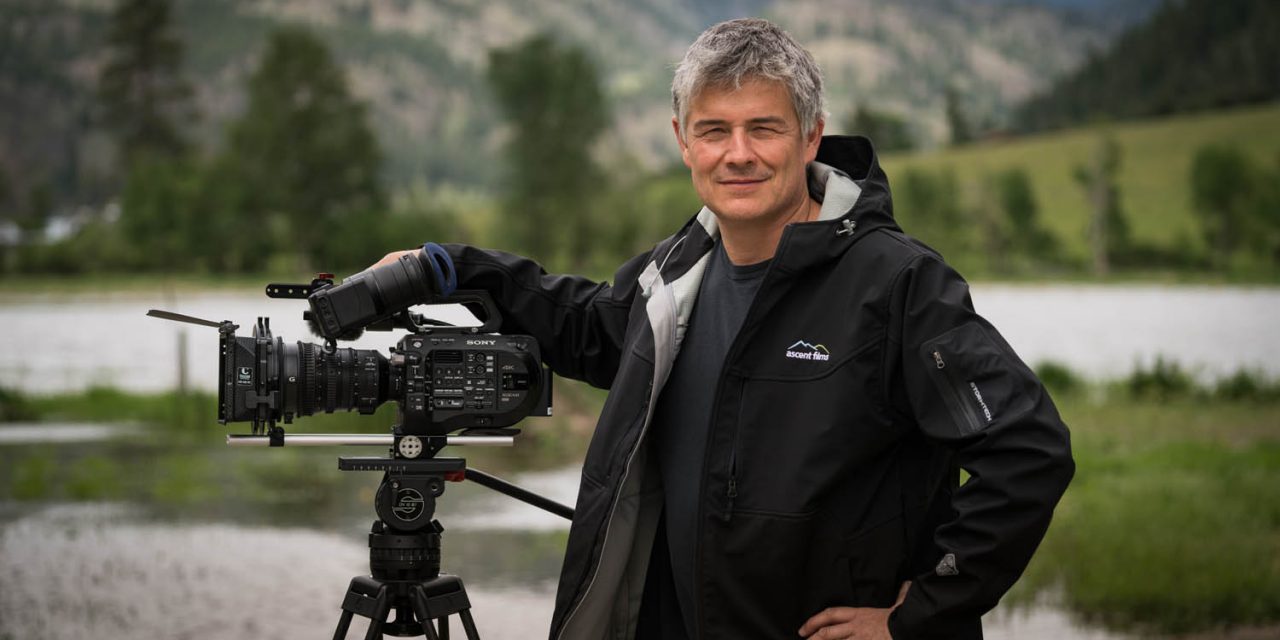
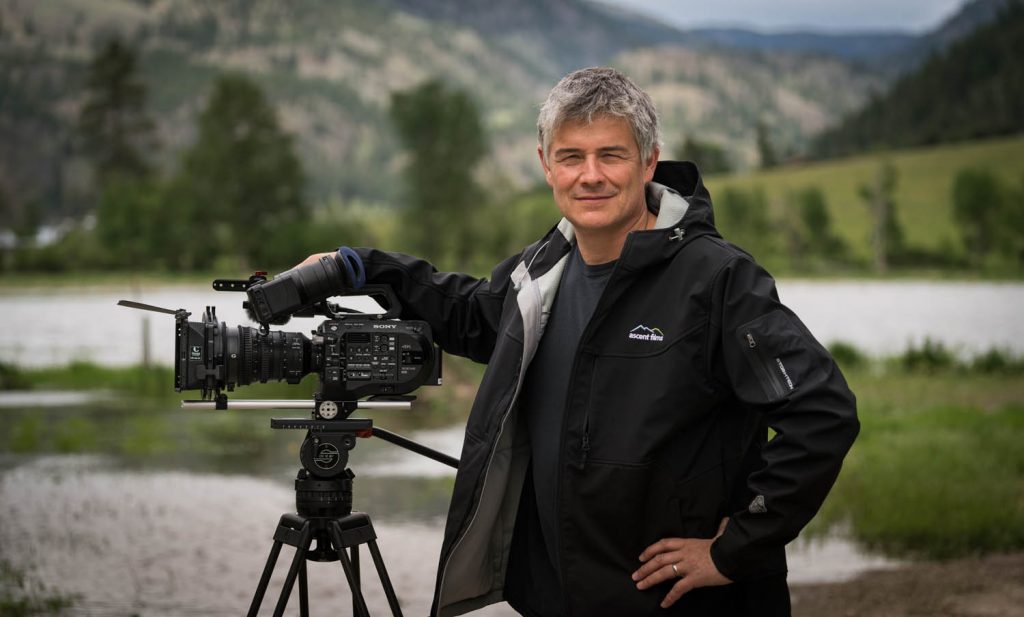
Director Jiri Bakala, of Kelowna-based Ascent Films, shot ‘A River Film’ with his wife Lucie and other collaborators. (Contributed photo)
The water of the Okanagan River is a precious resource that must be managed to balance the needs of competing users.
That’s the message of a new 38-minute film, “A River Film,” that will be shown to the public in a free screening at the Oliver Theatre on Oct. 25.
The film was to debut Tuesday evening at the annual public meeting of the International Osoyoos Lake Board of Control in Osoyoos.
There are five key interests in the Okanagan Valley regarding water, says director Jiri Bakala, of Kelowna-based Ascent Films – flood control, agricultural irrigation, fisheries, First Nations and recreation.
“One of the biggest challenges was to tell the story of how these interests are often in competition with each other and how the people who manage the watershed and waterways have to balance these interests,” said Bakala.
He points to the example of Shaun Reimer, who manages the dam at Penticton for the Ministry of Forests, Lands and Natural Resource Operations (FLNRO).
During last spring’s flooding, Reimer was under pressure to let as much water as possible out of Okanagan Lake, but letting too much out too quickly would wash sockeye eggs out of the gravel near Oliver, threatening the fishery.
Likewise, property owners are concerned about damage to docks and boat mooring if water levels rise too high, whereas irrigators downriver don’t want their water intakes hanging in the air above low water.
As John Arterborn, a fish biologist with the Confederated Tribes of the Colville Reservation, put it in the film: “Unfortunately water is always a finite resource and unfortunately, when it comes to competition between people and fish, the fish usually lose.”
Bakala said it was determined that the best way to tell the story of these competing interests was to follow the Okanagan river system through the four seasons.
The film was largely funded by the International Joint Commission (IJC), the Canada-U.S. body that manages international waterways. Also backing the film were the Department of Ecology in Washington State, who commissioned it on behalf of the IJC, and the Okanagan Basin Water Board (OBWB) in Canada.
Many of the people interviewed throughout the film represent those organizations, but there are also interviews with people involved in agriculture, dam operations and local politicians.
Osoyoos Mayor Sue McKortoff is one of the people interviewed.
From the opening scenes showing measurement of the winter snowpacks that will provide water to the river, the entire film takes place outdoors.
“One of the things I wanted to do was to keep the entire film outside,” said Bakala. “I didn’t want to go inside and sit down in somebody’s office or somebody’s living room and do an interview.”
So the interviews are all filmed along the river, interspersed with scenes of the Okanagan Basin in different weather conditions.
Filming took place over about a year and a half, starting in February 2016 and concluding with this spring’s flood conditions.
This spring, Bakala was able to catch what he missed the previous spring, but he couldn’t catch everything. One phenomenon he wanted to film, but which didn’t occur, was water from the Similkameen River backing up the Okanogan River below Oroville, Wash.
Most of the work on the film was done by Bakala and his wife Lucie Bakala, the producer, but there were other collaborators involved. Local filmmaker Kenton Gilchrist, for example, composed the music.
Bakala has done numerous documentaries on a range of issues, from health to the environment. One such film was about Gloria Taylor, a woman with ALS (Amyotrophic lateral sclerosis), who became an advocate for medically assisted dying.
“Every time you start a new film as a documentary filmmaker, you find out how much you learn about these topics,” said Bakala. “For us it was incredible. We learned so much about the river that we had no idea. I’ve lived here for over 15 years now, and you take so many things for granted.”
The free screening at the Oliver Theatre is at 7 p.m. on Wednesday, Oct. 25. Bakala recommends that people obtain tickets online at Eventbrite.ca to be sure of getting a seat.
Those involved with the production will be at the theatre to answer questions after the film.
The public may also attend the annual public meeting of the International Osoyoos Lake Board of Control on Tuesday, Oct. 17 at 6 p.m. at the Sonora Community Centre. The film will be screened at that meeting.
RICHARD McGUIRE
Osoyoos Times
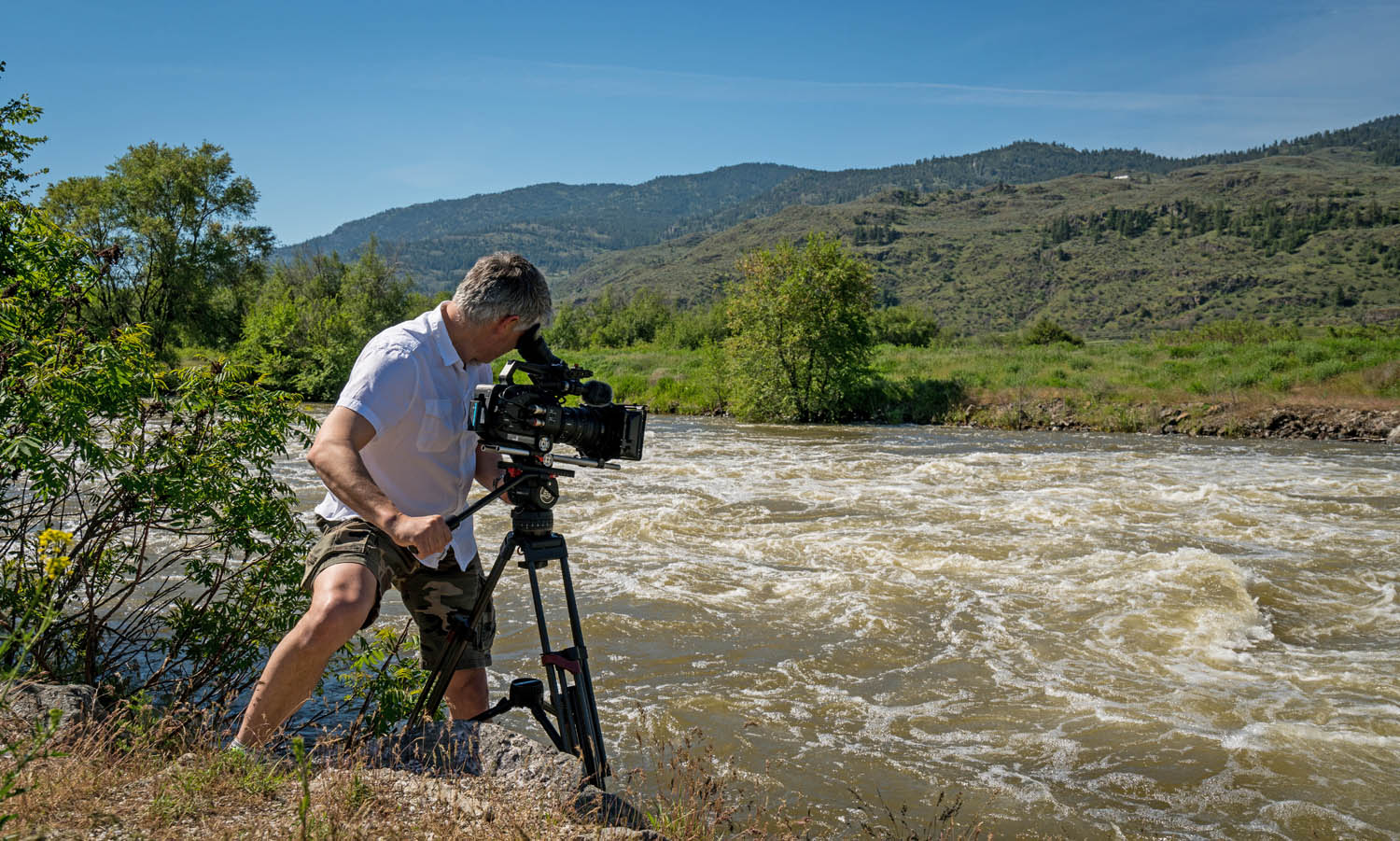
Director Jiri Bakala films a scene of raging water for ‘A River Film’. The movie will be screening in a free showing on Oct. 25 at the Oliver Theatre. (Contributed photo)