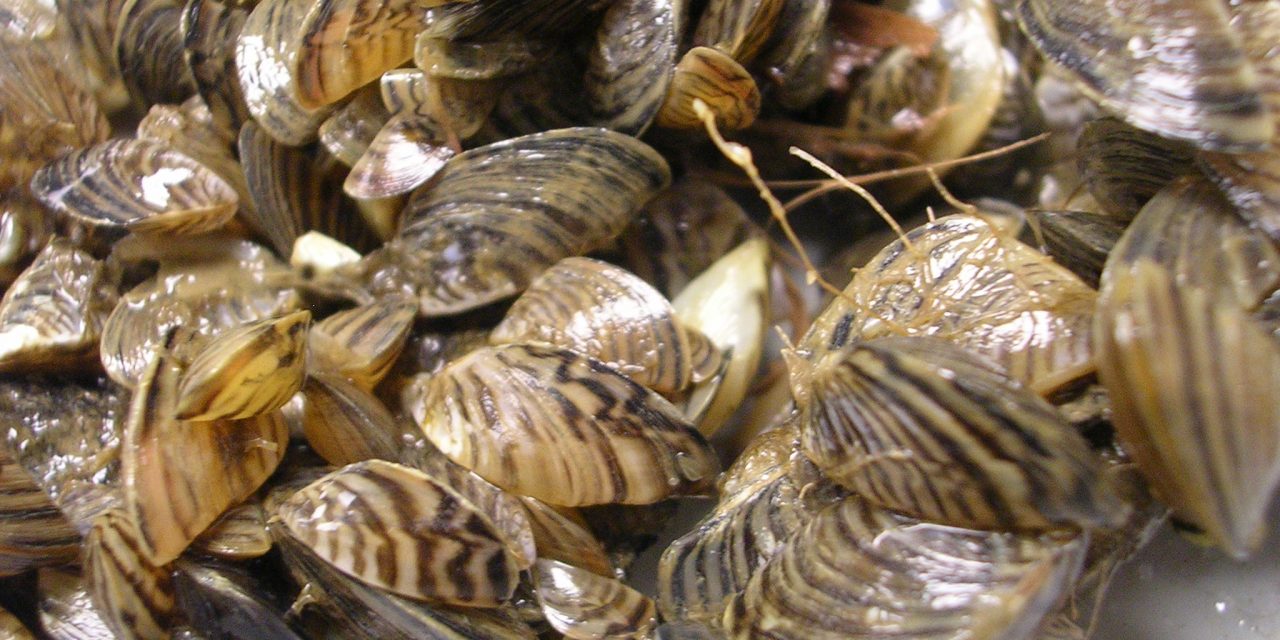
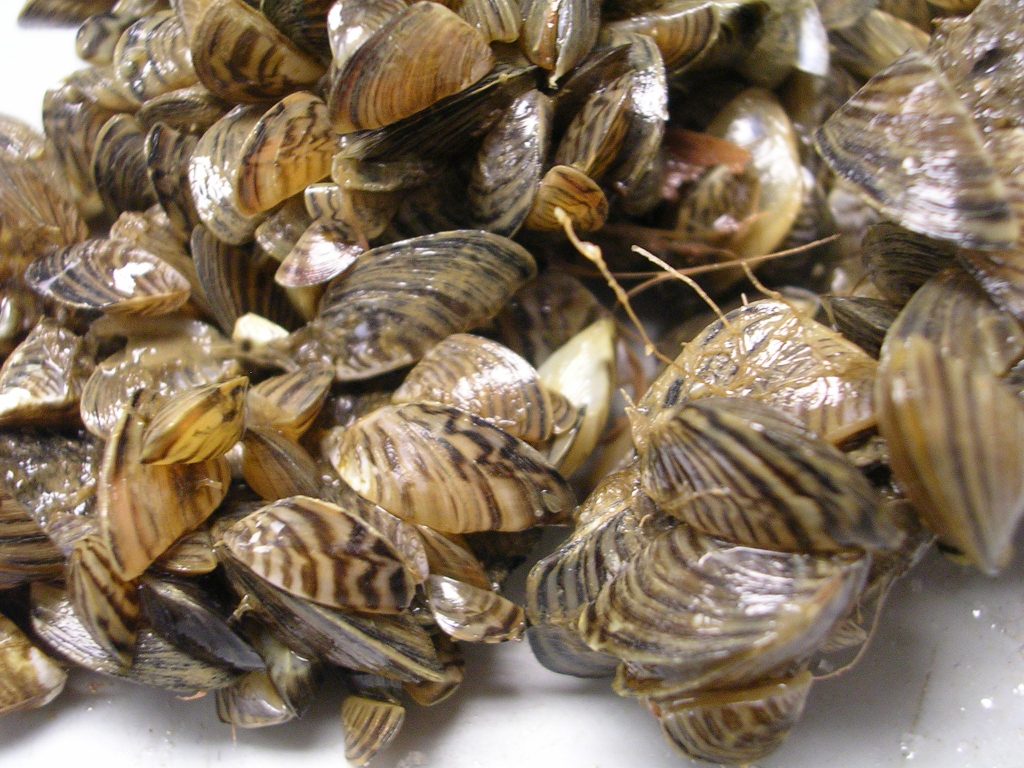
Invasive zebra mussels, like those pictured here, are being spread on boats that have not been properly cleaned, drained and dried after use in infested waterways. (U.S. Fish & Wildlife Service)
Fifteen boats carrying adult invasive mussels have been intercepted this year at roadside inspection stations and five of those were bound for the Okanagan.
“This is yet another wake-up call that these watercraft are headed our way,” said Corrine Jackson, communications director with the Okanagan Basin Water Board (OBWB).
“We’re very happy that those inspection stations are in place, thank goodness, but it really shows that we all need to be aware of the threat to our waters,” she added.
In addition to the 15 boats carrying adult mussels, 1,100 watercraft were identified as high risk, 166 decontamination orders were issued and 117 watercraft were issued quarantine periods required to meet the required 30-day drying time to ensure any mussels are dead, said David Karn, a spokesperson for the B.C. Minstry of Environment.
The figures, which cover this year’s boating season up to July 30, show that 19,800 watercraft were inspected since April.
Of the 15 watercraft found to be carrying adult mussels, six were headed for the Lower Mainland and five were destined for the Okanagan. One each was going to the Kootenays, Thompson-Nicola, Vancouver Island and Alaska.
Last year, after years of lobbying by the OBWB, the province implemented permanent inspection stations at highway crossings into B.C.
Although the OBWB is happy the inspection stations are now in place, they remain concerned that only one crossing, on the TransCanada Highway near Golden, has 24-hour inspections.
“The board is concerned that there is still the possibility of boats coming outside those inspection hours at the other nine watercraft inspection stations,” said Jackson.
Karn said between June 11 and July 30, 32 watercraft were inspected at Golden between 10 p.m. and 5 a.m. None of these were identified as high risk and none were found to be mussel fouled.
Invasive zebra and quagga mussels breed prolifically and encrust themselves on any object in the water, clogging water intakes, damaging infrastructure and leaving their sharp shells on beaches.
They have been spread throughout many parts of North America by recreational boaters who fail to properly clean, drain and dry their boats after using them in infested waterways.
Until last year, mussels were kept out of the Pacific Northwest, but last fall they were discovered in Montana.
Jackson said the OBWB wants the province to expand inspection hours and also wants any boat coming into B.C. to be inspected before it can be launched on waterways in the province.
Currently, she said, signs advise people arriving outside inspection hours to call an inspector before they launch, but it’s not mandatory.
Jackson said many people don’t realize that non-motorized watercraft such as kayaks also need to be inspected.
Even paddleboards and fishing gear can carry mussels or larvae, she points out.
Jackson said people can get additional information about preventing the spread of mussels at dontmoveamussel.ca.
RICHARD McGUIRE
Osoyoos Times