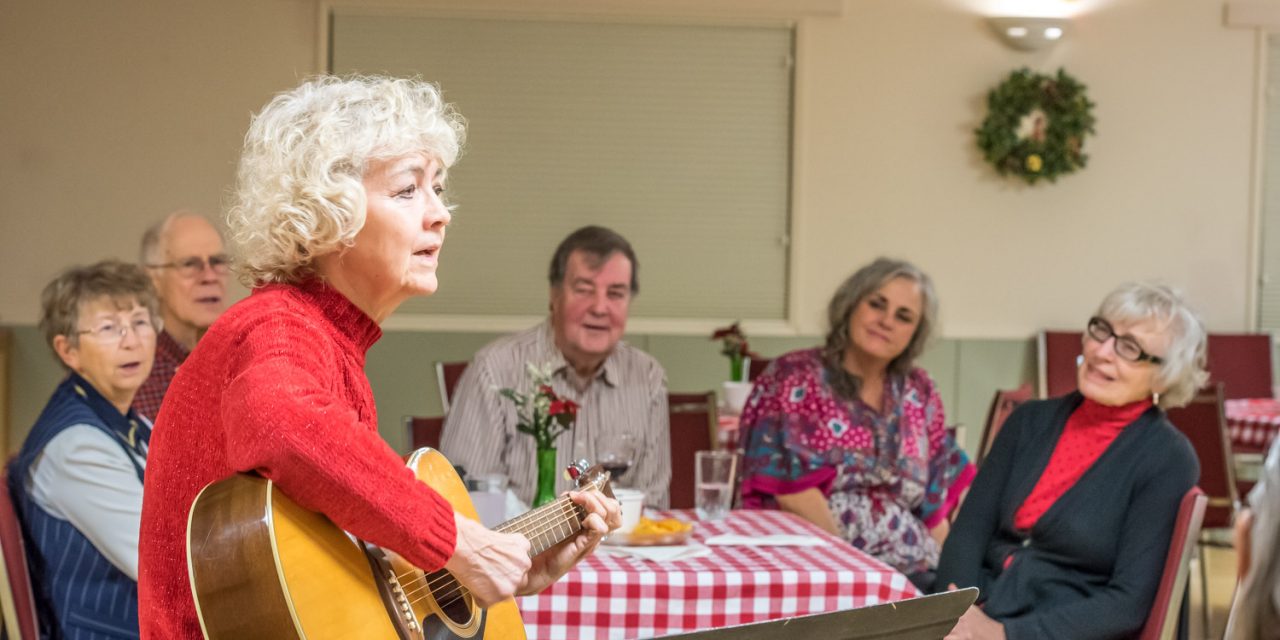
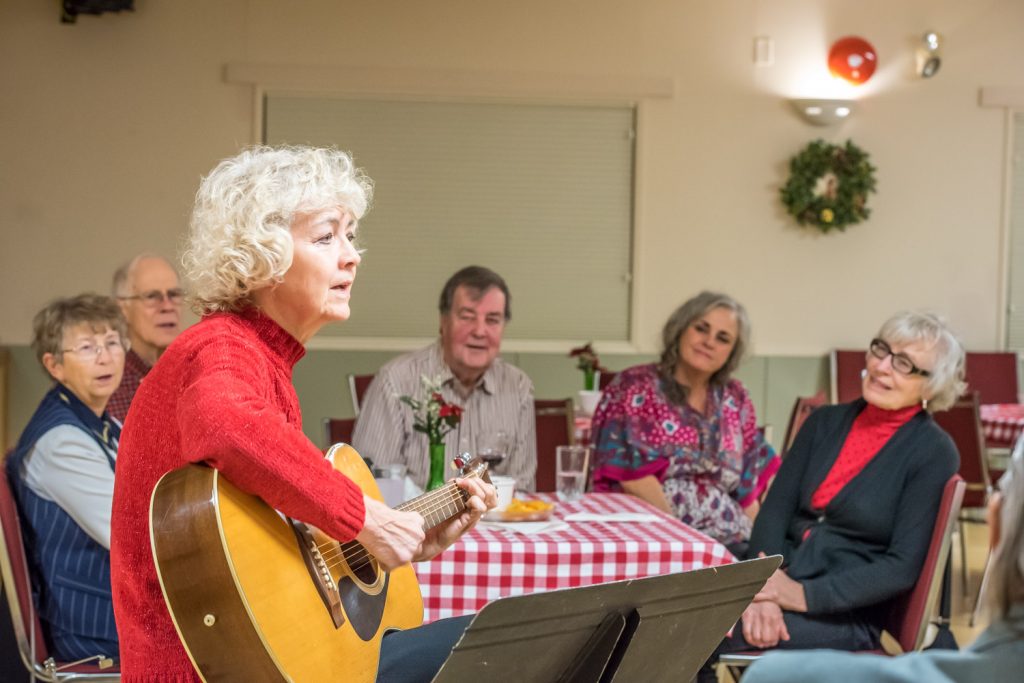
The Osoyoos Senior Centre is always a busy place with entertainment happening regularly. Osoyoos has a higher proportion of seniors than other communities in Canada with the exception of Qualicum Beach on Vancouver Island. (Richard McGuire file photo)
(This story has been updated to include comments from Mayor Sue McKortoff and to explain the change in the way Statistics Canada is reporting average populations in the 2016 census).
Osoyoos has one of the oldest populations in Canada, according to data from the 2016 census released last Wednesday by Statistics Canada.
More than two in five people in Osoyoos (42.9 per cent) were 65 or older.
Only Qualicum Beach on Vancouver Island has a higher proportion of seniors at 52.1 per cent of the population.
The average age in Osoyoos in 2016 was 55.4 years – once again higher than other communities except Qualicum Beach at 60.1.
The other two communities in which more than two in five people are seniors are Parksville and Sidney, both on Vancouver Island. Parksville’s average age is 54.5 and Sidney’s is 54.6, both just slightly younger than Osoyoos.
The Osoyoos population is significantly older than Oliver, with an average age of 51.4, and Penticton with an average of 48.7.
Statistics Canada has changed the way it reports the average age of the population with this census. In the 2011 census and earlier, the figure used was median age, which is the age at which half the population is younger and half is older.
In 2011 the median age was 60.3 and in 2016, it was 61.9.
Starting with the 2016 census, the age is reported as an average or mean. This is the sum of people’s ages divided by the number of people.
The average age in 2011 was 55.0, suggesting only a small increase to the 2016 average age of 55.4.
Osoyoos continues to have a low proportion of children aged 14 and under at just 8.9 per cent of the population.
Mayor Sue McKortoff said addressing the need for more young people is a big issue.
One of the things the community, including council, did to address this last year was to work to keep Osoyoos Secondary School open, she said.
“If we didn’t have the school here, we could turn into a ghost town pretty quickly,” said McKortoff, adding that seniors require services that are provided by younger workers.
Town council is being proactive in encouraging moderately priced, near-market housing, which will attract younger families, she said.
And council has also brought out the parks and trails master plan and is speaking out on healthcare services.
“We’re looking at providing services to a wide range of ages here,” said McKortoff.
Although it’s not council’s role to provide jobs, she said, council can make Osoyoos a welcoming place for people to come and set up businesses.
McKortoff said the town should embrace the fact that Osoyoos is a retirement community and encourage businesses that cater to retirees, who often have more money.
The census numbers show that overall Canada’s population is aging and from 2011 to 2016 Canada recorded the largest increase in the proportion of seniors since Confederation in 1867.
The acceleration of population aging is the result of the first baby boomers reaching the age of 65, Statistics Canada says.
For the first time ever, the census recorded more seniors (65 and over) than children (14 and younger). There are 5.9 million seniors compared with 5.8 million children.
This means seniors now represent 16.9 per cent of the Canadian population compared to 16.6 per cent who are children.
The average age of Canadians is now 41.
Besides the impact of baby boomers reaching the age of 65, other important trends are that life expectancies are increasing and fertility (birth) rates are remaining low.
In comparison to other developed countries, however, Canada’s population is still younger than most. Canada had a lower proportion of seniors in 2016 than any other G7 country except the United States, Statistics Canada says.
While Canada’s oldest populations by province are found in the Atlantic Provinces, B.C. isn’t far behind. The youngest populations are found on the Prairies and in the territories, especially Nunavut.
B.C.’s proportion of seniors is 18.3 per cent, tied with Quebec. By comparison, Nunavut’s is 3.8 per cent and Nova Scotia and New Brunswick are both 19.9 per cent.
B.C.’s elderly population tends to be concentrated on Vancouver Island.
The newly released figures also contain information about dwelling types.
In Osoyoos, of the 2,475 occupied private dwellings, well over half at 1,470 are single-detached houses. The rest are a mix of apartments with fewer than five stories, duplexes, row houses, and semi-detached and other attached homes.
There are no apartment buildings with five or more stories.
The numbers also give population breakdowns by gender.
In Osoyoos, there are 2,690 females to 2,400 males. Among children, boys outnumber girls, but among seniors there are more women than men.
There are 1,170 women 65 and over compared to 1,005 men.
Many numbers reported by Statistics Canada are rounded to the nearest five to protect privacy.
Statistics Canada said it changed to reporting average ages instead of median ages in 2016 because the use of median ages is skewed when all baby boomers have moved to older ages.
“Median age does not account for shifts in the age structure at older ages, as it only divides the population in two groups of equal size,” a spokesperson for Statistics Canada told the Osoyoos Times.
“Mean age will adjust better for the changes in the age distribution at older ages, for example when boomers reach age 85 and above,” she said.
RICHARD McGUIRE
Osoyoos Times