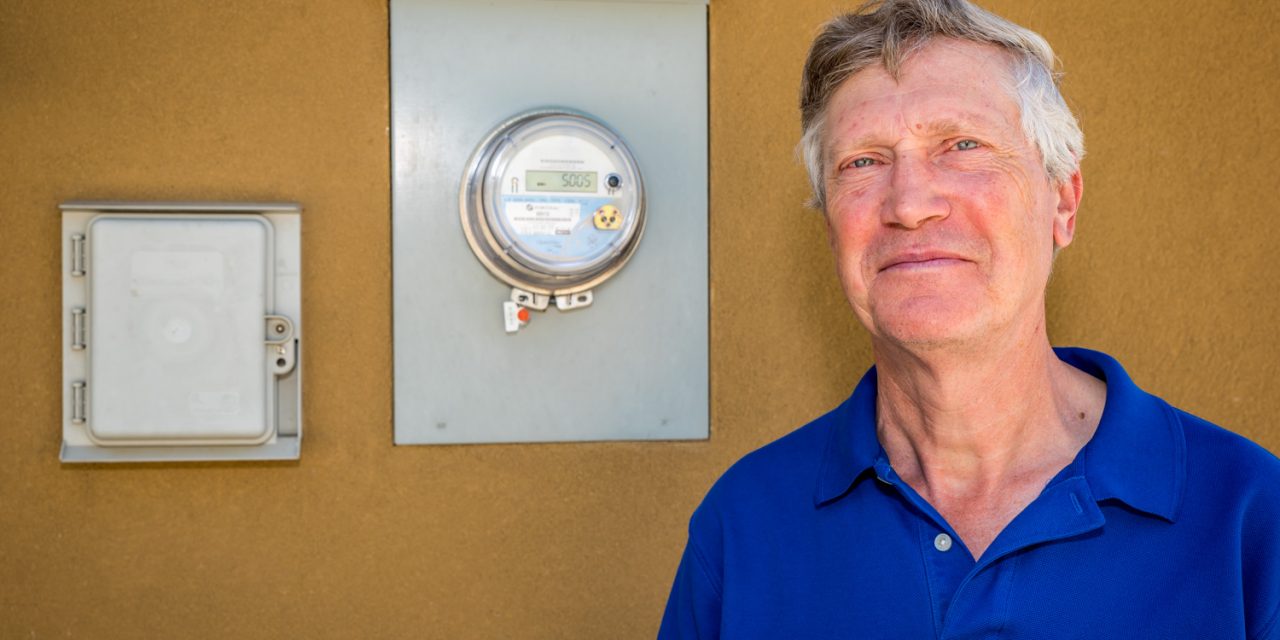
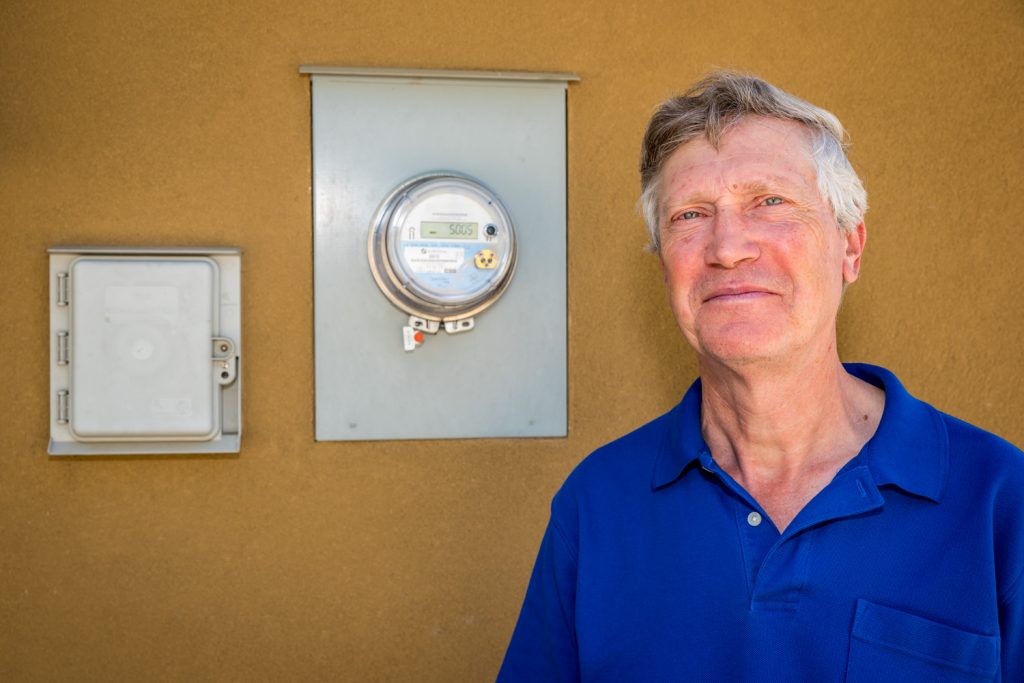
Nick Marty, a retired federal expert on energy conservation programs, has been fighting B.C.’s two-tier electricity rates for more than two years, but has hit walls of bureaucratic stalling and bafflegab. His argument is simple – when customers buy all or most of their electricity at the lower-tier rate, they have no incentive to conserve. When they have no access to natural gas, most of their consumption is at the higher-tier rate and the only realistic option to reduce it significantly is to burn wood. (Richard McGuire file photo)
An Anarchist Mountain resident, who has been fighting two-tier electric rates for more than two years, is not happy with what two power utility companies recently told the B.C. Utilities Commission (BCUC).
Nick Marty, a retired federal expert on energy conservation programs, argues that the present two-tier price system discriminates against rural residents without access to natural gas and doesn’t promote energy conservation as it’s supposed to.
In July 2015, after much pressure from Marty, B.C. Energy Minister Bill Bennett posed five fundamental questions to the BCUC about the two-tier rates.
Last month, 15 months after the minister posed his questions, BC Hydro and FortisBC submitted responses.
But Marty argues they’ve ducked the questions.
Marty’s argument is that customers with access to natural gas for space and water heating don’t need to use as much electricity, so most of their consumption is at the lower-tier rate.
Those without access to gas, who are largely rural, must use the bulk of their electricity at the higher rate. The only way they can realistically reduce electricity costs is by switching to burning wood, a pollutant.
BC Hydro, however, rejects the notion that customers without gas are cross-subsidizing customers with gas.
They also argue against the idea that low-income customers are negatively affected, saying a majority has lower rates under the two-tier Residential Inclining Block (RIB) rate.
BC Hydro also argues its existing programs to reduce electricity demand are sufficient.
FortisBC, on the other hand, provides tables of information, but doesn’t come to clear conclusions to answer the minister’s questions, Marty said.
“I would say Fortis has ducked the questions,” said Marty. “BC Hydro is deliberately trying to put forward answers that are not correct.”
Marty recently sent an email to hundreds of people around B.C. who share his concerns asking them to send comments to the BCUC before a Nov. 24 deadline.
He’s also done his own analysis, which he’s asking people to tell the BCUC to use as the basis of its response to the minister.
“Fortis’ report has some useful information buried in it, but they end up making a bunch of vague statements that avoid answering the minister’s questions,” Marty said in his email. “BC Hydro’s report is one big cover-up. The analysis they present is completely biased and often isn’t even pertinent to the questions being asked.”
For example, BC Hydro said it doesn’t find cross-subsidization, but bases this conclusion on “inherent limitations” of its analysis.
“It is a travesty of these proceedings that 15 months after the minister posed his questions, and after repeated delays by BC Hydro to complete its ‘analysis,’ that we are being provided with reports that are clearly unacceptable as a response to the minister,” Marty writes.
He believes the next steps will be for BCUC to prepare a response to the minister based on the reports from the utilities and feedback from the public. But the process could continue well into 2017.
“I expect it will be after the election,” Marty said.
To read the responses from FortisBC and BC Hydro as well as Marty’s Oct. 19 comments and those of others, go to this link: http://www.bcuc.com/ApplicationView.aspx?ApplicationId=506.
RICHARD McGUIRE
Osoyoos Times